+91 11 4109 1715
24/7 Support Center

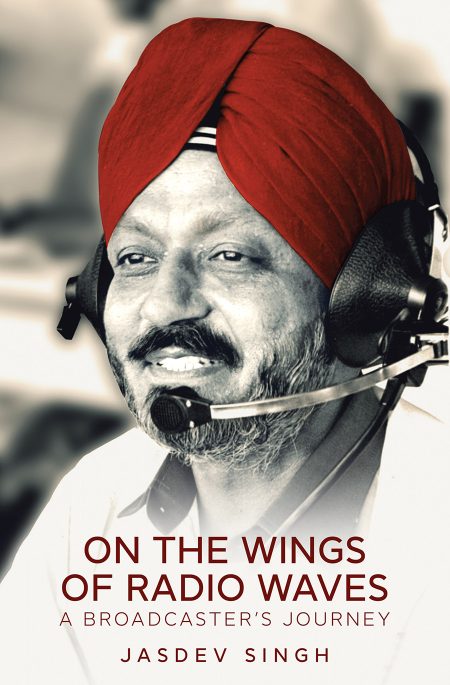
This is an autobiographical account of the life of Jasdev Singh, India’s renowned Hindi sports commentator. The book gives an eyewitness account of many monumental events in the field of sports. But Jasdev Singh did not merely cover sports. Through his eyes, we see history unfolding before us – India’s first space mission with Russia, the massacre at the Olympics village in Munich, the unforgettable Golden Temple tragedy and the subsequent assassination of Indira Gandhi – Jasdev Singh has covered it all. While giving us fascinating first-hand accounts of these events, the author gives us a glimpse into his personal life – his losses, his struggles, the obstacles he faced and how he overcame them and also his amazing victories. He was awarded the Padma Shri and the Padma Bhushan by the Government of India for his outstanding services.
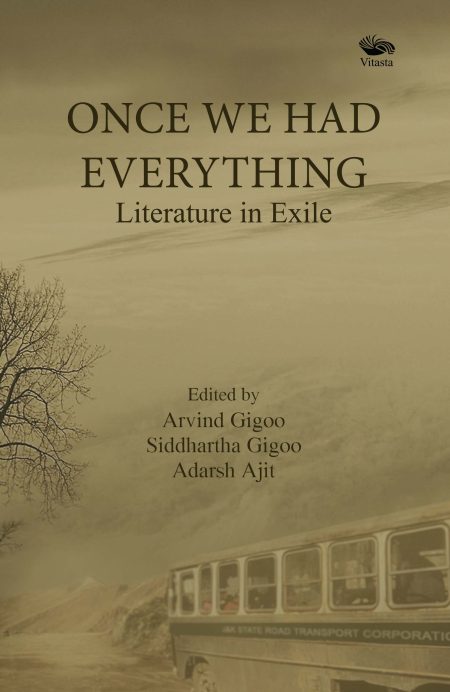
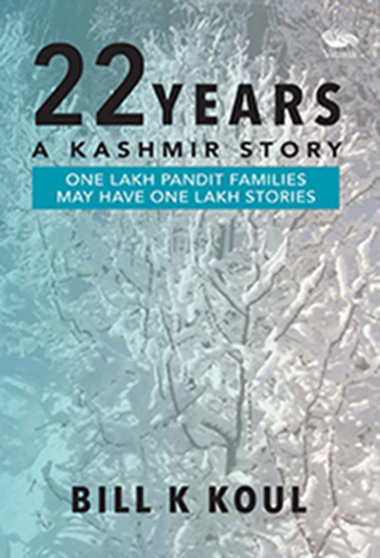
Imagine being evicted from your home and being forced to live in a cramped tent with no electricity, no water, no possessions, no safety, and no security. Imagine being forced to live there not for a day or a month or year but an entire decade! This happened in modern India. In 1990, when half a million Kashmiri Pandits were expelled from Kashmir under militants’ threat to their lives, they had nowhere to go, and were forced to take refuge in tents and one-room tenements in camps in Jammu and elsewhere. Struggling to survive, the displaced people battled alienation, deprivation and fear. Yet, for years, they nurtured hope—of returning to their homeland, of keeping the civilizational ties to a 5000-year-old history alive. Seeing no progress on their return to and rehabilitation in Kashmir, that hope is dwindling now. The writers of the stories in this book have lived with the horror of having been banished from their homes with no place to call their own. They are still living with the harsh reality of not being able to go back to Kashmir even after spending twenty-eight years in exile. They are living with the pain of seeing their homes and places of worship ravaged. They ask: Who are we? Where have we come from? What is going to happen to us? This book has the answers. Kashmir is, and will always remain incomplete without its original inhabitants—the Pandits.
Imagine a life where each moment is lived to the brim, and every chance seized with fervour… Allow me to step into the light, to be more than just words on these pages: I am Prakash Rohera, and over the past 26 years, I’ve been a corporate trainer and executive coach. Prior to that, I worked with Citibank, Bank of America and HCL Ltd. Through the years, I have had the opportunity to meet over 200,000 different participants, through 3500 plus sessions, from 160 plus organisations, across 26 countries. Each of these incredible individuals have inspired and motivated me as I learned of their life journeys—their opportunities and their challenges as they navigated and figured out their careers, their families, themselves and essentially this wonderful thing called ‘life’. With the pandemic pushing us all to reimagine our realities, I felt it was time to pen down their stories and the wisdom they held within. I yearned to share the practical tools and techniques that have resonated with countless workshop participants over the years. And so, this book was born—a labour of love and a tribute to those whose paths have intersected with mine. It’s a window into the transformative journeys of individuals who’ve traversed the labyrinth of life, each carrying lessons that light the way for others. As I often say, “One doesn’t need to change the world; all one needs to do is change our world.”

He called his India visit a ‘pilgrimage’ The American Civil Rights leader Martin Luther King Jr spent one long month in India, calling it the land that demonstrated the efficacy of Non-violence as a successful tool of resistance against bondage, injustice and the power of the gun. Gandhi was the world’s guru who showed the way, leading the common man into contributing in a struggle out of colonialism. He made Civil Disobedience a household word. Martin Luther King Jr gave Civil Liberties a new meaning, ending apartheid in the USA, at a time when it became the world’s strongest nation. In the last 50 years, there has been no more powerful voice against war in the world, it is still Martin Luther King’s stand against America’s war on Vietnam that shines as an example against military might. He is the voice of America’s conscience, still reverberating. Only in Darkness Can You See The Stars is an MLK biography reminding a young India that looks askance at non-violence, what a struggle America waged to give itself equal rights, including sitting rights and voting rights, not so long ago. King’s life is an example of what is doable at the time of utter darkness. That what Gautama Buddha taught India nearly 3,000 years ago still holds good. At the end of Darkness is Light.

The world order, as we knew it, is fast changing. Emerging powers are clamouring to claim and cement their positions in the ever-evolving geopolitical landscape.
The battle arena has long shifted to nondescript rooms filled with harmless seeming computer equipment. But don’t let appearances fool you. The innocuous looking cyber-soldiers glued to these screens are capable of altering the course of history by a few simple clicks. The suicide of a successful and politically connected C.E.O in Mumbai, India, sets off a series of disparate but alarming events. Are these events linked? Could they be a precursor to something even more vile and sinister? Will Ronit, an A.I. expert who, driven by a sudden patriotic surge, has left a high-paying corporate job to serve his nation, be able to piece together the full puzzle in time? Who is Noor Sabah, the mysterious Malaysian secret agent? Why are most covert command centres of South Asia terrified of the name, Zhiming? And yet, why does no one know what she looks like?
Operation Bamboo Garden is a pacy geopolitical thriller that will open your minds to veiled possibilities that could be shaping the inexplicable global events you read about.
With only 0.55 beds available for every 1,000 people, India’s public health system struggled to cope with the COVID-19 crisis, even while out-of-pocket expenditure pushed millions back into poverty leading to economic, educational, and equity distress. Also, with the increase in the use of technology, concerns about data privacy and citizens’ right to privacy emerged. Tensions between the State and Centre over the allocation of funds built up as budgetary resources started dwindling for both. Children becoming orphans and girls vulnerable to child marriages and trafficking was another disturbing fallout. Amidst these multifarious challenges in several sectors, there were States like Odisha which stood out, by adopting the famed 5T framework of governance which forms the overacting policy approach in what has now gained prominence as the Odisha Model of growth and development. Odisha Government’s handling of the covid crisis riding on its earlier experience in handling natural disasters has been applauded nationally as well as globally. Pandemic Disruptions and Odisha’s Lessons in Governance compiles various essays that the author wrote during the pandemic years outlining India’s and Odisha’s fight against COVID and all the concomitant unintended consequences while also commenting on how either policy planning or implementation could possibly have been better, setting out a roadmap for the future. Several of these policy prescriptions were later adopted by the Government.

Parents at War shares real-life stories of children caught up in the warfare between litigating parents, bringing to the fore the plight of children who bear the brunt of such contests and undergo deep trauma due to parental bickering and tug of war. The book also shares the predicament the judges face while balancing delicately the interests of all the stakeholders and ensuring the welfare of children. It brings to light how unknowingly, the parents, in their zeal to win custody, scar the children forever. Children not only suffer psychological trauma, but also have physical manifestations like stunted growth, obesity, nausea, aches and pain etc. Whether the mother lands the custody or the father, there is no winner here because it is the child who loses on love, affection, and care of a parent and also the extended family. The book also touches upon the issue of insincere custody litigation with hidden agenda.
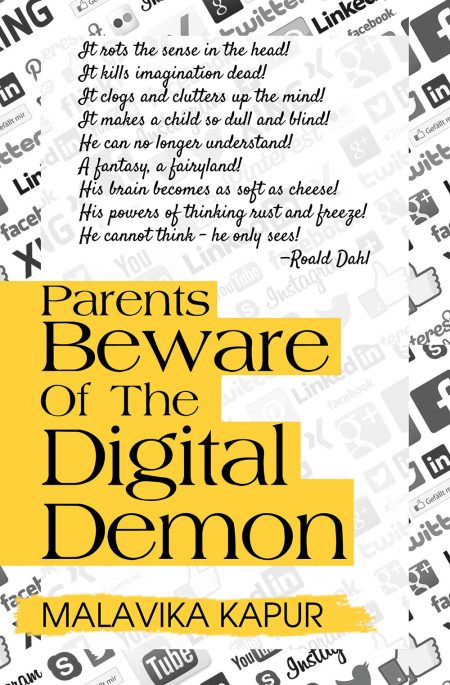
Televisions, smartphones, internet, social media are all horribly addictive and the Covid pandemic has doubled the online presence of children. The WHO says, ‘Digital disorders are hugely under-recognised in India’. According to Rajesh Sagar of AIIMS Delhi, ‘It is fast emerging as India’s newest lifestyle disease’. Digital games, advertisements and reality shows are dangerous for a growing mind. The Government of India has banned online games like PUBG, Blue Whale, sites like Tik Tok. The Government of Karnataka has even banned online classes for children up to class five. This book is an attempt to flag the dangers and provide some suggestions on how to combat digital dependence. No teaching formula or A1 model can accommodate multiple diversities at the grassroots level. The National Institute of Mental Health and Neuroscience offers a SHUT (Services for Healthy Use of Technology) clinic for internet addiction. This needs to be created across the nation. The advertisers know the young are consumers. They are not bothered about how the ad impacts children, especially when there is no actual regulator and no parental bodies, nor teacher groups. No ‘Truth about Technology’ lobbies here. Rules need to be implemented. If Daag achche hain, then why teach children to be neat and clean?
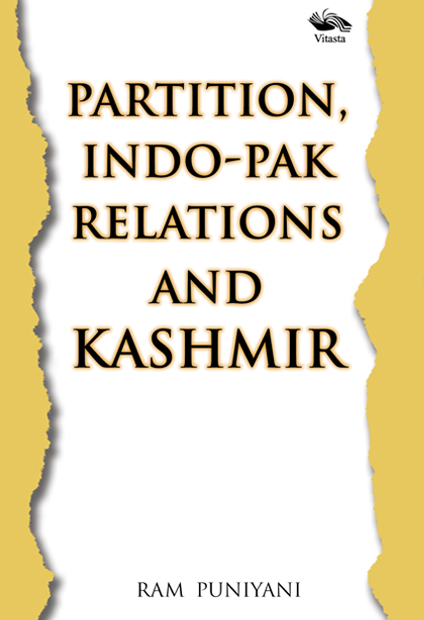
Partition, Indo-Pak Relations and Kashmir is a book that says, the only solution to the Kashmir imbroglio can be and has to be peaceful. Looking at the issue in the context of the subcontinent’s partition, it notes how Indo-Pak relations are held hostage to Kashmir and the vice-versa. The book says, in the 21st century, the process of secularisation has remained incomplete in India, Pakistan (and Bangladesh) and fundamentalism and communalism are rampant in all of these nations.
The first major war between these uncomfortable neighbours took place on the issue of Kashmir, resulting in one third of Kashmir becoming ‘Azad Kashmir’ in the military-mullah ruled Pakistan, with lakhs of soldiers breathing down the neck of Kashmiri civilians in democratic India. Dwelling on this unhappy situation, the book also talks of one remarkable nonagenarian communist from Kerala, BM Kutty, who has made Karachi his home for the last 70 years; how Indo-Pak cricket matches are seen more as India-Pakistan war; how legendary film star Dilip Kumar (Yusuf Khan), and the modern ones like Shah Rukh Khan, Salman Khan are humiliated time and time just because of their religion. The book sets its readers thinking.
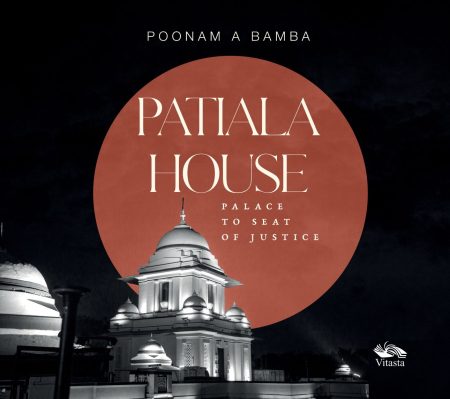
This coffee-table book is a tribute to and celebration of the rich heritage and architectural grandeur of Patiala House. Though situated in the heart of Lutyens Delhi, its beauty got lost in the hustle and bustle of the business of courts. This book captures the journey of Patiala House from a Patiala plot to a royal palace to a seat of justice whilst chronicling its history through documents and oral testimonies/messages of some of its occupants. It takes one on a visual odyssey of Patiala House showcasing its architectural features like the conglomeration of chhatris, a long continuous chajja, protruding balconies, the jaalis that allow comfortable cross-ventilation, floor designs and stair railings with motifs of a peacock reigning supreme. The book captures some of the high-profile cases tried at Patiala House Courts like, the Parliament attack, BMW hit-and-run case, Phoolan Devi murder, Jessica Lal murder, and Nitish Katara murder, to name a few. Patiala House: Palace to Seat of Justice is a treasure trove for historians, culture enthusiasts, students, litigants, lawyers and judges alike.
About the Book
History has had its own favourites, and Patna, inarguably, has been one of them. The palanquin of India’s incredible heritage, Patna, has down the ages stood like a mannequin, upon which civilizations have bestowed fineries woven by stout threads of secular democratic traditions, embroidered by delicate pearls of eclectic cultural mosaic. Standing steadfast by the bank of the timeless Ganga, by the grace of god, this Patna, of yore and now, has over a period of two millennia and more, assimilated the minds, moods and monuments of ancient, medieval and modern times; Buddha’s prophetic feuds, fires and floods, notwithstanding.
Golghar on the front cover as seen from the river with European official’s house nearby is a watercolour painting by Robert Smith (1787-1873). Golghar, a huge granary, built by Captain John Garstin in 1786, intended to store grain, but unfortunately, the building was found to be unsuitable for its purpose.
The 100-year old Darbhanga House was built by Maharajadhiraja of Darbhanga during the later half of the 19th Century. It has been declared a heritage site. It now houses the post graduate faculty of the Patna University.
The picture on the back cover is a pen and ink drawing by Sir Charles D’Oyly (1781-1845), of a view of the French Factory at Patna dated 9 February 10, 1823, from an album of 80 drawings, of views in Bengal and Bihar, made between January 1823 and May 1825.
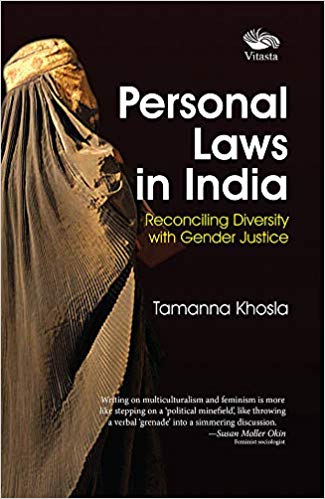
In 21st century India, feminism is not a nice word. Multiculturalism is politically perfect and loaded with identitarianopportunism. Personal laws of communities like marriage, divorce, inheritance, adoption and death are controlled by religion. So multi-culture here meansmulti-religion’s laws.Laws in India are a legacy of the colonial era. For the state, these hand-me-down personal laws are tools to grantminorities rights and boast of being a multi-cultural democracy.When minoritiesgain group rights, women lose out as women occupya subordinate status in most cultures and granting group rightensures the maintenance of their lower status.
Feminist sociologist Tamanna Khosla points out that women are also a ‘cultural minority’ as their way of life is considered to be a ‘minority’ way in the public and political space, still male dominated. The book, Personal Laws in India: Reconciling Diversity with Gender Justice, placesthe personal laws and diverse issues that haunt women and children for the eightreligious groupingsin India under one umbrella reference.It analyses cultures of different communities and sees how equitable they are to women.

“Understand yourself first. Understand your Man. Then understand the relationship” – is personality Guru Donna Partow’s advice to women to help them maximize their roles as mothers, wives, and individuals.
Everyone you meet will be a unique blend, but the simplest way to understand a person is by understanding his or her underlying “colors.” You’ll gain an increased appreciation for the man in your life, she says in this book. You’ll find freedom in the realization that just because you disagree doesn’t mean one of you is wrong and the other is right. You can conserve precious time and energy once you accept that you’re simply looking at life through two very different lenses. And that’s not only okay, it’s a good thing.

Physics of God attempts to find and explain the ultimate reality, God, using laws of modern physics. It inaugurates a new intellectual order by realizing the much talked about and hyped but still awaited joining of science and God; reason and faith; physics and metaphysics. It proposes a new hypothesis that borders science and imagination. This work is a serious confluence of physics, philosophy, metaphysics, theosophy and theology written with a pen, which is youthful and bubbly. Jampak Zu, the virtual cartoon character who has co-authored this book with Kartikey is an innovation in itself.
The work brings out seven levels of reality that constitute the cosmic existence. Human existence participates in all of them. It lists the seven important parameters of reality and establishes a canonical inter-relationship between them all. Laws of physics are then extrapolated into the realm of non-physical worlds using these inter-parametric relations.
The seven parameters work like seven interconnected knobs. By turning their values, the reader is made to undergo a journey from one world to another. At the climax of analysis, the reader finds himself in the world of God. The ultimate reality reveals itself automatically and spontaneously with a pleasant surprise that even God does not violate the laws of physics. We see Him through the lens of physics.
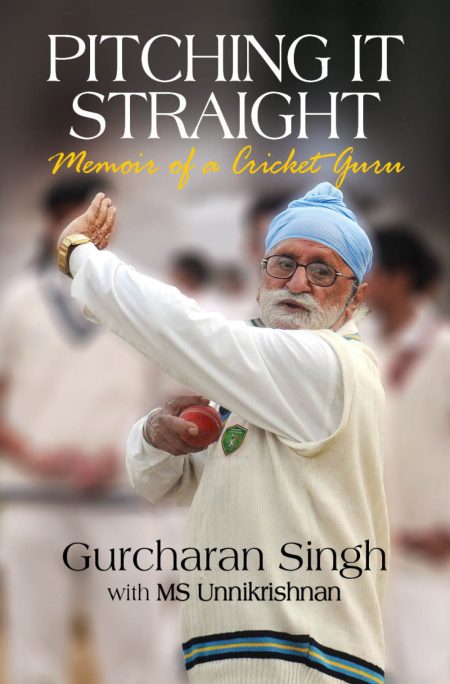
A good coach can change a game but a great coach can change a life. Gurcharanji is that great coach. Shah Rukh Khan, who played under Gurcharanji at St Columba’s School, wanted to be a wicketkeeper but was afraid of getting hurt by the pacers. Once, when Gurcharanji reprimanded him for pulling back, Shah Rukh left the field, and never returned to Gurcharanji’s coaching session. Shah Rukh later became one of India’s top actors. Shah Rukh has, however, taken Gurcharan Singh’s name at different forums, acknowledging that he had trained under Sir. Principals of Sardar Patel, Airforce Bal Bharati and many other schools have called Gurcharanji, ‘Guru of Gurus’. Maninder Singh, Vivek Razdan, Kirti Azad are all his students, steeped in cricket as school boys. This is the life story of DRONACHARYA Gurcharan Singh, once India’s national coach, curator of the famed National Stadium Greens, coach to 11 test and more than a 100 first class cricketers whose 60 years of contribution to the game cannot be matched in world cricket lore. From a young boy who rose from the ashes of the 1947 partition, having lost his father and home in the horrible riots; this is a survivor’s tale who, at 85, is India’s most revered mentor. As Kapil Dev says, his life story ‘will be very educative’. In this book he also answers a dozen questions that plague Indian cricket, from match-fixing to IPL and has tips to give the new generation of players.
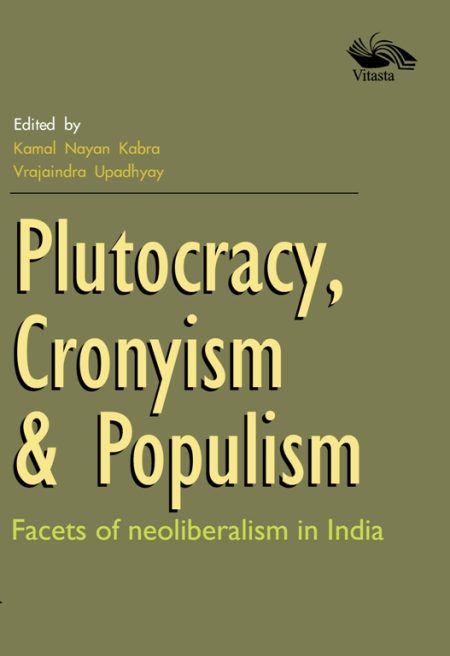
For over a quarter century now, Indian society has become a battleground for competitive neoliberal policies by successive political regimes. As a result, notwithstanding the formal democratic system and the stated pursuit of socially inclusive economic growth, the present-day Indian political economy seems to be characterised by the interplay of plutocracy, cronyism and populism. Little wonder the country is facing a grim spectacle of unprecedented multi-faceted disparities and adverse inclusion of the masses in the socio-economic and political process. This is reflected in a shockingly small number of the entitled citizens who manage to get a place in the organised sector of the national economy while a many times larger number of the dispossessed and discriminated persons manage to survive with marginal, irregular and inadequate access to sub-human levels of living by their sheer grit, ingenuity and willingness to make downward adjustments to what their adverse inclusion forces on them. Expectedly, the masters of economic growth and democratic management of the neoliberal development discourse and governance amass enormous family fortunes and secure places in the power structure for a number of their future generations. All these widely noticed, but equally callously neglected, aspects of India’s democracy
Expectedly, the masters of economic growth and democratic management of the neoliberal development discourse and governance amass enormous family fortunes and secure places in the power structure for a number of their future generations. All these widely noticed, but equally callously neglected, aspects of India’s democracy form dominant parts of the discourse on India’s economic growth and the accompanying despondency, though luckily, with some rays of hope here and there. What the Indian Political Economy Association presents in this volume is inspired by the hope and belief that these analyses may possibly form parts of the rays of hope for a major part of one billion plus people who call themselves Indians in the 21st Century.