+91 11 4109 1715
24/7 Support Center

An American girl is given in adoption since her biological parents have no means to support her. The new family loves her immensely but fails to prevent her exposure to sex when she is two. She moves to school but still cannot come out of her obsession with sex. Later, she comes across hippies and gets addicted to drugs, plunging deeper and deeper into the unknown. She goes into lesbianism and the search for quick money leads her to a credit card scam for which she is convicted. Stuck between the wildly changing times and her drug addiction, she continues to search for some stability, which is provided by her bona fide spiritual master Srila Prabhupada’s Hare Krishna movement. But before she could be cleansed of all sins, she is pushed in the vortex of drug abuse once more. Does she continue to live a meaningless life of drugs, sex and violence, or does she succeed in cleansing her life and her soul? Are all her questions about life answered? Can she be rescued from the hellish depths she has plunged into? A gripping story till the end.
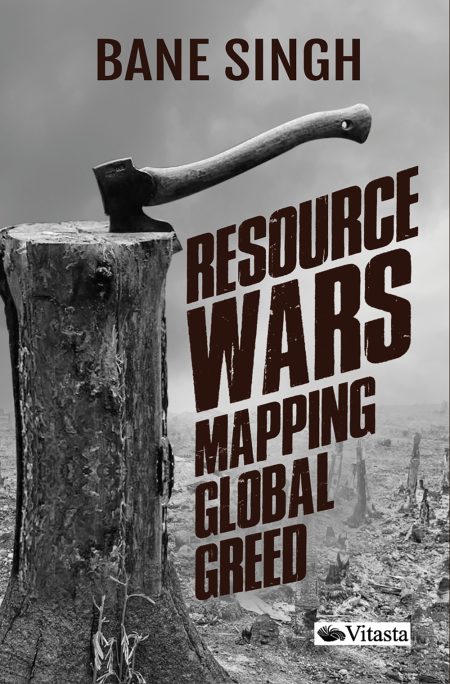
The region above the Arctic Circle accounts for only about six per cent of the Earth’s surface area, but holds nearly one-fifth of the world’s recoverable oil and natural gas. The book, Resource Wars: Mapping Global Greed, tells the fascinating story of global competition for the Earth’s natural resources, even in the remotest corners of the world. Broadly cataloguing the resources available to mankind on this planet, the book also notes how technology for their extraction is a key determinant of winners and losers among nations fighting for oil, uranium, even the sun, sea and sand. Within its jackets, the book brings to its readers a comprehensive global overview of Earth’s assets and a perspective on the fatal exploitation that is creating an irreparable ecological imbalance.
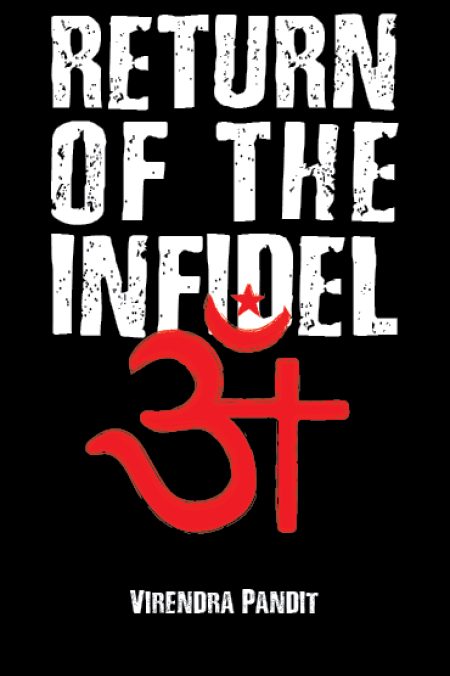
It is not Gandhi but Jinnah who was the Father of modern India. It was Jinnah who, like a pied piper, lured monotheism out of India. His persistent demand for a ‘separate nation’ for Muslims resulted in the migration of millions of Muslims to a new geographical and political reality called Pakistan. Had this not happened, imagine a united Hindustan with 750 million Muslims by 2050, the biggest Islamic country in the world. In that sense Jinnah was the greatest Indian after Gautam Buddha, Chanakya and Adi Shankara.
Author-journalist Virendra Pandit suggests that although Mahatma Gandhi pretended to oppose Partition, deep within he was content that India would be a country living according to its Hindu heritage and ethos. Gandhi plotted the exit of Islam and Christianity—the end of colonialism—so that most part of India remained a home majorly for the Hindus. He egged on Jinnah to demand Pakistan and with its creation India’s medieval era came to an end. Arguments of the author are compelling and though the book appears to be a panacea for those who think that India will survive only if it is a Hindu majority country, there is plenty to chew on for the forces of secularism. Return of the Infidel is the story of how India ejected both Christianity and Islam from the subcontinent. The story of China and Japan, and that of many other nations, is the same. Christianity and Islam viewed these three ancient Asian giants as ‘infidels’—and they are Returning now!
टेक्नोलॉजी और विज्ञान, दोनों हैं वरदान, इन का साथी प्रदूषण, यह तो है शैतान। यह पुस्तक दिल और दिमाग दोनों को प्रदूषण के खतरे से लड़ने के लिए तैयार करेगी और पर्यावरण के बारे में जागरूक करेगी। बच्चों की दिमागी कसरत और मनोरंजन के लिए इस पुस्तक में कुछपहेलियां भी दी गई हैं। पुस्तक में दिए गए चित्र आर्टिफिशयल-इंटेलिजेंस के माध्यम से बनाए गए हैं।
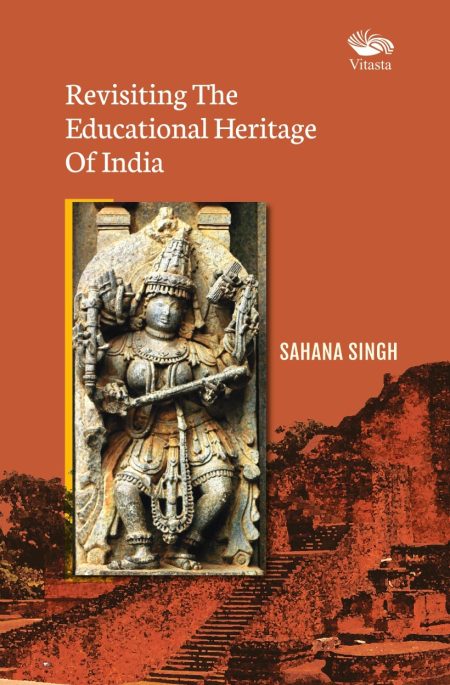
Long before the first European universities appeared, India already had multi-disciplinary centres of learning that fuelled a knowledge revolution around the world. This book fills a dire need to chronicle the great educational heritage of India. It describes a unique ecosystem which ensured that Gurus and Acharyas handed the lamp of learning to generations of students. As the author puts it, “When swords quenched their thirst and famine ravaged the lands, Indians still held on to their truth that there was nothing more purifying than knowledge.” She has collated information from oral history, local lore, travelogues, surviving literature, inscriptions, salvaged manuscripts and accounts of scholars and laity. Historically, the book covers a vast time span from ancient India’s traditions to the deliberate destruction of its heritage. It also outlines steps that can be taken today to incorporate the most relevant aspects of ancient learning systems into the current structure of school and university education.
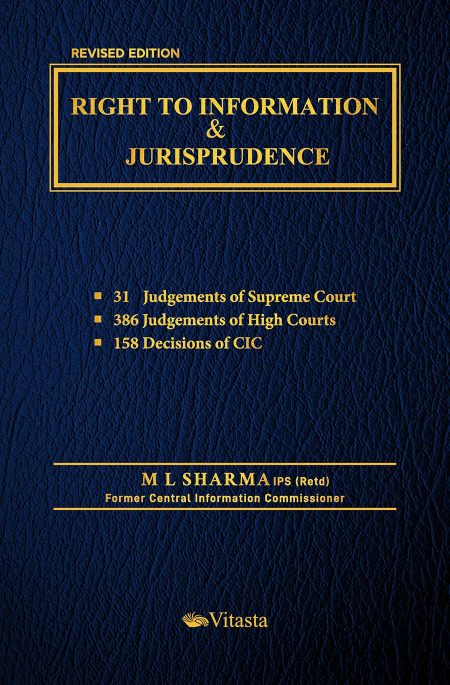
The underlining philosophy of the RTI Act is to promote transparency and accountability in the working of every ‘public authority’ and thereby strengthen and deepen participatory democracy. In this book, M.L. Sharma outlines the global perspective of the Right to Information, traces its genesis and evolution in India and insightfully analyses the Act in the light of case law. The book contains the ratio of 29 judgments of the Supreme Court of India; 374 judgments of various High Courts; and 156 decisions of the Central Information Commission, along with the citations for reference purposes. The author has also legally critiqued the Act and given valuable suggestions for amending and fine-tuning it, apart from giving an overview of its implementation on the ground. This book would prove useful and handy for RTI litigants and activists; Public Information Officers, First Appellate Authorities and Information Commissioners; law students and the lay readers in general.
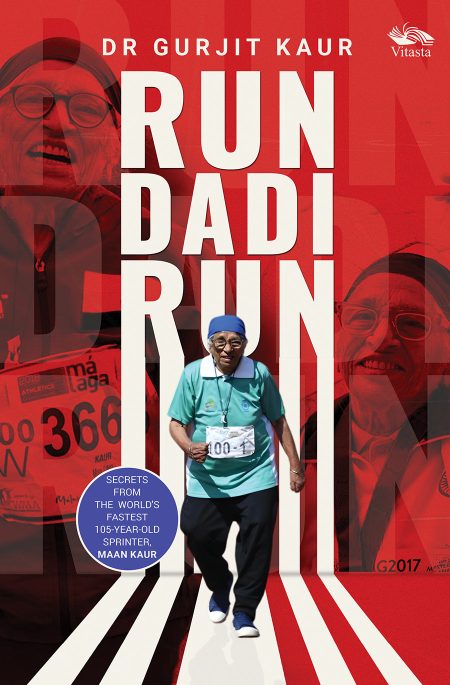
Run Dadi Run is an extraordinary tribute to the unstoppable Maan Kaur, the 105-year-old record-breaking athlete who took up running at the age of 91 and continued defying expectations with her unwavering spirit. Named Athlete of the Year at the World Masters Games in 2011, Maan’s journey is a testament to resilience, courage, and the power of self-belief. Guided by her son Gurdev, a record-breaking senior athlete himself, Maan transformed her life, proving that age is no barrier when passion and determination lead the way. Inspired by a documentary, author Dr Gurjit Kaur spent a week with Maan in Patiala, documenting her daily rituals, diet, and the exercise routine. The book reveals simple yet profound habits that fuelled Maan’s vitality—from refreshing kefir drinks to sprouted wheat chapatis—and her various other recipes for longevity. Dr Kaur’s insights capture not only Maan’s wellness secrets, but also her rich life philosophy: grounded, spiritual, and optimistic. Filled with stories of Maan’s days as a nanny in the Maharaja of Patiala’s palace and her memories of India’s freedom struggle, Run Dadi Run draws readers into Maan’s world—a world where energy, purpose, and positivity are ageless.
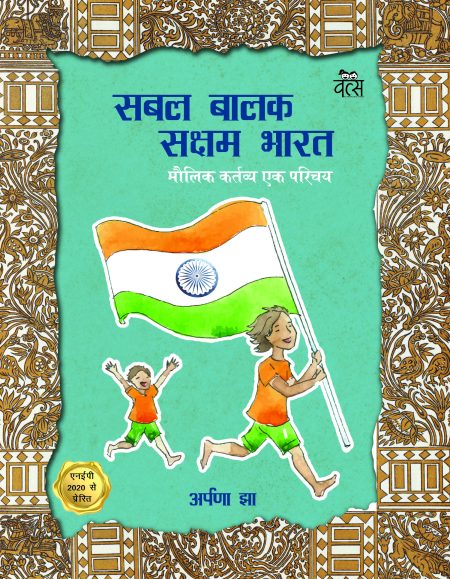
Sabal Balak, Saksham Bharat is an engaging and child-friendly book designed in alignment with the ‘National Education Policy (NEP) 2020’, aiming to instil constitutional values in young minds. Focusing on the ‘Fundamental Duties’ as prescribed in the Indian Constitution, this book introduces children to their civic responsibilities through simple language, relatable stories, vibrant illustrations, and practice sheets & other activities. It bridges the gap between classroom learning and real-life values, helping children become not just good students, but responsible citizens. Every growing child deserves a strong moral and civic foundation. ‘Sabal Balak, Saksham Bharat’ is a must-have book for schools, homes and libraries seeking to raise socially aware and responsible future citizens. It’s not just a book—it’s a step toward building a ‘capable child and a stronger India’.
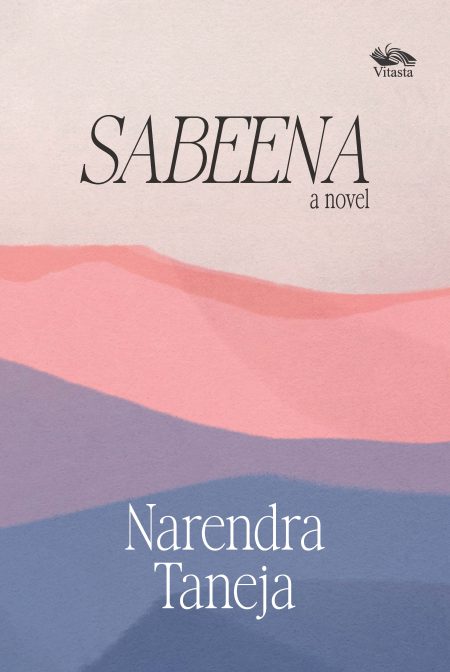
Loneliness is Vikram’s constant companion, born out of his rootlessness. Ever since he learned of his father’s forced displacement, he longed for a home on familial soil, a place where the fragrance of his ancestors lingers in the grains of sand. No matter where life takes him, no triumph can cure the wounds left by the tragedy that partitioned his history from him. On the other side of the Wall, Sabeena is a brilliant woman, whose fate unfortunately delivers her into the caste most discriminated against in Indian society. Beautiful and unyielding, she carries within her a fire of calm resistance and the grace of sacrifice. Denied the dignity her mind and heart deserve, she endures daily injustices that leave her soul scarred, but her spirit undefeated. This is the story of two exceptional individuals and their shared longing to belong.
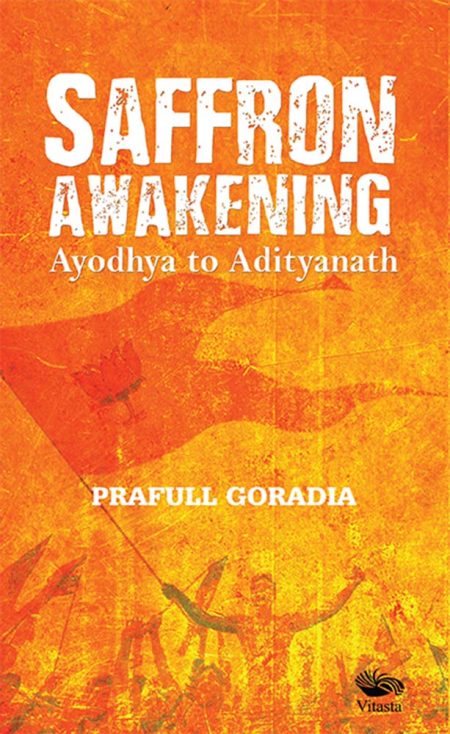
A turnaround in the course of Indian history’ is how the 11 March 2017 UP assembly elections are being described. It is believed, the election of a majority BJP government and of a Hindu mathadhikari as the Chief Minister of India’s most populous State is an expression of resurgence of Hinduism, not just a religious awakening. In 21st century India, this is the third such symbolic public demonstration of saffron ascendancy, says author PrafullGoradia, who was an eye-witness to the first such assertion in recent times, the demolition of the Babri Masjid in 1992. Until the advent of Narendra Modi, no leader was able to inspire the Hindu confidence for the expression of their true sentiments, he asserts. The book, Saffron Awakening, takes a look at what UP suffered during centuries of Islamic rule and analyses why Uttar Pradesh voted the way it did. Never before has the Hindu expressed himself with such vengeance. It is a time of Saffron Awakening.

The plays in Volume 6 reflect on the continued Western orientation of Indian communities till today. As a character in Salt Licks says: ‘Go West, young man, to rediscover the East. And don’t be in a hurry to get back’. The first play in this publication series refers to a peculiarly Bangalore society of elders fixated in the Raj, calling themselves the Empire Loyalists. If it was ‘Great Britain’ at one time, it was the American Dream later. In the pre-liberalized economy, young people went to extremes to get admission in American colleges and universities. Any university, any course, any location, it was only important to get there first. And yet… there was something so human in their dreams. The collection in this Volume can be called Vijay Padaki’s early plays. The stories are set in the period early ‘seventies to early ‘nineties. The ubiquitous 2-in-1 music system in the plays creates a special place for itself. Two plays in the set need further explanation. Gold and Silver was written at the time of an exchange project with the Royal National Theatre celebrating India’s Golden Anniversary of Independence. Evening Shadows is an original English language adaptation of Sandhya Chhaya by the Marathi playwright Jaywant Dalvi. The loneliness of an elderly couple is compounded by the son not returning from America.
With the changing times, we seem to be too engrossed in our silos of individual growth and achievements and tend to ignore or even ridicule tradition. To be Western is the trend, without realising that the philosophical tradition of the West is trying to discover the beauty of Sanatan Dharma—an all-inclusive way of life. From Adi to Anant, Sanatan Dharm is the constant evolution and revelations of human possibilities. It keeps transforming with time to suit the need for existence. It is not rigid. But the moral order underlying existence never changes. When duty becomes a part of consciousness and gets the backing of impeccable philosophy of existence, life becomes much easier. Sanatan Dharm does just that. As we step into this new world, Sanatan Dharm will find increasing resonance with those who wish to understand religion and its purpose in life. This is because Sanatan Dharm is not prescriptive and gives individuals the liberty to be seekers and find their own enlightenment. It rather guides people to attain higher levels of spiritual discovery.
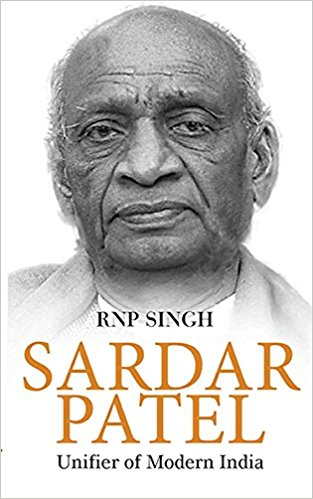
Vallabhbhai Patel (1875-1950) left his mark not only on the map of India but also on the minds of her people. He is said to have bequeathed the idea of an integrated India to the nation, and is often called the ‘Iron Man’, with an uncanny foresight and a clear vision of where independent India’s future lay. He was no superman, he was a statesman gifted with the rare quality of astuteness and pertinacity in his approach to problems. He was more than Bismarck in many ways. His decisive approach to the merger of the 565 princely States into the Union of India is a hair-raising story of grit, gumption and guts. It is the story of how a man, believed to be ‘the accurate bowman of Gandhi’s struggle…who knew no retreat’ wooed, cajoled and coerced Princes’ India into becoming a People’s India. Patel was convinced, ‘small States cannot subsist as independent entities without endangering Indian unity’ and this book tells the bold and brazen story of how State by State, from Junagadh to Patna, Travancore to J&K, that is, two-thirds of the land mass was shepherded under Mother India’s wings, by one man’s steadfast commitment to the larger cause, ‘no further division’ of the subcontinent. India is today suffering the consequences of ignoring Patel’s advise on Kashmir and China. Though it covers just five years of Sardar Patel’s life and times, this is a work of historicity that every Indian must read to understand how India came to be the India that Google today shows us.
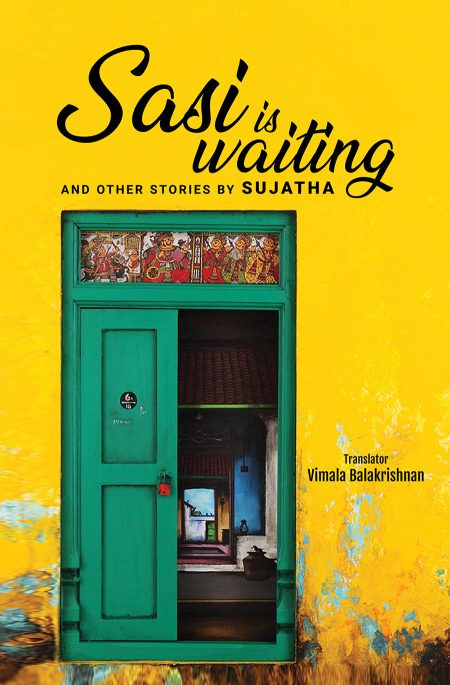
Sujatha, the pseudonym of S Rangarajan, is a name synonymous with Tamil literature. Loved by readers of all ages, he is credited with over 100 novels, 250 short stories, numerous plays, and regular columns in popular Tamil periodicals. In this collection of stories, Rangarajan takes us on a wild journey into different genres of fiction. He delves into science fiction in City Tours while The Sun depicts the horrible reality of a nuclear holocaust. In Secha, he captures violence in an incident of brutal mugging in the USA, while the ethical dilemma of police brutality is debated in Justifications. We also have The Edge, a psychological thriller, and the delightful story of Krishnaswamy titled The Horse. And finally, in his showstopper, Sasi is Waiting, the writer dissects the most basic of human emotions, Love, Fear, and Longing with just one question: How long will Sasi keep waiting?
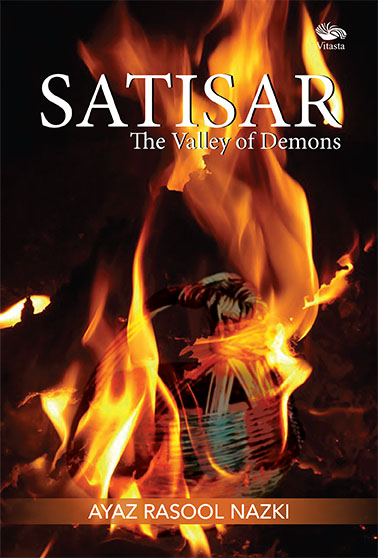
Kashmir, ancient abode of knowledge and scholarship has a five thousand year old history. This charming landscape has unfortunately been distorted by continuing violence. The book is set in the turbulent nineties of the last century when the situation erupted for the first time. A plethora of characters drawn from its long history weave tapestry of events, the warriors of yesteryears don the robes of renunciation and hermits of bygone days are seen on the battlefield. The intended chaos represents the ground situation to a great extent. A political satire cloaked in fiction, the book dissects the inertia and indifference to human misery and tragedy.
The characters emerge from across eons and cultures. The fundamental legends get reinterpreted to make sense to modern sensibility. The narrative is racy and presents a good measure of fantasy in the form of fairies, demons, magical concoctions, charms etc. The stories of powerful men and women are interwoven with lives of ordinary folk to finally converge at a point and usher in a new dawn of hope and tranquility for the beautiful valley.