+91 11 4109 1715
24/7 Support Center


In the novel The Bench the author endeavours to look at the complexities of life through the prism of human emotions. The protagonist, Natasha, embarks on a journey of self-actualisation. Waiting endlessly, without hope, she sits on the hospital bench living through the trauma and tribulations of her life as her husband fights for his life after a terrible accident. The doctors and nurses befriend her as she reaches out to help others. Instead of becoming a poor helpless victim of circumstances she sets out to carve a new life for herself. Does she succeed? Is it enough for her to live with the happy memories of her brief marriage or does she succumb to her father-in-law’s entreaties to remarry? The author explores all of Natasha’s dilemmas with sensitivity and from an emotional perspective.

Lishia Vance is flummoxed. One day she has friends. The next day everyone has turned against her. No explanation. Just complete social isolation. Even her best friend Janelle isn’t giving her the time of day. When she makes a connection with Riley Atkins, a popular cheerleader, things start looking up. But is Riley really as good a friend as she seems? Or is Lishia better off without her?
With her signature insight into the lives of teen girls, bestselling author Melody Carlson explores the treacherous world of friendship, loyalty, and choices teenagers face in high school. This is a story that all teenagers must read.
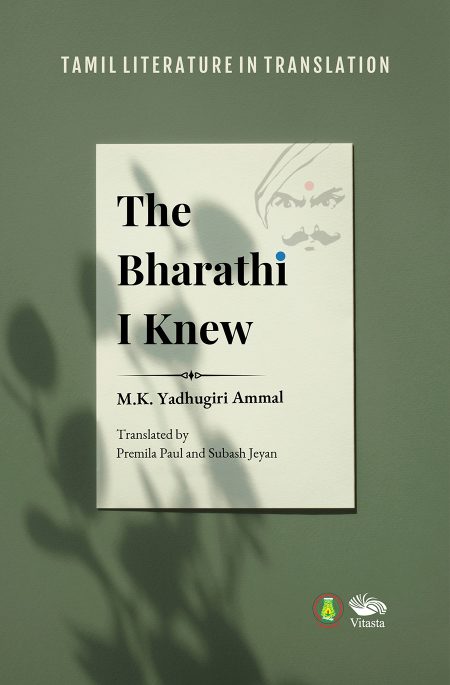
The Bharathi I Knew is M.K. Yadhugiri Ammal’s fond recollection of her growing up years in Puducherry in the turbulent days of the Indian freedom struggle when “Mahakavi” Bharathi opted to live in exile in French Pondicherry during the years 1912-1918. She had spent most of her time then with Bharathiyar’s family, an integral part of her extended family, enjoying the love and tutelage of the poet. The book captures the young Yadhugiri’s excitement about Bharathiyar’s poetry and enthusiasm for his progressive views on social reform. It presents twin perspectives—of Yadhugiri as a child and as an adult forty years later. Her adult perspective gives Bharathiyar’s recalled words a special significance; and discovers in his life, a special message for humanity.
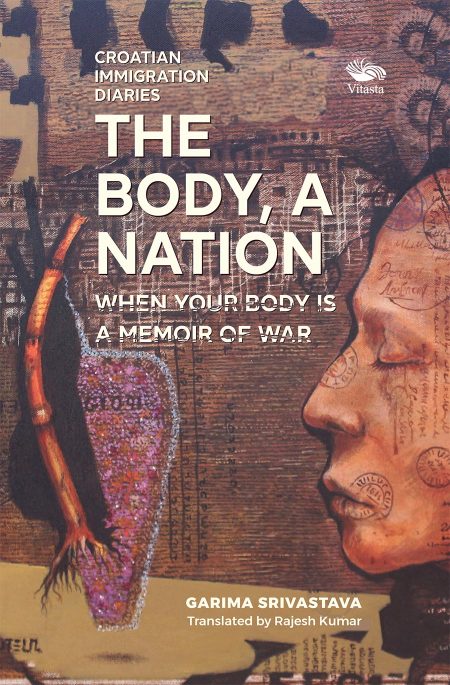
It is hard to define the identity and bodily autonomy of a woman, more so in the face of war. The knowledge of crime and abuse often plays only in the background of our lives, but for the countless women who have witnessed the full capabilities of mankind, the world remains a hostile place. For author Garima Srivastava, what was to be a two-year posting in a foreign land, slowly turned into a journey of discovery—of the self and the other. Chronicling her thoughts about family, the homeland, womanhood, Simone de Beauvoir, and the everlasting remnants of a war that ravaged Europe, she leaves us with thoughts and questions to ask of our own. Weaving in stories she has lived through and those that have been painstakingly entrusted to her, the journal takes us to a world both familiar and unknown. Translated from the 2017 Hindi publication of the journal Deh Hi Desh, the book guides us through Europe in a way that most shy away from, one that shows.
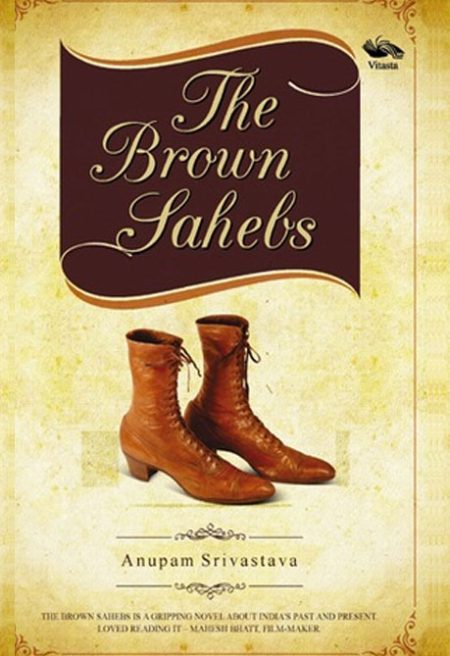
About the Book
The Raja of Teekra, a dusty and forgotten kingdom near Lucknow, gets lucky when the British Resident visits him but also brings with him a leading revolutionary. The Raja enters India’s struggle for freedom and is rewarded with a berth in the cabinet of free India. He is shocked to see the ministers and officers living and operating like their imperial masters but is suitably rewarded for his silence. As he begins to enjoy the good life of Lutyens’ Delhi, the British capital which India’s freedom fighters abhorred, he faces only one adversary in his plans—his journalist son Pratap. A novel that will blow you away with its depiction of love, passion, intrigue and betrayal
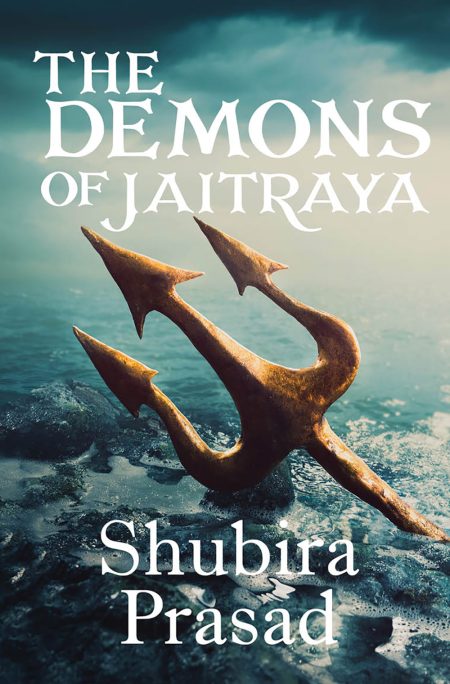
The epics say, in the great war of Ramayana, a number of Rakshasas escaped. They hid in the bowels of the Earth, in the water and in space and remained dormant for eons. In the 20th century of the Christian era, however, some of them reappeared in different forms to plague the Earth with wars and illnesses. At the end of his war with Ravana, Rama had asked Hanuman to raise and train a contingent of warriors who would take birth multiple times on Earth, to contain the demons. Aishani and Adheesh are two such warriors, blessed with divine weapons and powers to fight the world’s evils at present times. Read this exciting story to know who finally wins. The Good or the Evil? The Demons of Jaitraya is the first book of the trilogy of the war between demons and humans.
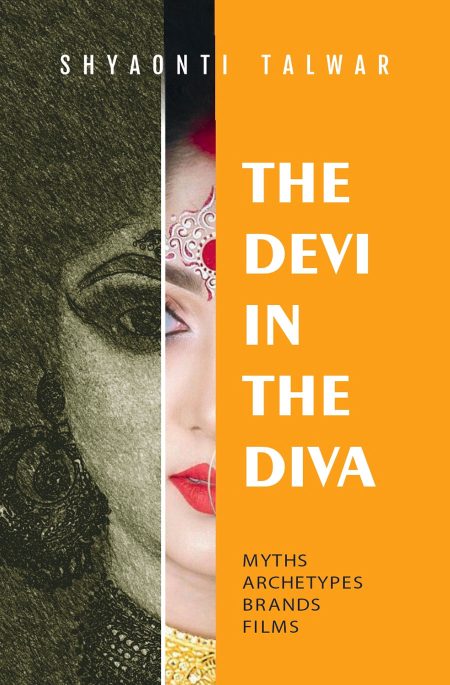
How have Parvati and Lakshmi’s myths dominated mainstream cinematic plots for over five decades? Why do Kali and the Matrkas figure so often in horror films? Who is the most enduring manifestation of Saraswati in Bollywood cinema? How is the female cop almost always the Durga archetype? How do Claire Underwood of the House of Cards and Olivia Pope of Scandal make such convincing Lakshmis? These are a few of the many questions this book raises and answers. This book is for every reader who loves films and all those who take an interest in mythology. It dwells on Indian goddess archetypes which reveal themselves through their many myths and suggests how these archetypes can be worked with for more empowering projections of women in the media. It traces the goddess in human form and her many manifestations and tales in contemporary cinema and television web series.
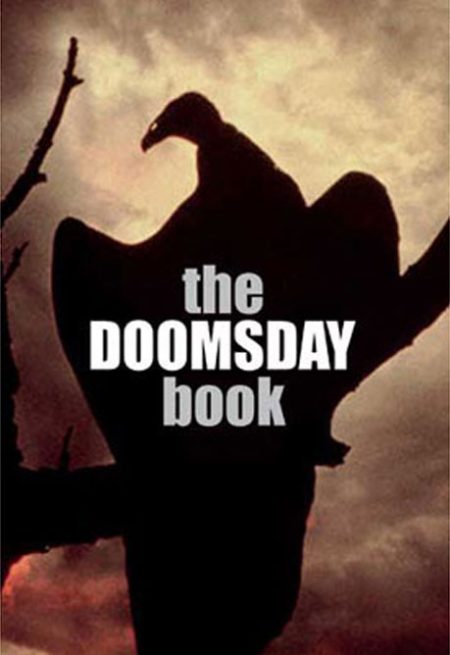
Prophets of doom have predicted that the world will end one day either from manmade disasters or from natural causes. For the believers, it is religious. Whether it is a tsunami or an asteroid, a terrorist attack or a nuclear war, the end of the world seems ever closer. But just what are the chances of civilisations being destroyed, and which method of meltdown is most likely? The Doomsday Book looks at all the burgeoning threats to civilisation, explaining the story and the science behind each one, and provides a clearheaded assessment of how serious they are and what can, and is likely to be done about them.
Covering ecological crises, such as water shortages and habitat destruction, the dangers of nanotechnology and superplagues, and the cataclysmic effects of a supervolcano or a new ice age, Joel Levy’s book is scarily engrossing.
Examining the fate of ancient civilisations and explaining the lessons they can teach us, the Doomsday book explores the likelihood of our survival when disaster hits. Various religions have their own conception of the Doomsday, and they all have a common thread. Trinath Mishra, an Indologist, has given introduction to Joel’s book and tries to explain how this has been viewed in religions, particularly Hinduism.
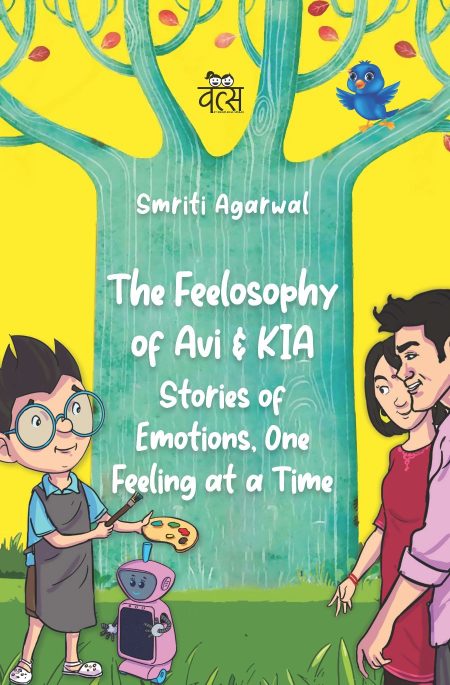
The Feelosophy of Avi & KIA: Stories of Emotions, One Feeling at a Time takes young readers on a heartwarming journey of discovery and empathy. In this delightful sequel to Avi and KIA, the roles are reversed—Avi, a curious eight-year-old, now becomes the teacher, guiding his ‘Know It All’ robot friend through the fascinating world of human emotions. Each story explores a different feeling—from joy and kindness to anger and fear—helping children understand and express their emotions with confidence and care. Blending imagination, gentle humour, and meaningful lessons, the book nurtures emotional intelligence and social values in an engaging, relatable way. Perfect for parents, teachers, and children alike, The Feelosophy of Avi & KIA is more than just a storybook—it’s an invitation to connect, feel, and grow together, one emotion at a time.
Frank but scathing in her remarks, Chatterji in this collection of essays voices those who have been muted but not silenced. She scrutinises the intertwined fabric of social and financial milieu that determines a woman’s place in society. Her observations on the systemic silence of women, the physical and mental abuse, the stereotypes that women are forced to live up to, are some of the many things that force you to stop and think. Ranging from issues that affect women and society to the representation of women in cinema, she goes through important societal issues one by one with a fine-tooth comb and analyses them through multiple lenses.
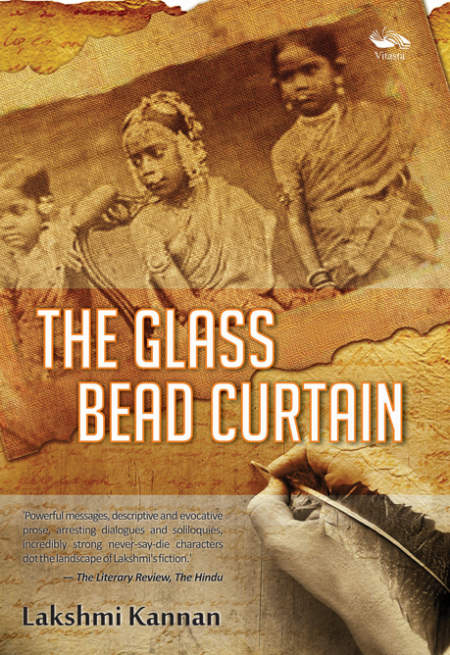
Kalyani and Athai, two feisty women, sail through the turn- of- the- century Madras Presidency under British rule, despite archaic customs such as child marriage and a prescriptive widowhood. British influence encounters an ambivalent attitude that was contrary and at times uproariously hilarious. Kalyani’s child marriage ends her formal education because of a prevalent superstition that married girls would be widowed if sent to school. Tutored at home by the intrepid Susan O’Leary of Irish origin, Kalyani soaks up her irrepressible humour. O’Leary is equally delighted by the strapping girl’s passion for sports and athletics, but is anxious about her pupil’s future beyond the luminous beauty of the glass bead curtain in her father’s home. Kalyani, grows taller than her husband Natarajan. It becomes a contentious issue for her retrograde female in-laws who mock her height and her English. Kalyani battles her way through unfazed and evolves as a successful badminton coach with the unstinting support of her husband, father-in- law and grand mother-in- law. The intellectually endowed Athai uses her widowhood to pursue her education. The family discovers an astonishing secret about her, when she dies. A contemporary writer Shailaja “writes” the novel capturing the changing ethos of the people with the irony, pathos and humour that animate the period.
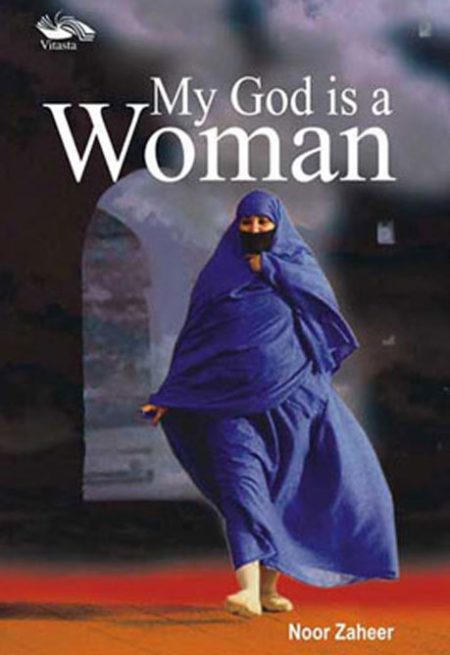
About the Book
An innocuous article in a magazine lands nine-year-old Safia Mehdi in the world of purdah. Her father gets her married to Abbas Jafri, son of the famous Jafri family of Lucknow. Abbas is a barrister and author of a controversial book. Safia’s father hopes that she would be able to bring back her deviated husband to ‘God’s true faith’. Ironically, Abbas who dreams of a liberated India where women enjoy equal rights as men, leads Safia to break free from the stereotype of a traditional Muslim woman.
Set against the tumultuous period of pre-Independence, the husband-wife duo embarks on a journey, elucidating the way to a progressive nation. However, just when everything seems alright, Abbas is issued a fatwa for confronting the Imam, preaching inequality between men and women. His Marxist Party too ostracizes him for criticizing the Shariat for the sorry state of the Muslim women in the country. Consequently, Abbas is killed by Muslim fanatics and Safia is left all alone to fend for herself and her daughter.
With time, Safia gains grit and common sense. Armed with her forth righteousness and sheer belief in her ‘power’ of being a woman, Safia walks on, championing the cause of women empowerment. But does she manage to bring about that much-awaited change or falls a victim to the repressive dogmas of the society? Can she help the Muslim women to step forward, wrench their tightly closed fingers open and set out to build a world to suit their destiny? Can women become the God that they were always meant to be? My God is a Woman tries to seek answers to some of these questions.
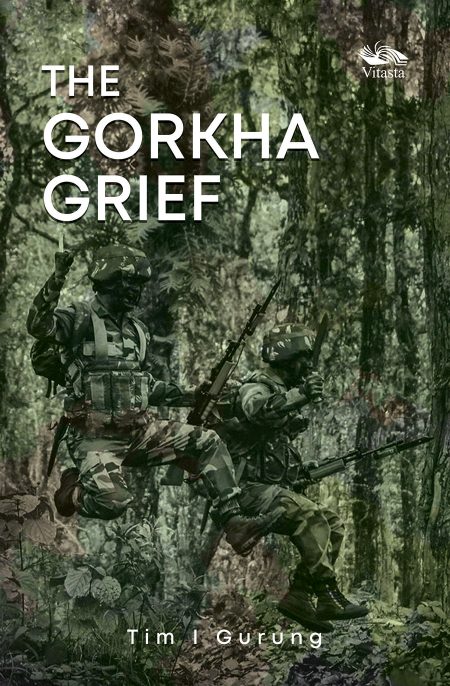
First to lead and the last to complain, the Gorkha soldiers have withstood the test of time despite the challenges thrown their way. Renowned for their bravery, they have a remarkable legacy as warriors who paved the way for the proud modern India we celebrate today. Instead of being rightfully showered with accolades and acknowledgment, the sincere Gorkhas have been treated as outsiders, their families and communities left out of the progress that the rest of the country has leaped towards over time. Stuck between power players plotting to determine its faith, Nepal has also come to a standstill, with progress slipping away faster than the country can keep up with. Who is to blame for this reality and is it too late to make amends? There are many questions left unanswered, but through the pages of this book—woven with the tears of long-suffering Nepalis worldwide—Tim I Gurung intends to show you how the vast depths of the Gorkha Grief came to be.
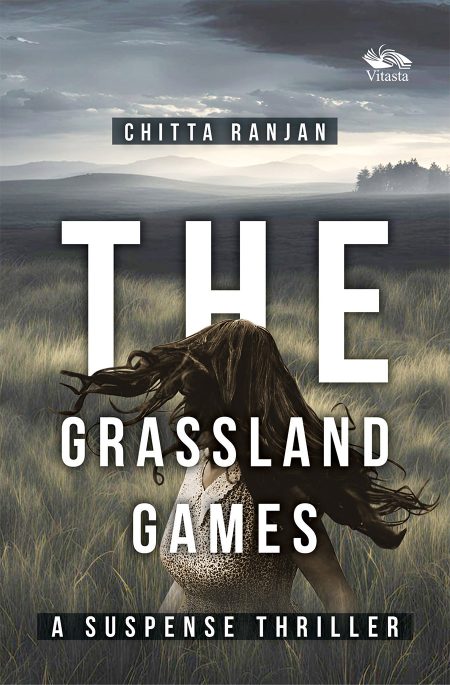
Amelia, an adventurous Australian tourist, narrowly escapes kidnappers in Kolkata. Though shaken, she resolves to carry on with her travels and soon reaches a remote national park in northeast India. Meanwhile, Raj, a park ranger, uncovers a disturbing secret in an anti-poaching camp, and despite coming from two different worlds, Amelia and Raj share a dangerous secret that entangles them in an elaborate web of lies and deceit within the park’s grasslands. Together, they face an unknown enemy in the misty floodplains of the Brahmaputra. While Amelia grapples with cultural differences and mistrust, Raj strives to safeguard the park. Fate finally brings them together to fight their common adversary. Will they be able to outwit the Smiling Assassin and survive the endless challenges they encounter? Join them on their thrilling journey in The Grassland Games.
![THE GREAT RESET [CTRL+ ALT+ HUMAN]](https://demo.crisscrosssolutions.in/Vitasta/wp-content/uploads/2025/10/9788199171251-450x666.jpg)
Humanity stands at the edge of a revolution. At the heart of The Great Reset is Nour, a visionary AI expert, who reveals fifteen extraordinary breakthroughs across iconic global sites—each one a portal to a radically transformed tomorrow. Yet, every step toward innovation raises a haunting question: will our political structures evolve or stumble over time? Nour’s journey moves toward a dramatic climax at a pivotal United Nations summit, where the blueprint for humanity’s future hangs in the balance. In the tension of those international debates lies the possibility of a unified world or the chaos of irreparable division. The Great Reset is a gripping exploration of power, progress, and survival—of how one era ends and another begins…. At stake is the promise of breathtaking progress colliding with the threat of global collapse as outdated political systems struggle to contain a world transformed by artificial intelligence.
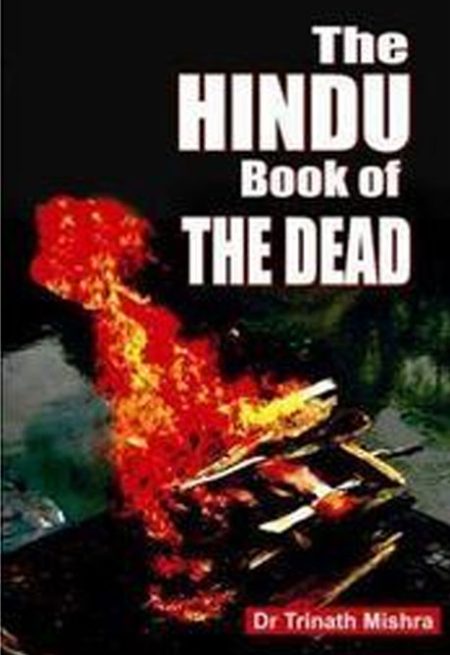
The Hindu Book of the Dead discusses all the concepts, beliefs and traditions found in these texts as well as the secular classical works about death and its meanings critically. The significance of various funeral rites and rituals and their relevance for the soul and for those who are alive have also been explained. What are those rituals and their meanings and how the soul tries to overcome the cycle of life and death? Where the journey ends? The body is dead but the soul still has to travel. The book tries to explain the What, Why, Where and How of what is described as death. It also presents a comparative picture of the beliefs and traditions held by other faiths and cultures.