+91 11 4109 1715
24/7 Support Center

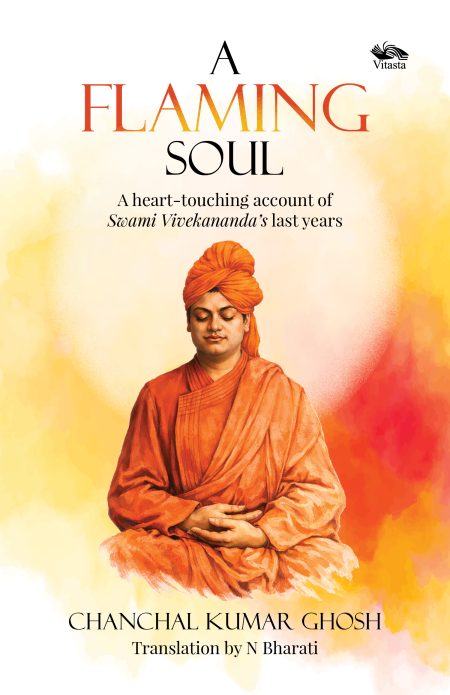
| Chanchal Kumar Ghosh is a Kolkata-born writer whose work explores the depths of human experience—love, suffering, and hope. Despite early hardship, he devoted his life to literature. A passionate traveller, he once followed the course of the Ganges from Gomukh to Gangasagar over eight years. Author of numerous novels, essays, and short stories, he is widely recognised for writings that blend history, spirituality, and narrative imagination. His notable works include Chirasakha He, Trishul, Ekaki Krishna, Jagannath Tomake Pranam, Chiriakhana, Amritapath Dinanter Alo, and Tui Kichu Paris Na among others. |

About the Book
This Handbook on Information Technology aims to bring together views of professors, industry experts, researchers and student learners from across all barriers to a common platform for the discussion and propagation of knowledge on the latest breakthroughs in the fields of Information Technology.
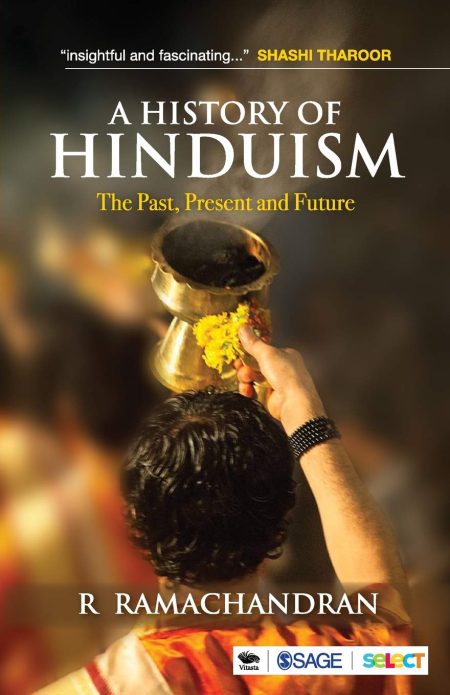
IS THE HISTORY OF HINDUISM, THE HISTORY OF BRAHMANAS FROM RIGVEDIC TIMES TO THE PRESENT? Or, does the story of Hinduism begin with the descriptions of the ancient roots as revealed by archaeological findings and the evidence from present day tribal, village and regional cultures? This book looks at both. The history of Brahmanas, tracing their lineage to the fifty-odd Rigvedic poets, is dealt with through the chronological ordering of the Sanskrit texts which were first handed down to us as oral narratives from Gurus to shishyas. The circumstances and purposes for which these texts were written is examined, along with events of a true historical nature. This is followed by a sequential treatment of Hinduism as a ‘Rigvedic religion’, the two Mimamsas, Buddhism, Jainism, Dharmasastras, the Epics and the Puranas. The growth of Hindu temples, the role of Adi Sankaracharya and the Bhakti movement is delved into, and the influences of Muslim and British rule of the subcontinent on Hinduism is analysed. The author explores one major reason for the survival of Hinduism—the support of prehistoric tribal and village cultures which were not modified or destroyed by the later-day Brahmanas. Much of tribal and village deities and practices were co-opted into concurrent Hinduism, so-much-so that today these cannot be separated from mainstream Hindu practices and traditions. They exist in all their colourful glory to this date and make Hinduism vibrant. It is these ancient folk religions that provide a stable foundation for the survival of Hinduism, argues author R Ramachandran, presenting in this book an all-encompassing landscape view of Hinduism as it has been for the last five thousand years. Finally, the present status of Hinduism is discussed along with its survival in the future.

A tycoon’s daughter is murdered in her sleep. Was she the intended victim, or was the actual target her twin sister? What do the mysterious activities of the murdered girl’s former employers have to do with her death? These and other vexing questions lead the investigating police officers into a labyrinth of plots and sub-plots which appear to converge into a sinister and earth shaking conspiracy located within the tycoon’s own industrial empire..
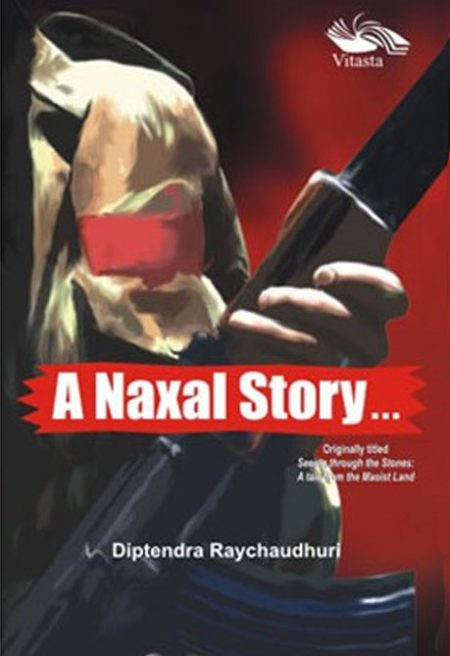
A Naxal renegade elopes with the wife of the protagonist Mahendra Chamar who is supposedly dead for him after a police encounter. Other Naxals kill both. Years later the unmindful killing helps Mahendra to see through the stones, the reality which is opaque. The book goes deep inside the mythical lands where magic is a part of life. Where a nun leaves the church to raise the son of Maoist. Where revenge of a landlord leads to unthinkable scale of killings of innocents., and where a former armed guerilla transcends all barriers to become a ‘god’.Meanwhile, within the Red army there is debate on links with the LTTE and the need for sophisticated arms. There is struggle for control over organisation in which guns play a vital role.
About the Book
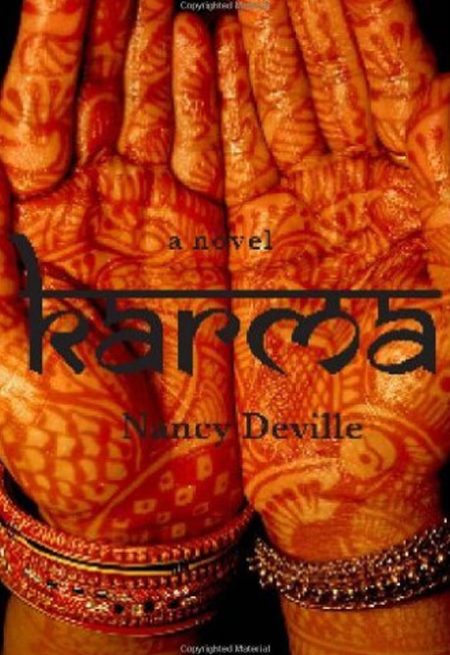
While having a seemingly harmless glass of tea at a bazaar in Istanbul, Meredith Fitzgerald, a beautiful soon to be married American doctor finds her privileged world turned upside down. As she’s waiting for the police to arrive to collect an abandoned gypsy girl left in her keeping, Meredith’s vision starts to blur and the bazaar music turns into a high-pitched whine. She recognizes too late that the tea was spiked with chloral hydrate, rendering her helpless.
In this gripping novel, a confusing scenario grows yet more frightening as Meredith realizes that she has been abducted and swept into the dark world of the human sex trade. The once confident, self-reliant doctor finds herself trafficked to Mumbai and trapped in a brothel compound where she’s expected to work as the doctor. But maybe, just maybe, she is not as helpless as she appears.
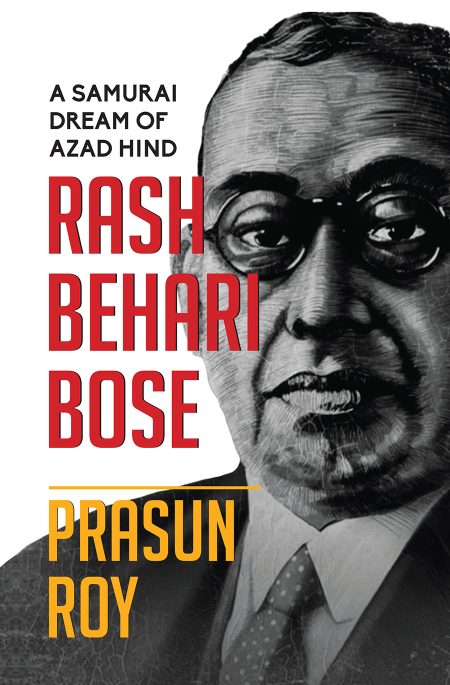
The story of Rash Behari Bose starts in the 1890s when a small boy began to dream the giant dream of an India, independent of colonial subjugation. His were the hands that made the bombs lobbed at the Viceroy of India, Lord Hardinge, in a crowded Chandni Chowk procession in 1912. The attack not only dented Britain’s pride, it forever snatched their hope of ruling a sleepy subcontinent peacefully. Rash Behari then went on to become the mascot of armed struggle to free India; he was a prominent leader of the iconic Jugantar and the Ghadar Party and inspired 1857-like mutinies in 26 cantonments in 1915. Self-exiled in Japan, he gave the call, Asia for Asians; founded the Indian Independence League and later built the Azad Hind Fauj, providing a lifeline to several million POW Indian soldiers in the 1940s. Then, selflessly, he handed over the INA to Subhas Chandra Bose. The book, A Samurai Dream of Azad Hind, is also the story of thousands of other men and women involved in the armed struggle to free India and the extensive support network they created, not only throughout India but globally – from California, Mongolia to Japan. Imagine this at a time before the internet and mobiles. No wonder the British gave up the Jewel in their Crown in a hurry as soon as their war ended.
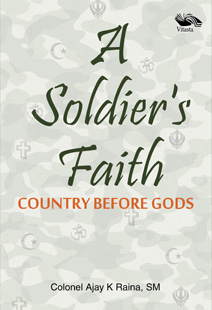
At a time when people wear their faith on their sleeves and are ready to attack each other in the name of religion, the armed forces offer an island of hope. A soldier does not die for his religion but for the pride of his regiment which is invariably associated with pride of the nation. A Soldier’s Faith is replete with folklores, legends, and some true stories of soldiers’ bravery and courage that have been shaping the faith system of Indian troops for decades. Whether a soldier is able to recite a hymn or a prayer properly or not does not make a difference, as long as he is able to align himself with his regimental war cry. The question is—if our army has been able to evolve its faith that unifies all religions, why can’t our countrymen, or for that matter, the citizens of a globalised world not do it…time, really, is running out.
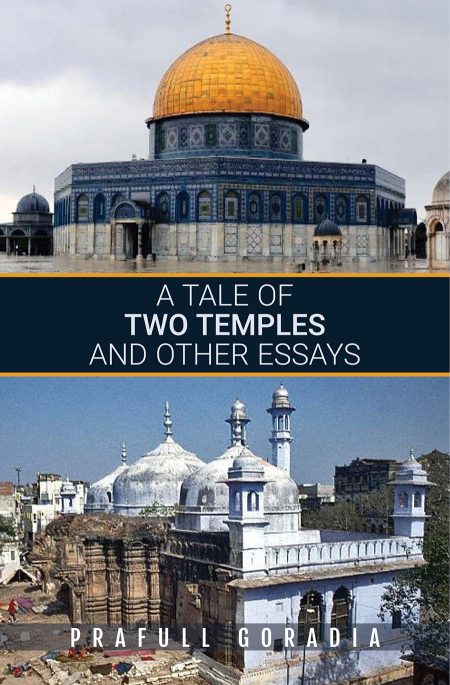
A Tale of Two Temples and Other Essays takes the readers on an interesting journey from Nehruvian socialism to Kamala Harris, the first woman vice president of the USA; from Covid and Karma to why Muslim migrants are no longer welcome in France. The author questions why educated families do not encourage their children to make a career in politics. He also analyses why madarsas can’t be secular. He refers to the UNO as a “Useless Non-existent Organization” whose catalogue of failures has been listed since 1948.The article ‘Travancore Stood for Tolerance’ introduces us to Koji Kawashima, the Japanese scholar who researched the Hindu state of Travancore between 1858 and 1936 highlighting its tolerance of other religions. Having lived in Kolkata(Calcutta) for thirty-eight years, the author calls Kolkata: a city with a soul, that values its cultural ethos and where elite club membership is for those who are socio-culturally acceptable, unlike Delhi which values position and wealth. The articles present a vast panorama of topics from the past to the present, both of India and the world.

This course aims at giving the students an elementary understanding of the basics of administration and its application to the management of ward and health unit.
This course is designed to help students to develop and understand the concept of child health, the modern trends in child care and the proper handling of health problems of children. This book will enable students to meet the needs of children, in health and in sickness.
Upon completion of this course, the students will be able to:

This book is designed to help students gain an understanding of community health in order to introduce them to the wider horizons of rendering nursing services in a community setup, both in urban and in rural areas.

This book is designed to introduce the students to the concept of teaching as an integral part of nursing, its relationship to the nursing process and also the importance of effective communication in nursing.
The exam primer includes all the units and content prescribed in the syllabus of the Indian Nursing Council to help in the self-testing and advanced preparation for university level exams in the subjects mainly Medical Surgical Nursing – II, Child Health Nursing, Mental Health Nursing, Nursing Research, Bio-statistics, Midwifery and Obstetrics Nursing, Community Health Nursing and Nursing Management.
This book is designed to help students develop an understanding of community emergencies and be able to render first aid services as and when the need arises.

Designed to help students develop the ability to meet basic health needs of patients: • Helps explain the concept of comprehensive nursing care • Develops skills in assessment, planning, implementation and evaluation of the care rendered • Helps learn skills in observation, recording and reporting • Makes students utilize opportunities for planning and implementation of health programmes for individuals, groups and communities