+91 11 4109 1715
24/7 Support Center

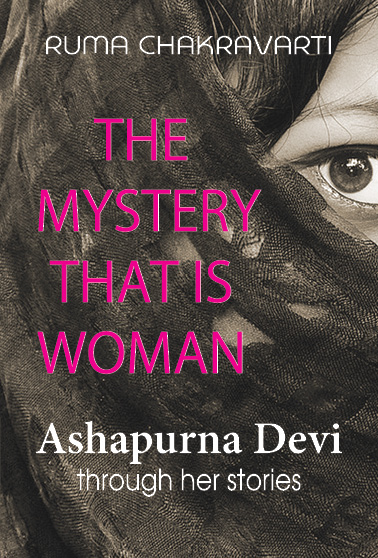
The stories have been selected to provide a look at human issues such as rural migration, feminism and the refugee experience.The characters, whether they are mothers and daughters or husbands and sons, always seem to be people we have seen and possibly even know in our daily lives. They are never distant or two dimensional.The stories are full of wisdom. The writer had a great understanding of the layered complexity of the world outside the confines of the four walls of a home.These stories deal largely with women and the situations they find themselves in, in different settings both urban and rural. While deeply sympathetic towards the dreams and heartache of a woman’s life, Ashapurna never does this at a cost to her male characters. Her feminism is neither strident nor vitriolic but her characters are treated with respect and compassion.
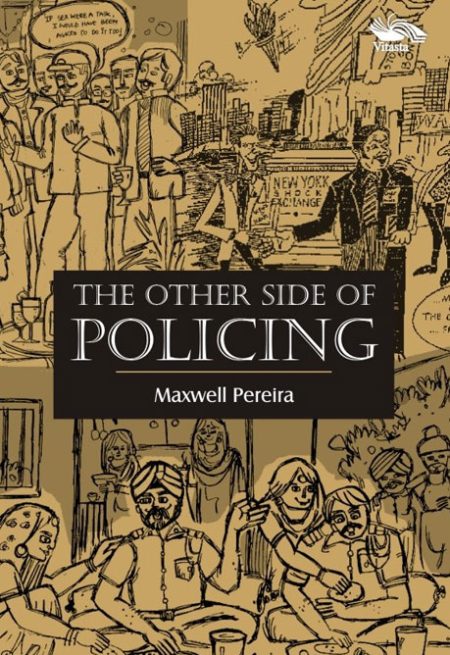
Forgotten and buried deep behind the uniform is a common man. As The Other Side of Policing attempts to break the stereotype of policing as an obsession with guns, crime and criminals, it insists that even the cops have a penchant for humour. At times, for people like Maxwell, it is the humour that makes them survive in a system that kills initiatives.
The book is based on the author’s own experiences as a policeman for nearly 35 years where he provides an insider’s account of someone who has experienced everything at close quarters and can afford to be critical of the system as a whole. He recounts gripping stories about how policeman learn to survive under the axe of the media, politicians, common people and their own seniors.
In his anecdotal account, the author talks of various incidents and projects, the men behind uniform as human beings who could succumb to the trials and tribulations of power. He talks about the inability of cops to do anything when high profile politicians enact stage dramas to stay in the limelight, how the cops take liberties to kill at will, how a South Indian to whom all Sikhs looked the same learnt to differentiate between them and how an April Fool’s prank resulted in a senior officer waiting at the airport to receive a VIP when none was scheduled to arrive.
His narration laced with humour provides a fresh look at unexplored alleys and brings home the point that at the end of the day we all need our daily dose of banter and policing provides ample opportunities for that. The author hopes that this book will connect easily with the man on the street and help bridge the gap between police and people.
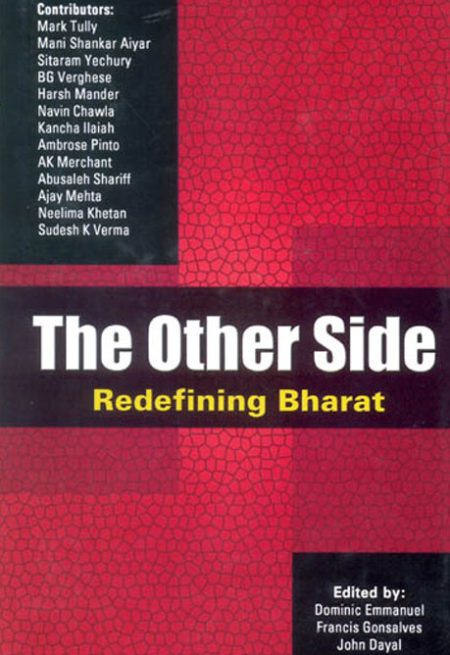
The Other India: Reinventing Bharat is a volume in honour of His Grace Archbishop Vincent Michael Concessao on the completion of 50 golden years of his service to God and to humanity as a priest. His fifty years of priesthood also coincide with his 75th birthday. The book highlights topics that are not only dear to Archbishop Vincent’s heart and espoused by the Catholic Church, they are issues which the Archbishop has rallied for in the public sphere, and for which he has provided outstanding leadership.
The essays, written by eminent authors, focus on stark realities of the India which is not as shining as India Inc. and the rich and powerful would make believe. The essays draw roadmaps that India could follow for a brighter tomorrow.

1969, New Delhi… Childhood best friends and next-door neighbours, Veer and Rashika study and play together every day. They don’t spend a waking moment apart but are separated when their politician fathers start competing in rival camps. Years later, they land in the same college and rediscover their lost bond. With each run in, and banter, they find it hard to stay away from each other. But when the national Emergency is imposed, what comes first, love or family?
Politics in india is full of paradoxes, and caste, community, education, all civil society matters are subject to intense politics, which is very often so quixotic that it is not funny. India is the only country in the world that has practiced toleration for thousands of years and, at the same time, runs a successful democracy today. This makes toleration a sine qua non of democracy; a proposition which applies to all real practitioners of this free system of government. Pakistan, an Islamic country, is home today to 203 million Muslims, India, a ‘secular’ state is home to 201 million Muslims! There are no wakfs in Turkey; Libya, Egypt, Sudan, Lebanon, Syria, Jordan, Iraq and Tunisian. In India, wakfs thrive though on independence, zamindaris and jagirdaris were abolished as were the princely States. India’s political life, thus, is full of contradictions, though it is 75 years old. When will clarity come, is a question the author asks.
Michele has been looking for answers for a long time. She remained behind the doors fearing the embarrassment that truth would accompany. Therapy presents her life in a new way, to look beyond the obvious. It teaches Michele to accept life the way it comes, to make her choices towards the life she desired for, and to live the fullest. Michele’s quest continues as she steps into her desired choices.
Do her parents accept her for the person she is… does she regret ‘coming out’ to the world… what happens behind the doors? This is a true account of a struggling woman, who seeks her identity despite all odds. Her life becomes a source of inspiration for the author. An unswerving heart accepts all challenges before finding the unsurpassed.

Corporate Wisdom in Thirukkural is a book on management applicable to corporate leaders and present day political leaders too. Thiruvallur’s thoughts on management are appealing to the head and heart. What Harvard professors teach today on management has been elaborately discussed in Thirukkuralwhich is a treasurehouse of vast wisdom. Thiruvalluvar lived in Tamil Nadu 2000 years ago. He speaks about the duties and responsibilities of the King and his palace officials. He speaks about various leadership qualities and human factors of public administration required for a welfare state such as effective delegation, organisational relations, domestic relations, social relations, public relations, communication skills, human resource management, project management, time management, financial management, decision-making skills and some case studies applicable in day to day administration and all walks of life.
The book seeks to discuss and explore the journey of Islam as an ideology from the time of its origin to the present, particularly in respect of three schools namely, Wahhabism, Deoband, and Tablighi, which have come to dominate the discourses on the radical stream of contemporary Islam. It explains how the idea of puritan Islam delves into the terrain of political Islam and forms an ideology that is exclusivist in nature and poses a serious threat to democratic pluralism and secularism. It elucidates how the concept of puritan Islam becomes a powerful source for the Islamic organisations to preach, propagate and network the gospel of Islamic terrorism and how and why the moderate voices from the Islamic communities have failed to respond to these challenges.
History, geography, religion and culture have bound Nepal and India into an extraordinary relationship. While many Nepalis actively participated in India’s Independence movement, New Delhi too has played an important role in the political evolution of its landlocked northern neighbour. These elements of affinity, exacerbated by asymmetries in area and population are, however, responsible for the rancour underlying the uneven relationship. Many Indians, like most Nepalis, are also exasperated by the resentment this proximity has produced. Preconceived notions and outright prejudices have tightened this embrace of estrangement.
New Delhi’s ‘big brother act’ has been stifling for many Nepalis. This was more pronounced when Nepal got painted red with the incessant battering of the Maoist rebels and was split between monarchy and republicanism. This book takes an unconventional approach to India-Nepal relations. Devoid of the abstractions of the academic tomes that fill up bookshelves, this volume also steers clear of the detachment of a historical account. The book draws from a plethora of documents in the public record though it also relies on the author’s personal experience.
The provocative title encapsulates the crisp message: How independent India has virtually adopted British colonial policies towards Nepal. By elucidating the misgivings and follies that have long constrained the relationship, the book sets out to explore the inherent possibilities.
The book, set against the backdrop of the onset of a civil war, is the story of a young boy, Keev, who discovers the vagaries and purpose of life in the most unexpected of situations. The protagonists of the book must overcome the tussle between their dangerous circumstances and their instinctive judgment to come out unscathed during the trials that they are faced with. As the forces on either side move in for what they determine to be the final debilitating offensive to bring the war to a close, they are both caught up in a bizarre swap of positions. The commander of the Alliance and the rebels, Cantilly and Bilal respectively, recognize this but are also resigned to it. The novel communicates the repercussions of neo-colonialist conflicts on the quotidian intellect of an individual and society, and its futility.
She was fashionable and rich. She wore stilettos and danced at the latest clubs and had dreams of going to London to become a famous paediatrician. But her destiny was elsewhere — in the dusty little village of Kapashera. This is a compelling and honest memoir of a young doctor who had to give up her dreams to face the challenges of a rural practice. She goes on to change the lives of her patients by treating not only their physical diseases but solving their psychological, marital, and adolescent issues. In four decades of her practice, the author watched as India woke up to globalisation, and the new farmland wealth that exposed the highs and lows of the human behaviour. There are horrific stories of the villagers’ superstitious beliefs and blind faith in the village quacks and voodoo doctors, with disastrous consequences. Yet there is joy, celebration, and hope amidst despair. Each story is part of a thirty-eight-year unhurried journey that holds you spellbound as you turn the pages.
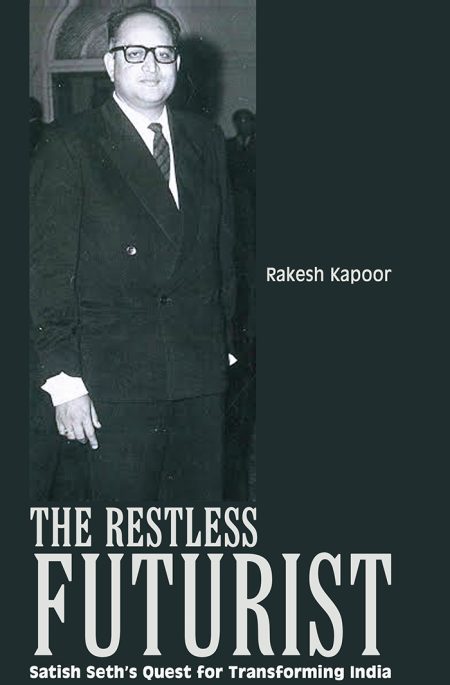
No matter what views one may hold, the 21st century shall belong only to a people of ‘vision’ and those who care for the future, wrote Satish Seth—passionate, multi-faceted and restless scholar, whose love for India and the human condition drove him to become a great champion of the future. Very few civil servants would be able to match the visionary range and depth of his remarkable contributions to the making of twenty-first century India. Seth’s consistent and lifelong efforts to promote futures literacy and the culture of anticipatory management spanned every aspect of public life in India—governance, policy-making, the economy and educational institutions. Our policy makers today need to earnestly re-look at the ideas and tools he gave us for understanding and anticipating the future. We hope this book will contribute to the rediscovery of Seth’s ideas and the revitalization of his restless quest to create a beautiful future for India and the world.

Have you ever wondered why the bonding among boarders is much stronger than the bonding among classmates? Have you ever thought about first crushes, midnight feasts, robbing guavas and eating berries? The boy had his right arm across his belly, as he bowed and asked ‘May I have the pleasure of this dance’. The girl held the corners of her dress and curtsied daintily, ‘Yes, sure’. That’s the way you are supposed to ask a lady for a dance; this too was taught at Barnes, apart from boxing, swimming and many other games. The school on the hill, with its massive stone buildings, is history retold by its legendary teachers and mischievous students. The management of Christ Church school, Mumbai, thought that the city was too crowded and unhealthy in 1917 and suggested a boarding school in Devlali. Wonder what would they say about today’s Mumbai? Life in a boarding school comes alive through the eyes of an 11-year-old and you grow up with him through his teens. A book that you will not put down and recommend to every boarding school student.
Focusing on the late nineteenth and early twentieth centuries, the book argues that Pakistan, as a concept, implicitly emerged from the cultural and political insecurities of the ashrāf, or the upper strata of the Indian Muslim society, and certain political missteps of the Congress. Once the administrative elite of the Mughal Empire, the ashrāf inhabited a cultural paradigm manifested by it—it is termed Islamicate. There was a relative decline in the worldly fortunes of the ashrāf under British rule. On the other hand, the Islamicate cultural paradigm, once hegemonic in the ashrāf-dominated qasbās, or small towns, was increasingly imperilled with Hindus aggressively asserting their own cultural symbols. The colonial state exacerbated this volatile situation by introducing local self-government. Hindus, due to their advantage in numbers, used municipal politics to push their cultural agendas in the urban spaces. Consequently, an already insecure ashrāf grew wary of franchise-based political representation and opposed the Congress when it demanded the same at the provincial and central levels of British India. To bring them around, the Congress made some initial concessions which legitimised a distinct Muslim interest in Indian politics, while it later refused to substantively engage with this interest. Resultantly, it charted its own course through the ‘Simla Deputation’, the All-India Muslim League and, finally, the idea of Pakistan.
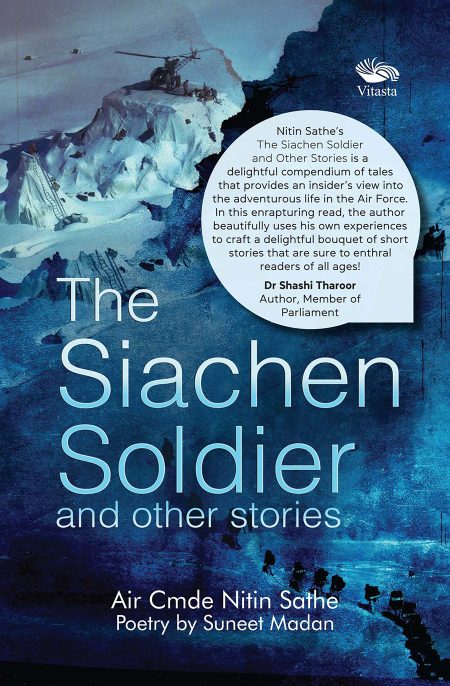
In today’s troubles lie the seeds of tomorrow’s stories. Air Commodore Nitin Sathe, drawing from his extensive service in the Indian Air Force, reflects on how the trials, triumphs, and moments of joy that once consumed him have now become the raw material for his narratives. His stories vividly portray life in the armed forces – from the thrill of combat to the rigours of training, the turmoil of warfare, the solitude of distant outposts, and the joy of leisure. Meanwhile, Dr Suneet Madan skillfully weaves her poetic magic around the central theme of each narrative, creating a unique and thoughtful read. These narratives, told with lightness and brevity, provide an intimate glimpse into the fauji life and will linger in your thoughts long after you’ve turned the last page. They serve as motivation or inspiration in those moments when you think all isn’t well with life.
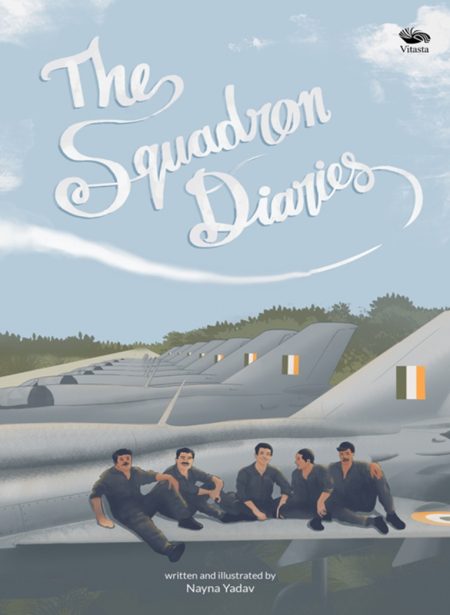
The vocation of a fighter pilot is a very specialized one. At present there are probably not more than 20,000 active fighter pilots in the world. Today India has maybe less than a thousand active fighter pilots in service. The demanding nature of this profession attracts a select few and accepts fewer still. Very few people have the privilege of being intimately familiar with the life of a IAF fighter pilot. This book creates a picture of the everyday lives of these heroes. To show more than the bravado and the wars. This is a book about their stories of training, camaraderie, about fears and motivations, and most importantly, it’s about them and their love of flying.