+91 11 4109 1715
24/7 Support Center

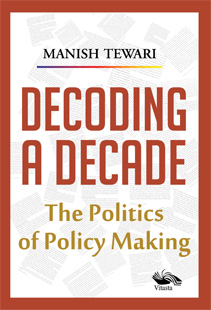
lawyer Politician Manish Tewari in his book Decoding a Decade articulates his personal point of view on a range of controversies that cropped up during the UPA and later the NDA years from 2006-16. Tewari’s questions are incendiary and the analysis incisive and provocative. He shines a light on the opaque underbelly of Indian politics. Being a victim of terror—he repeatedly questions as to why India is a wimp state when it comes to dealing with terrorism? Would the recent operations be able to deal with a problem called Pakistan, he asks? Was President Pratibha Patil who commuted the death sentence of 19 prisoners and rejected the mercy petitions of only three diffident about capital punishment for religious reasons? Was President Kalam right in saying that there is a socio-economic bias in the award of death penalty? Tewari points out to the lack of consistency in the highest echelons of the Indian state when it comes to deciding and disposing of mercy petitions. What would make the ruling dispensation see red is the scathing critique of the NDA-BJP governments track record over the past more than two years. He explains as to how Corporate India defeated the Congress party in 2014. He drills deep into the business of the media and questions the recent Indo-US agreement on nuclear accident compensation that would make Indian money pay for the negligence of Foreign Suppliers. Tewari’s articles reflect upon various trends in domestic and international politics and need to be located in context of the period they were written in and pertain to. His pieces go beyond party, partisan and geographical boundaries. Here is the Tewari that you would want to know beyond the TV screens
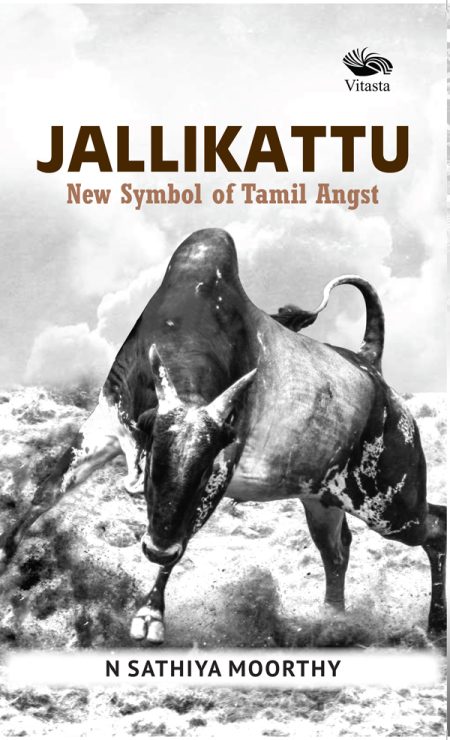
N Sathiya Moorthy is a veteran journalist, political and foreign policy analyst based in Chennai, with a particular interest in contemporary socio-political history of Tamil Nadu, the rest of India and also neighbouring nations like Sri Lanka and Maldives. Yet, India and Tamil Nadu remains the mainstay of his study and his writing, thinking and talks. Throughout the late Eighties and the Nineties, Sathiya Moorthy had predicted the course of national politics and that of Tamil Nadu, through a deep understanding of the nation’s history and a deeper knowledge of how societies and politics needed to be acknowledged together – later extendable to the study of India’s southern neighbours, as well. . Sathiya Moorthy is at present Director, Chennai Chapter of the Observer Research Foundation, the multi-disciplinary Indian public-policy think-tank, headquartered in New Delhi.
About the Book
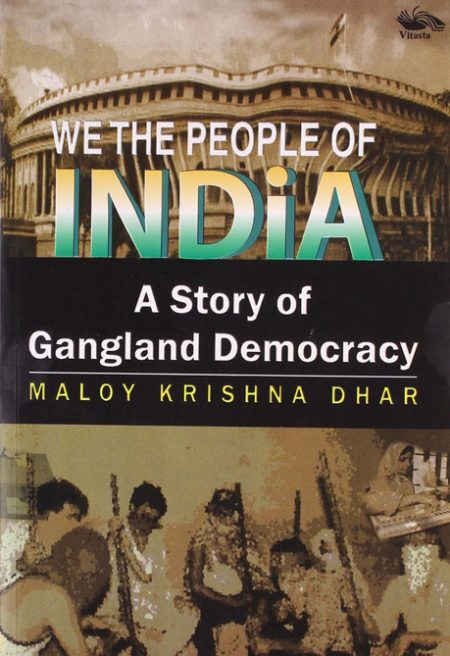
A Gandhi is killed, a Bose is forgotten and a Bhagat Singh no more pricks the conscience of the people who lead the country. This is the story of a nation that boasts of being the largest democracy. The novel undertakes tortuous journeys through the political minefield and discovers that moneybags, muscle power and criminal fringes have hijacked Indian democracy.
Satya Sarthi is a psephologist and wants to bring about a change in the system. He tries to catapult his simple but sharp businessman friend Dharmi into the top corridors of politics. His aim is to dethrone the ruling family which is corrupt and manipulative.
Dharmi’s hesitant metamorphosis from a businessman into a naïve politician and finally into a pucca politician is full of pathos. Does he succeed in dethroning the family? Does he end up changing the system? Maloy Krishna Dhar captures the intrigues that are played in power politics in the name of We the people…
We the People of India – The Story of Gangland Democracy is a reminder to Generations Next that they have to fulfill unfulfilled dreams of the savants of the nation.