+91 11 4109 1715
24/7 Support Center

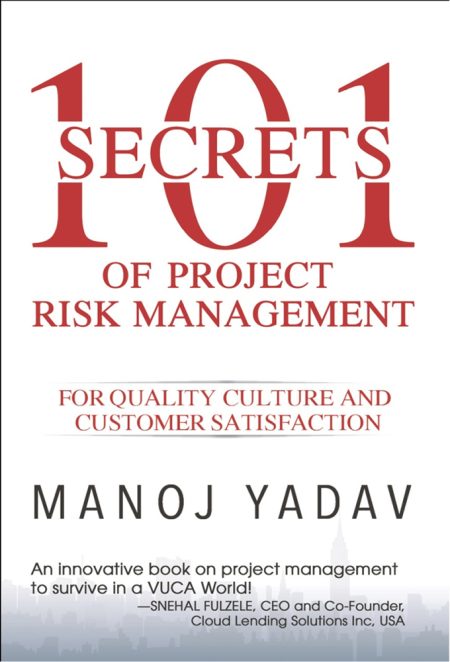
101 SECRETS OF PROJECT RISK MANAGEMENT is a comprehensive book that presents a practical approach to project management which can be implemented from day one. A 3-in-1 book for effective decision making in aspects of project, operational risk, and quality management. It identifies 101 classes of risk or challenges that form 98% causes leading to unaccomplished project objectives with 500+ proven strategies to mitigate them.
The book tracks the life of the top eight women entrepreneurs; Kiran Mazumdar Shaw, Kalpana Morparia, Naina Lal Kidwai, Neelam Dhawan, Ritu Kumar, Swati A Piramal, Vinita Bali and Vandana Luthra; their struggle and their success stories who surpassed the Indian entrepreneurial landscape.

On 26 December 2004, a monstrous wave rose from the depths of the Indian Ocean and struck without warning. Among the worst hit was the Air Force base on Car Nicobar Island—residential flats of the IAF were flattened in moments, and at least 116 of its personnel and family members were claimed by the sea. Five days later, Air Commodore Nitin Sathe (now retired) was among the first IAF officers to land on the ruined island, tasked with an almost impossible mission: to rebuild the base in just 100 days. Their first task was to restore the airfield and the jetty so that help and supplies from the mainland could land without further delay. This gripping narrative follows the journey of those who endured the destruction and those who came to restore hope. Through personal stories and vivid accounts, the book captures the scale of loss, the courage of survivors, and the discipline and humanity of the men in uniform who helped pick up the pieces. While it focuses on the 2004 tsunami, the book resonates powerfully in today’s world—one increasingly ravaged by climate change-induced calamities. From cyclones to floods, the echoes of 2004 remind us that nature’s fury remains ever-present.

The book starts with the fascinating journey of 74-year old Deborah Thiagarajan, who created DakshinaChitra and ends with 29-year old Likitha Bhanu of Terra Greens Organic. The others include Poonam Natarajan of Vidya Sagar, Vandana Gopikumar of The Banyan, Ranjini Manian of Global Adjustments, Nalini Shekar of Hasiru Dala and Padmashri Shanthi Ranganathan, whose name is synonymous with Asia’s first de-addiction centre, the TTK Hospital. Also featured are Sheela Kochouseph Chittilapally, who runs V-Star–a household name in Kerala, Radhika Menon of Tulika Publishers, Saloni Malhotra of DesiCrew, Svati Bhogle of Sustaintech India, Sreeja Arangottukara of Paatasala, transgender activist Kalki Subramaniam of Trans/Hearts and Sabriye Tenberken of kanthari. The remarkable stories of these entrepreneurs point to one thing: With dedication and hard work, anyone can achieve even the unachievable and that gender has no role to play in it. A must-read for all budding entrepreneurs.
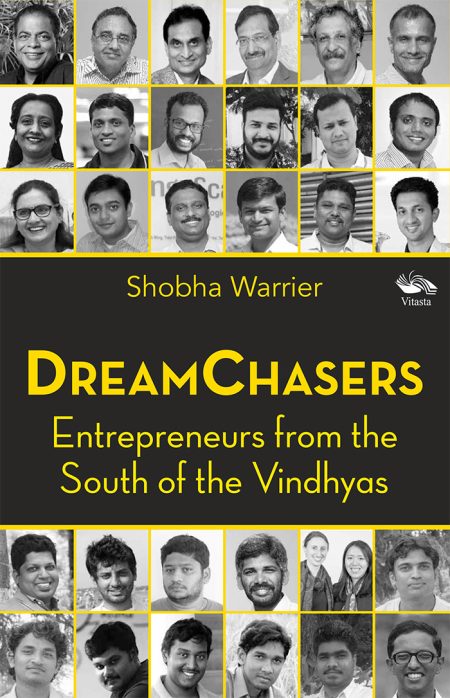
“I had not expected such thoughtful assemblage of the stories, which can be so enriching an experience for anyone who wants to be an entrepreneur tomorrow. It stands out amongst the plethora of books on startups that appear today. It gives entrepreneurship a context and a new meaning”, writes Padmashri Prof Ashok Jhunjhunwala, praising the book Dreamchasers: Entrepreneurs from the South of the Vindhyas.
This is a book on startups narrated through the stories of entrepreneurs from the 1970s, ’80s till now in three sections, The Trendsetters, The Next Wave and The New Generation. Some of the success stories featured in the book are that of Dilip Kapur of Hidesign, CK Ranganathan of CavinKare, Dr P Srinivasan of Jeevan Blood Bank, Patricia Thomas of Sandeepha Restaurant, Arun Jain of Polaris, Kalpathi S Suresh of SSI and M Mahadevan of Hot Breads. Their stories are so inspirational that they can be treated as study material for upcoming young entrepreneurs. Each story in the book epitomises the power and potential of the human spirit and the impact their efforts has on society.
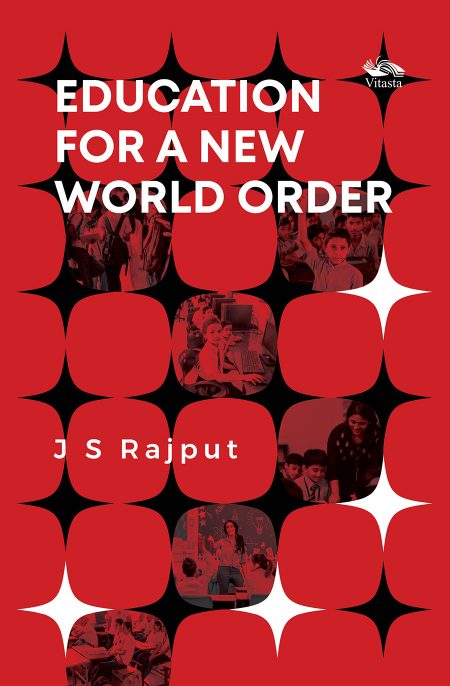
Education for a New World Order examines the transformative potential of India’s New Education Policy (NEP-2020), now gaining momentum almost four years later. Drawing from India’s ancient Gurukul system, Rajput critiques the current education model, advocating a serious need for transformation and a shift from rote learning to a creative, problem-solving approach. He envisions an education system that seamlessly blends digital innovation and traditional wisdom while focusing on sustainable development. The book presents a comprehensive roadmap for reform that effectively addresses the challenges posed by the Covid-19 pandemic and envisions a future aligned with Vision 2047. With insights from Swami Vivekananda, Mahatma Gandhi and Rabindranath Tagore, this book is a call for action for educators and policy makers, highlighting the NEP 2020’s roots in post-Independence experiential learning and its futuristic assessment of the world emerging in the twenty-first century.

With a fast developing world of electronics, gadgets and net, criminals have matched the means to use and exploit technology to their destructive cause. It becomes all the more important and imperative to use modern technology to protect and secure industrial houses and business establishments. This book attempts to highlight the advantage of having electronic surveillance in the field of security. The book unfolds various aspects of electronic surveillance that normally go unnoticed.
Today, terrorism extends beyond physical destruction of life and property. To counter their threat, industry has to step up electronic surveillance. It has become imperative that security threat assessment, identification, classification and response are made perfect and that minimum time is lost in this process. This book helps students of security issues to learn about the possible threats and gives them an idea of the available technologies today that can help combat terrorist threats. “

The hotel sector in India is one of the fastest growing industries with annual growth rate of 8.8 per cent. It is worth US $ 17 billion, that is equivalent to approximately 91,800 crore at the September 2012 exchange rate. To safeguard and to keep the hotel industry secured from any external or internal threat, special attention is needed. Writers whose articles appear in this book Hotel Security & Executive Protection have given accounts and analysed the subjects that may help in providing protection to executives staying in hotels. The guests, at times, include visiting Heads of States, Presidents, Prime Ministers and Monarchs besides senior executives and corporate honchos from business and industry.
The book also deals with protecting hotels from accidents and terrorist attacks. Fire is a major cause for concern for the hotel industry. In recent times all over the world, several serious fire accidents have occurred in hotels, resulting in large-scale loss of life and property. As a result of this, the hotel industry is now alert to the need of extra protection.

Industrial Security Management emphasizes the general security techniques and the ethical responsibilities of those involved. The work covers general security management, security personnel management, operational management, public relations and the perils of mismanagement.
Individual chapters address topics like the role of security personnel in organizational structures, hiring and training of security personnel, motivating them to produce goal-oriented behaviour, building an internal security culture and relationships with law enforcement and the community. The book also talks about the limitations and hurdles in the prevention of crime and how these can be minimized. Written by experts in their field, the book covers almost all aspects of industrial security, including many of those new techniques and developments brought in by computers.
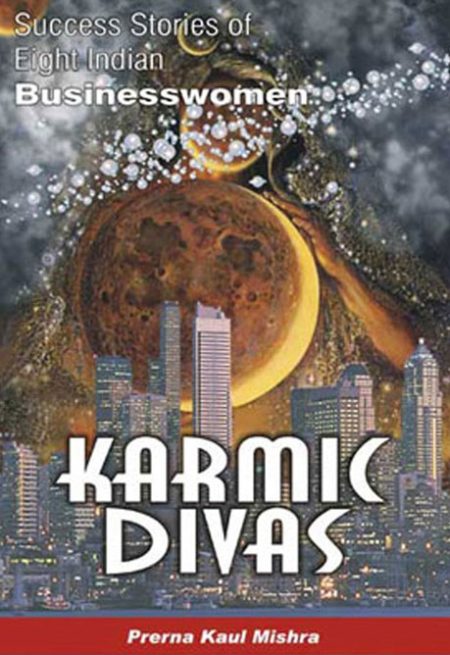
The book tracks the life of the top eight women – their struggle and their success in breaking the glass ceiling. It has a chapter each on business women who have made success stories surpassing the Indian entrepreneurial landscape to reach out to global audiences. It features India’s richest women Kiran Mazumdar Shaw, Kalpana Morparia, Naina Lal Kidwai, Neelam Dhawan, Ritu Kumar, Swati A Piramal, Vinita Bali and Vandana Luthra.

Unlock the secrets of wealth and success with this powerful compilation of timeless wisdom from four of the world’s most influential thinkers. Napoleon Hill, Wallace D Wattles, PT Barnum and Franklyn Hobbs’ proven strategies for prosperity and personal growth. From developing a wealth-oriented mindset to overcoming obstacles, this book distils centuries of knowledge into one accessible volume. Whether you’re an aspiring entrepreneur, a career professional, or simply seeking to improve your financial well-being or to discover how to harness the power of positive thinking, apply practical money management principles, and balance ambition with ethics, you’ll find invaluable guidance within these pages. This carefully curated collection offers essential tools with which you can start your journey towards financial freedom and personal fulfilment. Through these carefully selected chapters and speeches, readers will gain insights into the philosophies that have shaped the financial landscape for generations. Learn how to cultivate persistence, leverage the power of your thoughts and implement time-tested strategies for wealth creation. This book not only teaches you how to make money, but also how to think about money in a way that attracts success and abundance into all areas of your life.
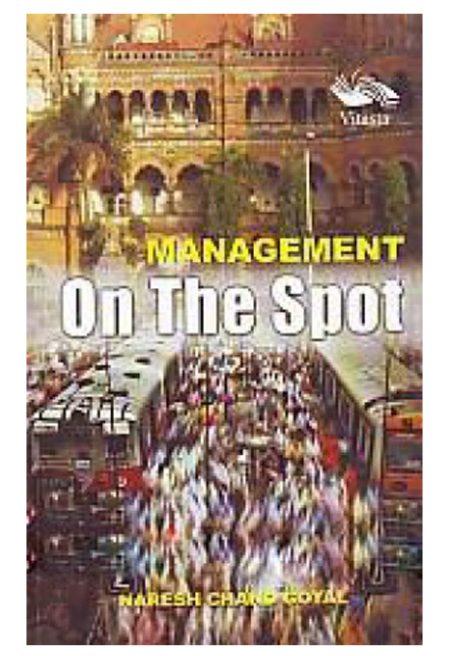
The Mumbai suburban system of Central Railway is, perhaps, one of the busiest networks in the world. A warren of zigzag lines and a host of unevenly distributed suburban stations, give life to the vibrant, throbbing metropolis, serving more than two million people per day. It is the sheer discipline of Mumbaikars and their love for the city that no untoward incident takes place everyday.
This book is an attempt to peep into the soul of the lifeline of the city, the Mumbai local trains, by way of a compendium of a series of incidents depicting, how a personal commitment to make this network more efficient and consumer-friendly succeeded. A must-read for every government official, especially all railwaymen at all levels.
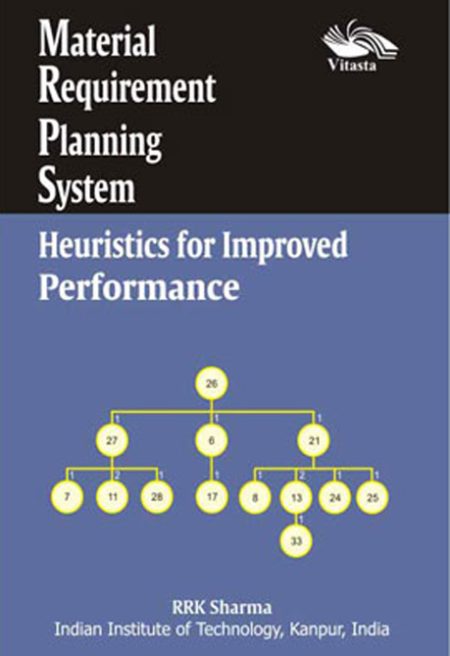
A user of MRP System is always anxious to balance total aggregate (or units) lateness with total cost (sum of the inventory carrying cost and the set-up cost). This book seeks to give better solutions to managers managing MRP systems in manufacturing organizations. It introduces the concept of multi-pass heuristics in MRP context and shows that in variety of conditions of the shop floor (such as high and low variations in machine utilisation) these (multi-pass given in this book) can be applied to give better performance on the criterion of total aggregate (or units) lateness with insignificant rise in total costs.
The author explains a heuristic that modifies the holding cost (of items/assemblies that have a higher difference of actual and the theoretical holding costs) and empirically shows that this is better than the heuristic that modified the lead time (of items/assemblies that have higher difference of actual and the theoretical holding costs). The book also talks about a series of heuristics that seek to attain co-ordinated arrival of assemblies at assembly centers with encouraging results.
“You won’t need to look elsewhere for tips on saving, spending, growing your cash and forever building a life you love. Never again will you have to count your pennies or cut corners when it comes to money. Money Management Doctrine brings to you ancient wisdom about the art of making money and examines the mystery of building and sustaining wealth based on the timeless principles of money management with magic money mantras culled from Sufism, Japanese, Chinese, and Vedantic thought. By the time you finish this book, you will stop stressing about money. And begin living…”

Internet has metamorphosed from an arcane tool used primarily by a handful to the buzzword that has attracted a large number of consumers from all segments of the society. Technology continued to break new grounds and advanced in leaps and bounds. The urge of harnessing the consuming potential of the online users became evident and marketing for long could not resist from promoting products and services online and this paved way for new media.
New media has evolved from simple online promotion campaigns to a more sophisticated and technologically advanced system. It can create need-specific communities, consumers’ interactivity with the brand, the desired brand image, an excellent tool for feedback and most importantly, become a charming way of communicating companies’ promotional messages. However, people in various industries are reluctant to try new media initiatives and this is what New Media: Techniques and Trends hopes to address.
The book describes 25 different forms of new media initiatives which include blogs, wikis, social networking, RSS feeds, online radio, I-TV and many more. It also includes the responses these initiatives have got and explains how it has been useful for many companies in different segments. Not only that, the book also lists a few universities with courses that can be availed by new media aspirants.
This book intends to show marketers that new media can work for brands of almost all industries. New media can be beneficial and productive not only to companies with large advertising budgets but also for those who have just started out and wish to promote their products with fairly low advertising budgets.
Key Features
This book has ideally been written for growing creative minds. The language is simple to understand; examples and case-studies after each chapter give the reader a practical view of the implementation of various forms of new media.
Students studying marketing, media or the Internet will find this book extremely helpful in finding new avenues to market their products and understanding the current trends and means of promotion.This book is a treat for students specializing in Internet marketing. Young web enthusiasts will get an opportunity to have all forms of new media in one single book. They could learn ‘how to implement and execute an online campaign?’ And ‘what can be the expected results?’
One of the most important chapters of the book is RoNMI—Return-on-New Media Investments—that explains how new media can be evaluated, what a marketer can expect and how he can improve it. This book is a great guide and a reference book for those who wish to learn the best practices in online promotion and explore the Internet as an advertising or promotional platform.
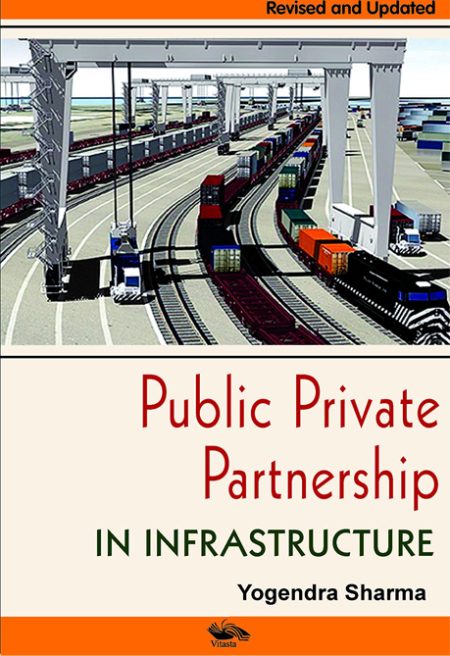
Since the beginning of the Five-Year Plan period, public sector has been solely responsible for providing basic infrastructure through government funding. However, post liberalisation the private sector has taken a lead into the infrastructure funding and the capital market now appears mature enough to enter into project financing. However, giving the externalities, high risk and low rate of return, private investors have been finding it difficult to finance capital intensive projects.
At the same time, with the budget constraints, inherent inefficiency and regulatory mechanism, public sector has not been able to muster required resources as well. Therefore, Public Private Partnership has emerged as a viable option in infrastructure building. As a case study, author has given a narrative description of the journey attached to a successfully planned and managed PPP project, in which he served as the first Managing Director and demonstrated that with effective management such projects are not only completed in time with reduced cost, but also provide incentive to the promotion by way of reducing operating cost.
The book is a hands-on narration of the experience that the author has in the execution of Kutch Railway, one of the earliest PPP rail projects on the Indian Railways. One of the first publications of its kind, the book will be of interest to the spectrum of readers from policy makers in the government to project financing companies, construction agencies, academic institutions etc.