
Availability: In Stock

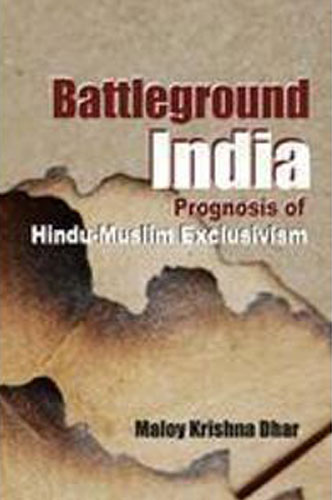
BATTLEGROUND INDIA

SKU: 9789380828497

599.00

About the book

“Ramnath Goenka, a freedom fighter in his own right, had been instrumental in giving credence to the Right to Speech guaranteed in the Constitution of India. Though his financial dealings were questionable, Goenka had earned a reputation for his fierce and fiery criticism of the Central Government and the all-powerful Prime Minister Indira Gandhi, in particular. His newspaper, The Indian Express, minced no words in criticizing the government policies even as the government used my independent investigation to pressurize him. To his credit, Goenka neither directly nor indirectly tried to scuttle the investigation though he was a powerful man.”

“Romen Chatterjee, the ring leader, insisted that the prosecutor apologized in front of all the staff members. The prosecutor, who had scolded a staffer for violating provisions of the Companies Act 1956, was scared but did not want to apologise. While I was entering my chamber, I heard Chatterjee talking to a reporter of the Amrita Bazar Patrika. Anticipating that the matter will be blown out of the proportion, I cooked up a story. I called Chatterjee in my chamber and told him that I had asked the Commissioner of Police to take action against the erring staff and that the Commissioner had said that talking to the Press would render him liable for a disciplinary action. Not knowing that I had overheard him speak to the reporter and that the story I was telling him was all made-up, Chatterjee started sweating. I was happy that I had saved the department the embarrassment.”

Frequently Bought Together

Description

About the Book

Battleground India: Prognosis of Hindu-Muslim Exclusivism is an interpretive study of the historical spectrum of India from 10th Century to the present period. This period witnessed the rise and collapse of Muslim politico-military powers in India, the gradual sprouting of Hindu nationalism and, later germination of Muslim nationalism. Hindu aspirations to assert nationalism, cultural and religious identity, and achieve self-rule; and Muslim endeavours to assert a separate identity as a distinct linguistic, cultural, religious and political entity; have been projected. Initial Hindu reaction to treat the British as the deliverer and the Muslim attitude of aversion led to the disproportionate growth of Hindu and Muslim fortunes.

The book interprets how Ashraf Muslims and the British connived to thwart Hindu nationalists and perpetuated the ‘Two Nation’ concept on the basis of religion, which finally succeeded in dividing the people, irreconcilably. The evolution of Muslim separatism since 1857 has been scientifically studied and discussed. The growth of Hindu majoritarianism and assertion of identity has also been chronicled. The mindset of ‘living together separately’ persisted even after Independence. The Indian Muslims continued to carry the burden of a minority identity crisis. The ambience of exclusivism continued unabated. Alleged minorityism practised by the state and Muslim clamour for better share evoked sharp Hindu reaction.

Battleground India has examined all these aspects both at macro and micro levels. The first unbiased projection of the deteriorating grassroots conflict prognosticates bad news for national unity and integrity.


Additional information

Author

Binding

HB

Reviews

There are no reviews yet.

Be the first to review “BATTLEGROUND INDIA”

Your email address will not be published. Required fields are marked *