+91 11 4109 1715
24/7 Support Center

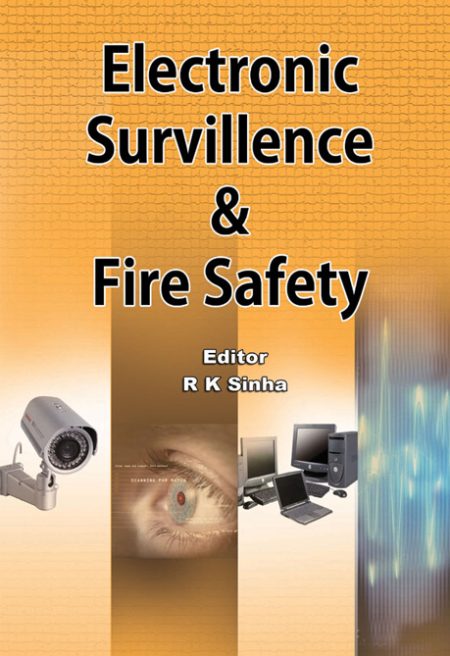
With a fast developing world of electronics, gadgets and net, criminals have matched the means to use and exploit technology to their destructive cause. It becomes all the more important and imperative to use modern technology to protect and secure industrial houses and business establishments. This book attempts to highlight the advantage of having electronic surveillance in the field of security. The book unfolds various aspects of electronic surveillance that normally go unnoticed.
Today, terrorism extends beyond physical destruction of life and property. To counter their threat, industry has to step up electronic surveillance. It has become imperative that security threat assessment, identification, classification and response are made perfect and that minimum time is lost in this process. This book helps students of security issues to learn about the possible threats and gives them an idea of the available technologies today that can help combat terrorist threats. “
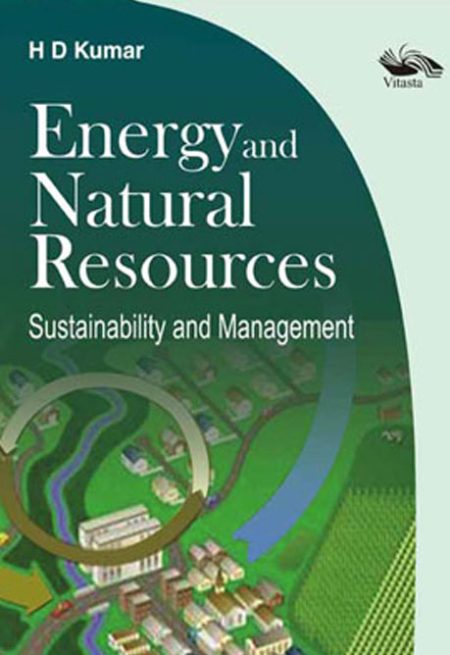
Energy and Natural resources affect the livelihood of over five billion people in developing countries and, in general, affect everybody everywhere. Ensuring sustainable economic development on the basis of the finite and depleting stocks of natural resources is crucial to the future of humanity on the disturbingly overcrowding, increasingly thirsty, and the energy-guzzling planet.
The pros and cons of various options available for sustainable management of diverse resources such as fossil fuels, biofuels, solar energy, hydrogen energy, photovoltaics, solar cells, timber, mangroves, marine fisheries and others are outlined and illustrated with appropriate examples.
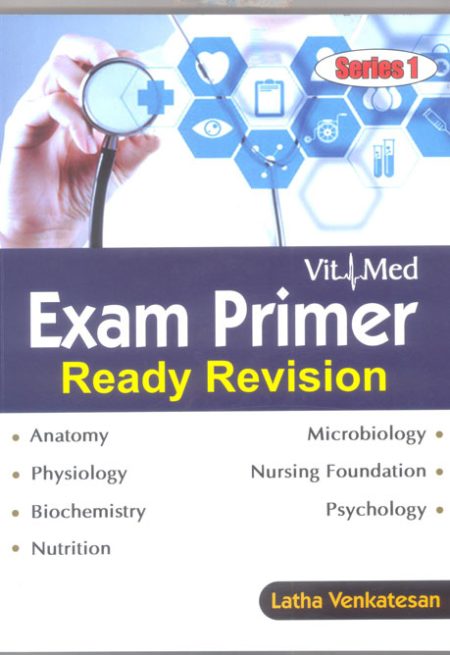
This book provides an exhaustive presentation of 2-mark questions with answers for all the subjects based on B.Sc nursing curriculum. It will be helpful for the students and faculty to prepare themselves for examinations in which 2-mark questions are a part of the question paper pattern.
This exam primer includes all the units and content prescribed in the syllabus of Indian Nursing Council to help in self-testing and advanced preparation for university level examinations.
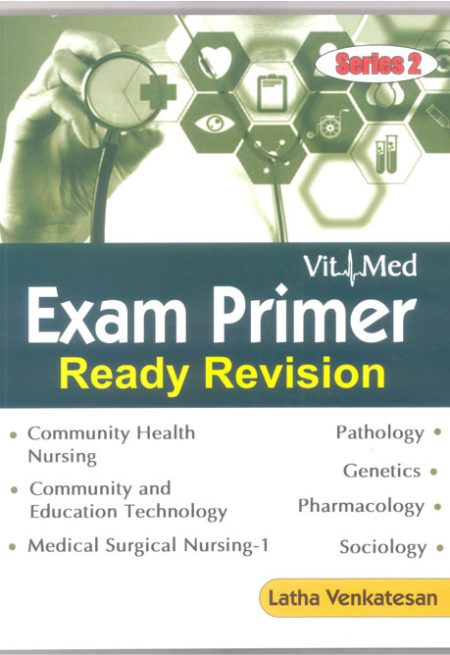
This book provides an exhaustive Presentation of 2- mark questions with answers for all the II year B.Sc nursing subjects based on B.Sc nursing curriculum prescribed by Indian Nursing Council. It will be helpful for the students and faculty to prepare themselves for examinations in which 2- mark questions are part of the question paper pattern.
The exam primer includes all the units and content prescribed in the syllabus of Indian Nursing Council to help in self-testing and preparation for university level exams in the subjects namely Medical Surgical Nursing I, Communication and Educational Technology, Pathology, Genetics, Pharmacology, community Health Nursing and Sociology.
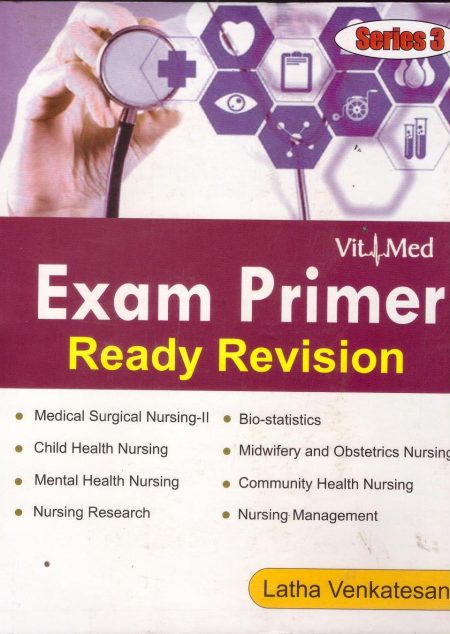
This book provides an exhaustive presentation of 2-mark questions with answers for all the III-year and IV-year B.Sc nursing subjects based on B.Sc Nursing curriculum prescribed by the Indian Nursing Council. It will be helpful for the students and faculty to prepare themselves for examinations in which 2-mark questions are part of the question paper pattern.
The exam primer includes all the units and content prescribed in the syllabus of the Indian Nursing Council to help in the self-testing and advanced preparation for university level exams in the subjects mainly Medical Surgical Nursing – II, Child Health Nursing, Mental Health Nursing, Nursing Research, Bio-statistics, Midwifery and Obstetrics Nursing, Community Health Nursing and Nursing Management.
About the Author
Anupam Jain is centre head of Hartron approved workstation in Chandigarh and runs MMC Computers/IT Campus in the city. A name synonymous with computer education since 1991, Anupam is an inspiration for thousands of her students, who have benefitted from her carefully developed course contents and are placed in various MNCs and government undertakings.
Navneet Mehra is a certified ethical hacker and has written a book on Hackers Beware for Macmillan Publishers (India). His another book Fundamentals of IT is in the press and is being published by Vitasta Publishing.
This book is an attempt to critically examine Dalit literature which as a distinctive form of writing not only mirrors the harsh realities of Dalit lives but also depicts their social, political, economic, cultural and geographical locations. The book surveys the nature and the scope of Dalit literature, traces its roots and illustrates authentically its evolution and significance in the present milieu. The conventionally muffled and marginalised Dalits use literature to voice their distress, indignation, and to register their collective resistance against discriminatory and dominant socio-economic and political forces. They reject the received literary conventions and aesthetic considerations and devote literature to waken, and mobilise suppressed Dalits. The issues such as caste-based violence, Dalitisation of poverty and Dalit women’s specific suffering come to frequent discussion and condemnation in the book. It brings out the Dalit strategies to liberate themselves, to smash discriminatory institutions and to initiate an egalitarian system in which all human beings may be treated as equal regardless of their caste, class, gender and religion.
Faith & Frenzy is a collection of stories that bring to the reader the intimate details of forgotten Kashmiris of all hues, caught in the quagmire of terror and murky politics, and weighed down by the historical burden of the long confrontation between India and Pakistan.
Their stories have remained untold, submerged as they remain under layers of shady rhetoric and politics of deceit. These are stories of reconciliation and reaffirmation of religious diversity and of how thousand of Kashmiris, mostly pundits, were forced into an exodus from the valley to the plains of India, their lives before and after the exodus and their identity crisis.
About the Book
In 1753, Ruckus Thawhorne, a British revenue officer, comes at midnight to the house of Ramabrahmam in Gandharva Kota. It is no ordinary counsel or favour that the officer seeks. In secret, the Brahmin journeys with him that night to destroy an unnatural ‘evil’. On his death bed, five years later, he makes a sinister prediction to his son Madhavachary, that the evil may return, although its perpetrator — a British soldier James Hil — was deported to England.
In 1792, Madhachary’s days go by, as did his father’s, in rituals, family affairs and offering counsel to the villagers. He lives with his two sons, a widowed daughter and the youngest daughter. Suddenly the forty year old events invade his life; his fears dead and buried return. He turns to his father’s papers stashed in a casket. Madhavchary discovers an unnatural tale of evil and a mysterious discovery that led to its destruction — but — was it destroyed?”

Over two decades of the neo-liberal policies have further intensified our chronic poverty and imposed a severe livelihood crisis on nearly one billion socially excluded Indians. The project wholesale globalization has become its own victim as seen in massive and unsustainable current account deficit, reckless inflation, decline of the external value of the Rupee and loss of confidence by the foreign investors in India policy regime. Even India’s own companies are happier investing abroad than in India.
The irony is enhanced as a way-out of the blind alley has been sought in throwing open even the retail trade sector to displacement investment by the biggest MNC retailers. We have succumbed to their lobbying and the entire policy space has been spread before them to freely write the policy script by way of pre-conditions for entry and subsequent regulation.
It is a sad story of going beyond free markets and self-regulation. It robs the adversely included scores of millions of Indian penny capitalist small traders and hawkers of their toehold in the economy. Thus the global super rich, the 0.1 percent at the top, have subverted both our ‘democracy and development’, courtesy cronies in government and the Indian corporate houses. The wooing of FDI in retail on the latter’s terms is nothing but a case of self-goal. The book examines this question in a broad socio-economic and political framework and shows how the neo-liberal establishment considers no price too high to accomplish its partisan agenda. Debunking the TINA syndrome, the book advances some alternatives to the disastrous policy of opening up retail trade to the most nefarious retail MNCs.
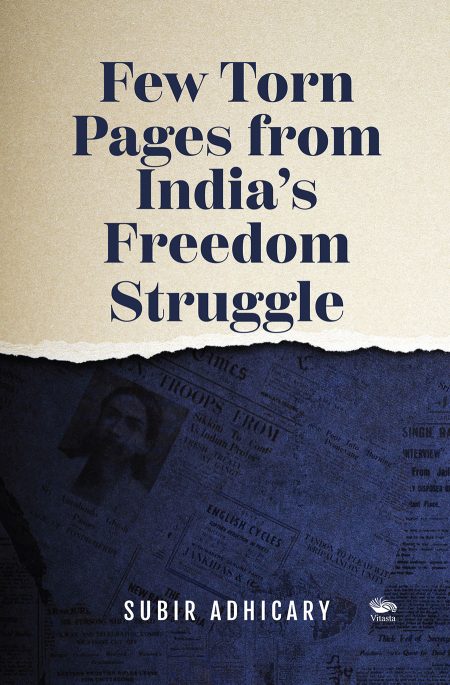
Sixty young men, aged between 14 to 25 storm into the heavily guarded British armoury, loot it and hoist the Indian flag keeping the town independent for three days. Five revolutionaries fight a formidable British force armed only with pistols for hours before they run out of ammunitions. A young woman dressed in men’s uniform barges into the European club in Chittagong with few others and opens fire before being surrounded by the army. Study of recorded history of India’s freedom struggle leaves out multitude of people. In free India, it would be a historical cruelty to ignore the influences of small actions by individuals or groups on our freedom struggle. History is based on and includes the sum of history prior to the period under study. By the same logic, it influences the history of the period that follows. Therefore, to ignore individual or small group actions will be a great injustice to a fair history. Few Torn Pages from India’s Freedom Struggle is an effort to bring to light historically unrecorded individuals and their contribution to India’s freedom struggle. These are accounts of very highly motivated young men and women who influenced the course of India’s history. – Major General Sheonan Singh, VrC (Retd)-Nephew of Shaheed-e-Azam Sardar Bhagat Singh)
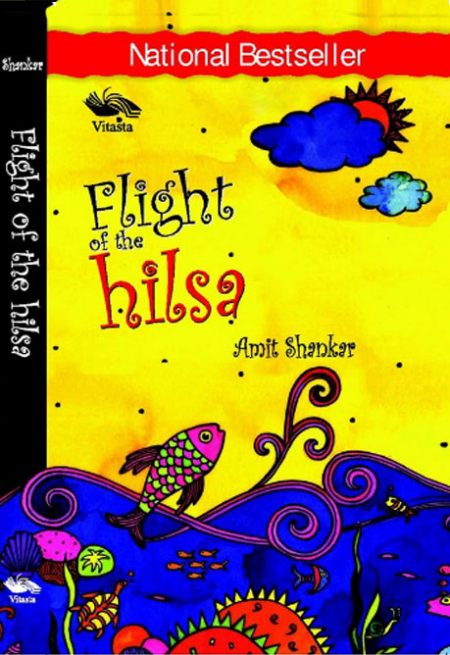
What is happiness? A by-product of success or a state of mind? Flight of the Hilsa explores and demystifies the same while tracing the story of Avantika Sengupta. As a creative soul—restless and opinionated—life to her has been unkind, even in her chosen career, painting. A chanced encounter with a boat owner; some twenty years her senior, changes everything. With a new found ‘success mantra’ and the ‘boat guy’ by her side, she starts striding towards her long-cherished notion of happiness—of being a rich and famous painter. But will the Hilsa discover her true calling and happiness? A gripping tale till the end.

About the Book
A first-of-its-kind anthology, offers a peek into the life and culture of the Northeast people here through the prism of their food. Containing perspectives on subjects as varied as anthropology, sociology and literature, this book translates as a comprehensive database for those seeking to know about the social and symbolic role of food in Northeast India.
These plays were written by Vijay Pakadi in the Period 1986 to 2002 and represent explorations in combining form with content. There is a humanistic undercurrent in the plays, an affirmation of the human spirit, the innate ability to question the given, so often remaining supressed, and the ability to find alternatives. It is known that a lot of his writing has been influenced by field experiences in his professional engagements. The content of the play has often (not always) begun as a case study, intruiguing in itself, but demanding an alternative perspective. The alternative perspectives have provided the raw material for the play scripts. The play scripts should explain themselves. Footprints is presented as ‘fictional science’, raising the serious question of the human species being Nature’s mistake, the price to be paid by the rest of the earth.
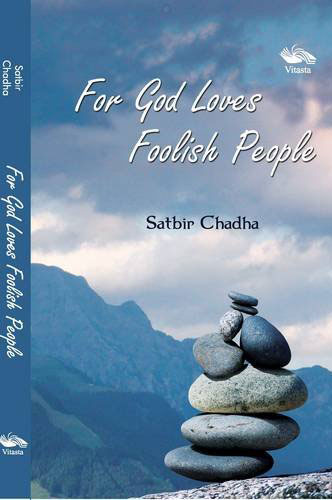
The story begins in Nainital in the early fifties. It tells of her family’s history of trade from Europe through to China, and of her community. Growing up, Satbir learns of the relationships between people, the conflicts, the trauma and the hypocrisy. She is shattered when her mother does not stand by her at the most important juncture of her life.
About the Book
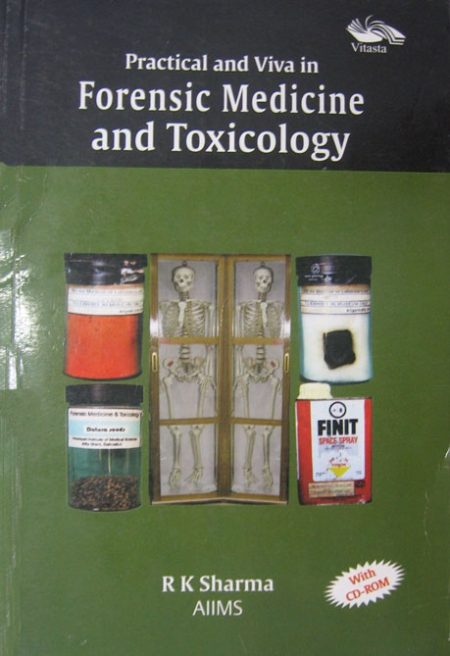
Practical and Viva in Forensic Medicine and Toxicology is specially designed for undergraduate students in Forensic Medicine and Toxicology to help them in practical examinations. It covers all aspects of practical examinations as prescribed by Medical Council of India. It would also be useful for students of Ayurvedic, Homeopathic, Unani and Siddha systems of medicine.
Key Features:
All the six exercises that are commonly asked are explained in detail along with model format so that students can reproduce them in examinations easily.
Questions asked in viva-voce are written in the same fashion as asked by examiners.
Spots shown in examination have been visually captured and provided in a CD form so that student can view them before going for examinations.