+91 11 4109 1715
24/7 Support Center

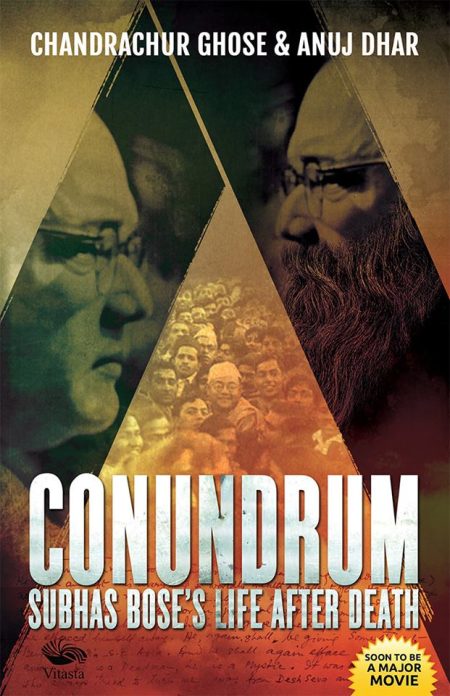
India’s biggest political mystery resolved. Sitting in a dilapidated house in a remote part of India, a 74-year-old man started narrating in his deep baritone the layout of Jessore cantonment in East Pakistan to his handful of followers. They got the import only a few weeks later when Jessore fell to the advancing Indian Army. This was in December 1971, and Subhas Chandra Bose was officially dead for 25 years. Ever since Netaji was pronounced dead following a plane crash in August 1945, Indians across the world have wondered whether the claim was true. The Government, however, decided to accept the story based on circumstantial evidence. For the first time, it is now conclusively shown that Netaji lived on. Having spent over 15 years in procuring and scouring through thousands of records from across the world, interacting with eyewitnesses and consulting experts, the authors come to a history-bending conclusion that a mostly unseen, unnamed man who lived in various parts of UP from the 1950s to 1985 was indeed Subhas Chandra Bose. From a “living” Netaji’s throwbacks about his contemporaries, his views on Constitutional issues and India’s foreign policy, to his forays into the world of paranormal and top-secret covert missions across the borders to first-ever sensational disclosure why he could not emerge in public — no other book is as bold and vast in its scope and implications. National award-winning director Srijit Mukherji’s upcoming movie “Gumnaami” is based on Conundrum.

Corporate Wisdom in Thirukkural is a book on management applicable to corporate leaders and present day political leaders too. Thiruvallur’s thoughts on management are appealing to the head and heart. What Harvard professors teach today on management has been elaborately discussed in Thirukkuralwhich is a treasurehouse of vast wisdom. Thiruvalluvar lived in Tamil Nadu 2000 years ago. He speaks about the duties and responsibilities of the King and his palace officials. He speaks about various leadership qualities and human factors of public administration required for a welfare state such as effective delegation, organisational relations, domestic relations, social relations, public relations, communication skills, human resource management, project management, time management, financial management, decision-making skills and some case studies applicable in day to day administration and all walks of life.
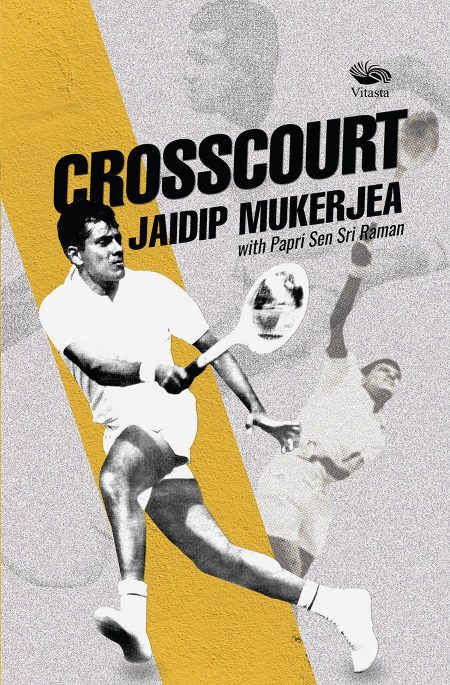
‘Looking back, I now think it is appropriate to share my life experiences with the new generation and sports lovers. I feel the young generation of our country should know more about the hard work that Indian tennis players of yesteryear such as Ramanathan Krishnan, Premjit Lall and Jaidip Mukerjea – the original Three Musketeers of Indian tennis – put in which took India to the Davis Cup finals for the first time in 1966.’ Jaidip has written the story of tennis in India; the transition from wooden to titanium racquets; Kolkata’s club culture and the promotion of tennis, football, cricket, polo, horse racing and sports sponsorship by the House of Tatas. The International Tennis Federation felicitated Jaidip Mukerjea with the ITF Lifetime Achievement Award in 2003; the first Indian to be thus honoured.
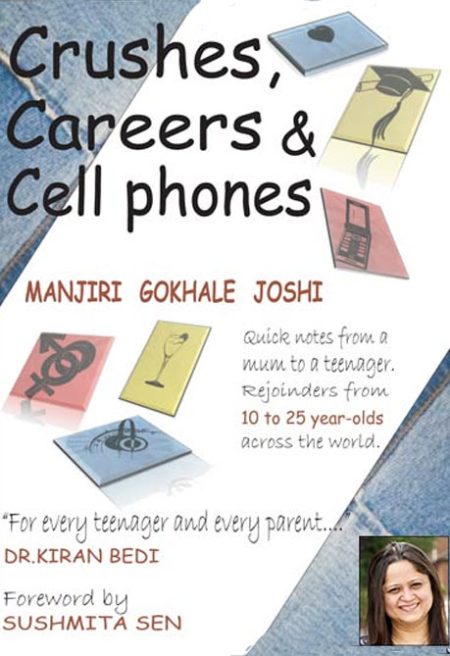
And for the parents of teenagers is the uncertainty–Are you “giving space” or being careless, imparting values or being dictatorial, encouraging ambition or building burdensome expectation? There is so much to talk about–A for alcohol, appearance, ambition, B for babies, braces, boyfriends, D for dads, dreams and drugs, E for embarrassment, G for growing up, gender divide, girlfriends, J for Jealousy, P for pimples, M for mums, men, R for running away, S for suicide, T for teachers, V for Valentine’s…
The book captures the nuances of parent–teenager communication in a series of snappy conversations. A perfect gift for anyone growing up… and for anyone standing by to watch!
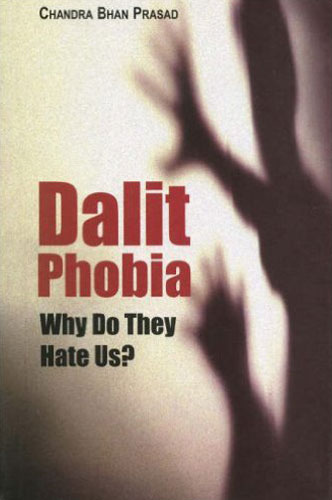
The Dalit iconoclast makes a clear distinction between the backward castes (the Shudras), and Dalits or Untouchables. He was chased by his critics for holding this view and he took the bolder decision to give his ideas the shape of this book. The analysis may further the understanding of the caste divide in India in the context of reservation for backward classes. Urban educated members of forward castes and Shudras get agitated when they are charged with discriminating against Dalits.
Dalit Phobia gives them the benefit of the doubt and may help them overcome their hate sense which Chandra Bhan says is passed on from generation to generation.
Is Dalit Phobia a genetic disease? The author makes a strong case saying ‘yes it is’.

Extreme poverty wasn’t the only impediment in seven-year-old Kalki’s life. Her pitch-black dark skin exacerbated her plight, making her a centre of ridicule in her village. Believing he’s the cause of his sister’s affliction, Karthi joins Kalki’s side as they become consumed with ways to whiten her skin. But the determined siblings invite more trouble and lose their mother’s life savings. Their journey to retrieve the money brings together a mysterious ally, an exotic festival, a divine intervention and a con artist changing their destinies in ways no one could have predicted.
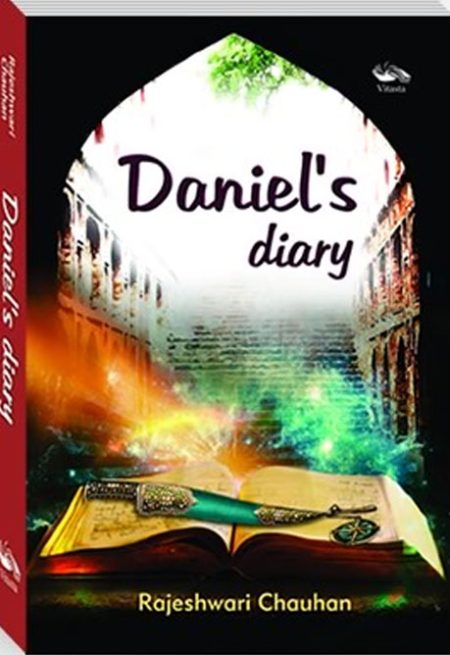
When Mrinalini, an art restoration expert, ventures into the ruins of Rang Mahal and the Palace of Sumangarh, an accidental discovery of a skeleton and a manuscript detailing the exploits of Daniel, a Portuguese artist, opens a window to the forgotten era of grace and grandeur. The blossoming of love between a Moghul Emperor and a Rajput princess, is seen through the eyes of a foreign traveller, who himself falls in love with the Rajput princess.
The plot revolves around Daniel’s quest for beauty and passion, the ecstasy and agony of love. He meets the famous courtesan Mahamaya only to lose her. It also draws a modern day parallel in the life of Mrinalini, a woman who seeks refuge in artistic pursuits and architectural ruins when relationships in life confuse her. Will she be able to decode the clues left behind by Daniel? Will the curse of centuries-old unfulfilled love break into a happy ending for Mrinalini?
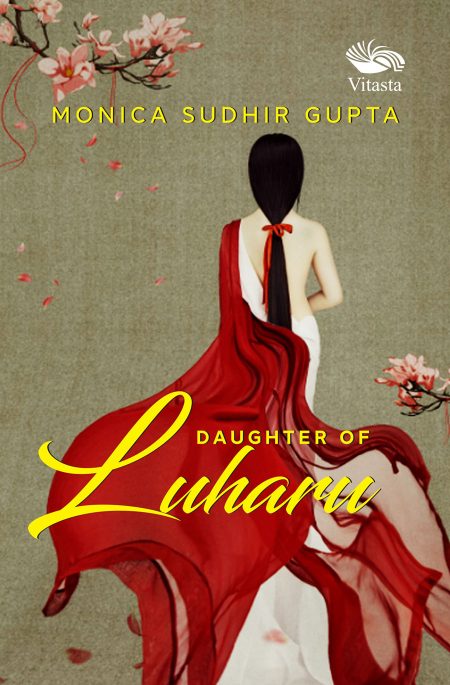
Married at the age of eight, Roheeni had no one who can look out for her. She learnt to survive an evil mother-in-law, an absent husband, back-breaking work, heat, and a ghunghat (veil). After twenty years when her daughter faces the same fate; will she finally speak up or let the story repeat itself? Set against the backdrop of the freedom struggle and partition, Daughter of Luharu is an extraordinary story of survival as Roheeni navigates issues of self-worth, love, marriage, parenthood, and most importantly, her identity. Relevant even after seventy-four years of India’s independence, the story gives a rare insight into a woman’s struggles in a pre-independent Haryana of the 1920s, 30s, and 40s and raises the burning question: Has anything changed at all? Transcending limitations to overcome adversity, Roheeni and her likes are India’s very own Thousand Splendid Suns..

This is the story of David Copperfield as narrated by him. He lost his father before he was born, lost his mother in his childhood and was forced to forego his studies by his stepfather to work as a helper at the tender age of ten. He runs away to a grand-aunt who gives him refuge, a decent life, a school and love. He is also loved by his old maid Peggotty who stands by him throughout his fight to come up in life. He comes across a variety of characters and adapts himself to the realities of life to emerge stronger. This is a story about the triumph of perseverance, hard work, adaptibilty and human values. The reader travels with David and shares his joys, sorrows, triumphs and tribulations….

lawyer Politician Manish Tewari in his book Decoding a Decade articulates his personal point of view on a range of controversies that cropped up during the UPA and later the NDA years from 2006-16. Tewari’s questions are incendiary and the analysis incisive and provocative. He shines a light on the opaque underbelly of Indian politics. Being a victim of terror—he repeatedly questions as to why India is a wimp state when it comes to dealing with terrorism? Would the recent operations be able to deal with a problem called Pakistan, he asks? Was President Pratibha Patil who commuted the death sentence of 19 prisoners and rejected the mercy petitions of only three diffident about capital punishment for religious reasons? Was President Kalam right in saying that there is a socio-economic bias in the award of death penalty? Tewari points out to the lack of consistency in the highest echelons of the Indian state when it comes to deciding and disposing of mercy petitions. What would make the ruling dispensation see red is the scathing critique of the NDA-BJP governments track record over the past more than two years. He explains as to how Corporate India defeated the Congress party in 2014. He drills deep into the business of the media and questions the recent Indo-US agreement on nuclear accident compensation that would make Indian money pay for the negligence of Foreign Suppliers. Tewari’s articles reflect upon various trends in domestic and international politics and need to be located in context of the period they were written in and pertain to. His pieces go beyond party, partisan and geographical boundaries. Here is the Tewari that you would want to know beyond the TV screens
This first-of-its-kind book by a journalist covering bureaucracy lists the ailments of India’s administrative system from a common man’s point of view. It delves into the pain faced by the lesser privileged in accessing governance in our country. The book highlights the reasons behind this alleged notoriety. The possible causes of the rampant organized corruption in some (if not all) property registry offices, RTOs, civic authorities among other departments, the visible red tape, ineffectiveness of the administration in ensuring ease of accessing governance and the existence of unprofessional approach from ‘public servants’ towards the public are also discussed.
Democracy and Good Governance reminds us of the true meaning of good governance and what democracy entails. Subhash Kashyap details practices and protocols followed in the Indian Parliament and the deviations and aberrant behaviours of legislatures, noting what their actual duties are and ought to be. The author also brings out in a series of biographical sketches his encounters with some remarkable parliamentarians during his long tenure in the Parliament Secretariat.
His essays on value-based education, included in his book, encourage the nurturing of democratic values that are syncretic with India’s Constitution enshrined tenets of equality, secularism and life of dignity for all its citizens. This book is a guiding light for all students of democracy, constitution and governance modules.
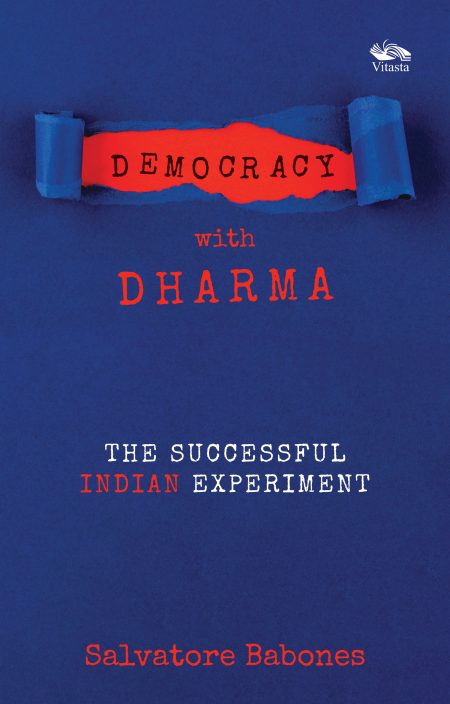
India’s democracy evokes strong opinions and reactions, yet the truth rarely fits the extremes. While international observers frequently sound alarms about the direction India is heading, many within India view these judgements as overstated or inattentive to the country’s unique political landscape. Between these contrasting perspectives lies a more measured story— one of a vast, plural society negotiating modern democratic life with all its tensions, traditions, and upheavals through the prisms of religion, caste, ancient dharmic values and its rapid surge ahead on the road to technological advancements and modernity.
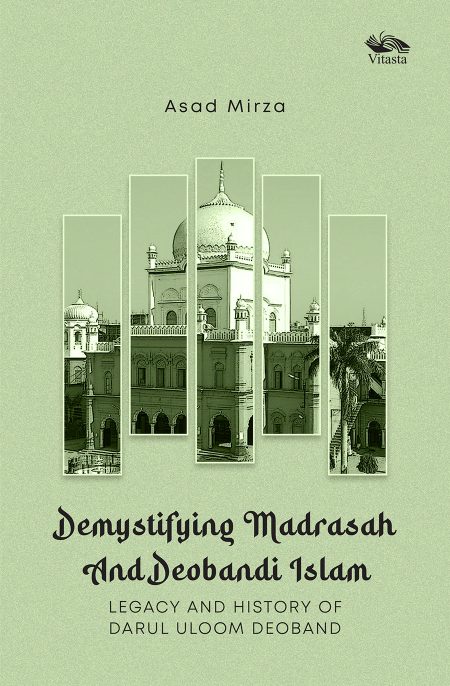
Demystifying Madrasah and Deobandi Islam traces the origin, evolution and growth of the Deobandi movement and madrasahs and outlines how Darul Uloom inspired and nurtured scores of such institutions across the globe, guiding millions of Muslims to embrace advancements in education while retaining the pristine form of Islam. Deobandi thought has remained steeped in Indian ethos and culture, embracing its diversity, plurality and universalism and thus differs significantly from the madrasahs in countries like Pakistan and Afghanistan. The book’s in-depth study of Deobandi Islam examines how its leaders contributed to the Indian polity and their role in the Indian freedom struggle. The author reconstructs the history of Deobandism and madrasahs through authoritative information from interviews with prominent Muslim scholars, academicians and religious clerics.

Facing the indignity of having to sleep with a stranger just to return to a husband who has pronounced Triple Talaq in a fit of anger; running from pillar to post to end a marriage by begging for Khula, Denied by Allah is a book that mirrors stories of women for whom even God does not seem to have mercy. These are women who have opened the windows of their bleak, painful lives in these pages; some surviving Mut’ah (pleasure), a temporary marriage, equivalent to prostitution.
This book discusses medieval laws irrelevant in the 21st century, sexist biases that pass for conventions, life impacting decisions made only by men which have denied women basic respect and protection, dignity and humaneness, often in the name of religion. The book asks, what has the community gained by keeping half of its population backward, ill-educated, chained to archaic laws, unwell and deprived? And how long will the laws for Muslim women in democratic India remain the same as in any Shariah-governed country?