+91 11 4109 1715
24/7 Support Center


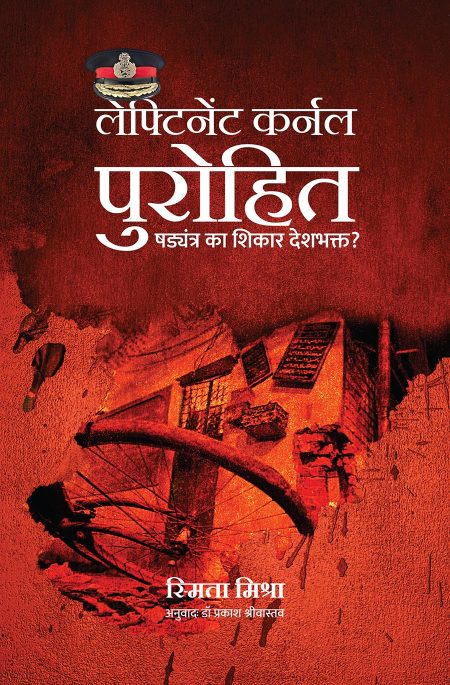
देश के इतिहास में पहली बार सेना के एक अधिकारी लेफ्टिनेंट कर्नल प्रसाद श्रीकांत पुरोहित को जब सितंबर 2008 के मालेगांव बम विस्फोट के सिलसिले में गिरफ्तार किया गया तो सभी अखबारों की सुर्खियां जैसे चीख-चीख कर बता रही थीं—“यह हिंदू आतंकवाद है।” यह शख्स आखिर कौन था, सभी अखबारों के पहले पन्ने पर उसकी तस्वीरें क्यों छाप दी गई थीं? उसे ही निशाना क्यों बनाया गया? क्या वह सचमुच दोषी था? क्या उसे फंसाया गया था? क्या उसे बलि का बकरा बनाया गया था? विचाराधीन कैदी के तौर पर नौ वर्षों तक जेल की कोठरी में पड़े रहने पर मजबूर सेना के इस प्रतिष्ठित अधिकारी के परिवार का क्या हुआ और उसे किन-किन मुसीबतों का सामना करना पड़ा? इस पुस्तक में इन सभी सवालों का जवाब देने का प्रयास किया गया है और इस कोशिश में एक ऐसी साजिश का पता चलता है जिसे जानकर इंसान की रूह भी कांप जाए।
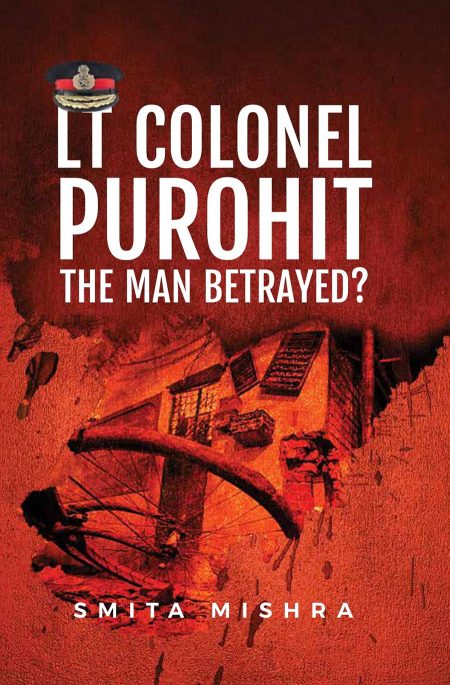
‘It’s Hindu Terror!’ screamed newspaper headlines, when for the first time in the country’s history an army man, Lt Col Prasad Shrikant Purohit, was arrested in connection with the September 2008 Malegaon bomb blast. Who was this person, why was his name plastered over the front page of all newspapers? Why him of all people? Was he guilty? Was he framed? Was he a scapegoat? What happened to the family of this decorated officer while he languished in prison for nine long years as undertrial? Lt Colonel Purohit: Soldier or Terrorist? attempts to answer these very questions and in the course brings to light a conspiracy which makes one shudder to even think of…

Mera Parivar evam Anya Rachnayein, is a collection of some of Mahadevi Verma’s most cherished literary works. She affectionately portrays her pet animals, capturing their quirks and quiet companionship with heartfelt sensitivity that reflects her profound empathy for all living beings. In her poignant depiction of society’s downtrodden, Mahadevi Verma lends a voice to the voiceless, portraying their dignity and daily struggles with rare compassion and realism. Readers will find in this collection not only literary elegance but also a timeless relevance. Mahadevi Verma’s deeply compassionate prose reflects a deep moral clarity and her love for nature, animals, and human dignity. Through tender portrayals of human innocence and struggle, Mahadevi Verma’s work becomes a powerful moral compass and a much-needed reminder of empathy in an increasingly fragmented world.
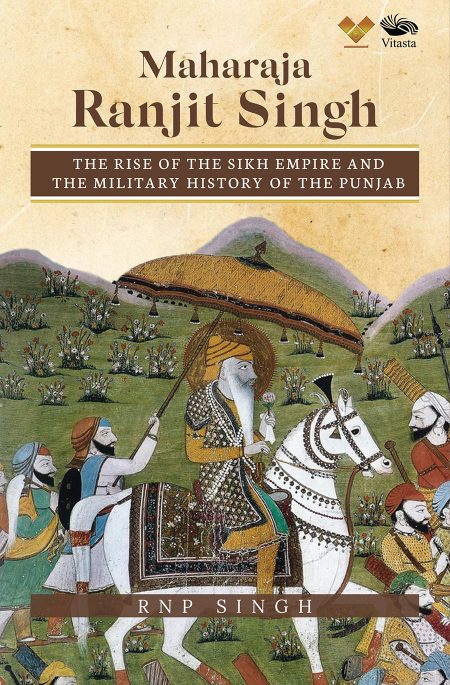
Ranjit Singh was the most adventurous, audacious, and sagacious ruler of the Indian subcontinent since Chandragupta Maurya. Like the Kohinoor he wore, he was a gem among rulers. He rose like a bright and brief firmament when India became a part of the global colonial geopolitics. He abolished the death sentence and created a new empire based on principles of statecraft. In the 1770s, the Punjab was sixty-eight pieces of a wild and prosperous land inhabited by a brutal and querulous people making a living by plunder even as invasion after invasion from the north-west frontier trampled it. Ranjit Singh stemmed these Afghan raids by capturing all the passes on the Hindu Kush and wresting from Kabul the fairest of its provinces. His matchless and modern army comprised 100,000 disciplined and well-armed men and 300 canons that stood between expansionist Britain and imperial Russia. In his fourth biographical work, RNP Singh brings our readers this incredible life story of a self-made Maharaja who became the last bastion of a free India in the 1830s.

Everyone knows the epic story of the Devi killing Mahishaasura. Mahishaa’s fault was that he was not prepared to fit into a conformist box. So, this cannot be a classic Good vs Evil tale. In the middle of the city, there was a dilapidated Kaali temple. Its condition was so because both the devotees and the priests were alien to love, although this was supposed to be the primary concept in places of worship. It was at such a time that a devotee decided to return the temple to its traditional practices of worship. This is accomplished in a pact with Kaali by the devotee becoming Mahishaasuramardini’s Mahishaa. What happens next is a marvellous cascade, flowing from the pen of poet Lakshmi Bayi.

Main Ek Gurezaan Lamha hun offers a window into the life of Padmashri Shovana Narayan, a global icon and a sanctuary for the arts. For a woman who seamlessly wove the gravity of a senior bureaucrat with the ethereal grace of a Kathak virtuoso, society’s question was always: “Files or Ghungrhoos? Career or Art?” Her answer was—”Both.” This saga is more than a biography; it is a ‘Manifesto’ for those who refuse to choose between ambition and passion. By shattering stereotypes that confine women to “limited choices,” Shovana inspires a shift from mourning constraints to conquering them.
Unlock the secrets of wealth and success with this powerful compilation of timeless wisdom from four of the world’s most influential thinkers. Napoleon Hill, Wallace D Wattles, PT Barnum and Franklyn Hobbs’ proven strategies for prosperity and personal growth. From developing a wealth-oriented mindset to overcoming obstacles, this book distils centuries of knowledge into one accessible volume. Whether you’re an aspiring entrepreneur, a career professional, or simply seeking to improve your financial well-being or to discover how to harness the power of positive thinking, apply practical money management principles, and balance ambition with ethics, you’ll find invaluable guidance within these pages. This carefully curated collection offers essential tools with which you can start your journey towards financial freedom and personal fulfilment. Through these carefully selected chapters and speeches, readers will gain insights into the philosophies that have shaped the financial landscape for generations. Learn how to cultivate persistence, leverage the power of your thoughts and implement time-tested strategies for wealth creation. This book not only teaches you how to make money, but also how to think about money in a way that attracts success and abundance into all areas of your life.
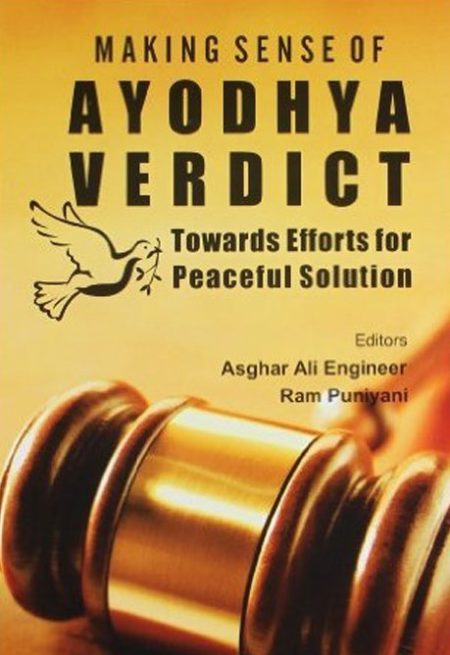
In the aftermath of the Ayodhya judgment by the Allahabad High Court, many social commentators, activists, historians, leaders of groups and parties came out with their opinion in various ways. Making Sense of the Ayodhya Issue captures the background of archeological, historical and political aspects of the issue and lays the foundation of understanding the current debates. Tracing the evolution of the dispute and its political implications, the book goes on to present the intellectual atmosphere in the country post-judgment and gives a perspective about different facets of the consequences of the verdict. It gives the sample of the verdict by giving the major excerpts of the judgment, the opinions of all the three judges and the editorial opinions from different points of view. It includes the interviews of one of the judges, major intellectuals, writers and social activists. It also incorporates the chronology of events related to the dispute.
It gives the sample of the verdict by giving the major excerpts of the judgment, the opinions of all the three judges and the editorial opinions from different points of view. It includes the interviews of one of the judges, major intellectuals, writers and social activists. It also incorporates the chronology of events related to the dispute.
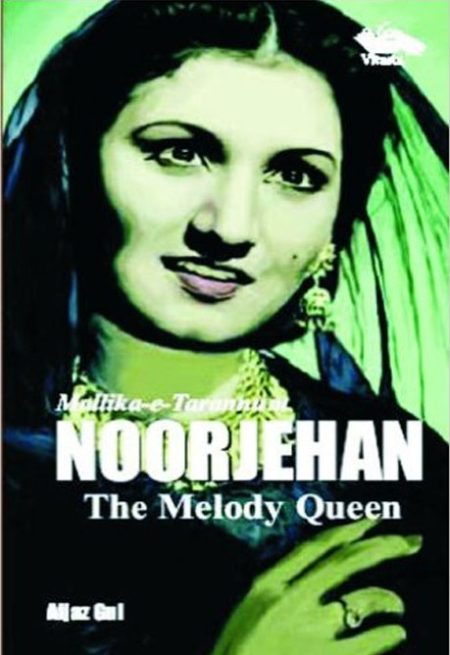
India split into India and Pakistan and forced people to opt for one or the other. It affected all sectors including the film industry. Singer-actress Noorjehan represented the generation that suffered the most. After becoming immensely popular across the country in the 1930s and 1940s, she opted for Pakistan after the Partition. But physical location of artists has often failed to divide them or their fan following. This was very true of Noorjehan. The magical quality of her voice continued to wield a charm on both the countries.
Fans treated her as a common treasure and a symbol of shared tradition and values. She was the most sensational singer-star of the Indian film industry of her time and was often called Mallika-e-Tarannum (the queen of melody). Even Lata Mangeshkar, referred to as the nightingale because of her melodious voice, was inspired by her. She was born in Qasoor (Punjab) of undivided India in 1926. She perfected her classical singing under Ustad Ghulam Mohammad Khan and enthralled audience with her personality which was a rare blend of beauty, voice, acting and success. She passed away in Pakistan in 2000. Her first visit to India after Partition was in 1982, when she was welcomed with open arms by one and all including the then Prime Minister, Indira Gandhi. She was also received by Dilip Kumar and Lata Mangeshkar. The audience had got one more opportunity to hear her sing live Awaz De Kahan Hai… Her voice had not lost the magic touch.
The 10,000 songs she rendered in Hindi, Urdu, Punjabi and Sindhi acted as a vibrant link between both sides of the border reminding people of their glorious past. Her first major hit was Khandaan in 1942, after which she married its director Shaukat Hussain Rizvi and shifted to Bombay (now Mumbai). Soon followed other hits such as Duhai (1943), Naukar (1943), Nandan (1943), Dost (1944), Badi Maa (1945), Gaon Ki Gori (1945) and Anmol Ghari (1946). In Jugnu in 1943, her lead actor was Dilip Kumar. In Zeenat (1945) she popularized Qawwali with songs such as Aahein Na Bhari Shikwein Na Kiye.
While her professional side was exemplary, there was turmoil in her personal life. She had a series of flings, two divorces and many scandals. She was very possessive and thought she could hold people through emotions. Her failure to retain those she considered dear hurt her and left her heart-broken.
From a modest chieftaincy to a mighty empire that thundered across oceans—and then, slowly, back to obscurity. History of the Cholas traces the remarkable journey of the Chola dynasty with colour, depth and feeling. Its kings and queens, princes and princesses, brave generals and ordinary subjects all walk through these pages like living figures. We see palaces glow under torchlight, temples rise skyward stone by stone, and endowments flow from monarchs, commanders and humble devotees alike. There are wars and conquests, yes—but also betrayal, loss and decline. M Rajamanikkanar gathers history, inscription, folklore and imagination into a narrative that is as powerful as it is human. This translation brings his masterpiece to a new audience, inviting readers to step into a world where ambition shaped kingdoms and faith carved monuments that still stand.
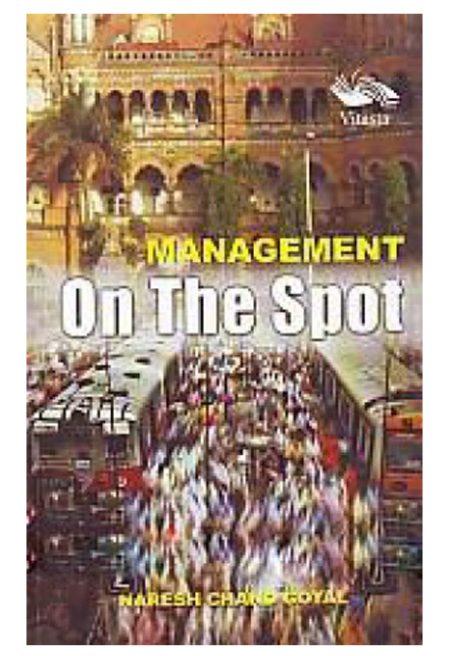
The Mumbai suburban system of Central Railway is, perhaps, one of the busiest networks in the world. A warren of zigzag lines and a host of unevenly distributed suburban stations, give life to the vibrant, throbbing metropolis, serving more than two million people per day. It is the sheer discipline of Mumbaikars and their love for the city that no untoward incident takes place everyday.
This book is an attempt to peep into the soul of the lifeline of the city, the Mumbai local trains, by way of a compendium of a series of incidents depicting, how a personal commitment to make this network more efficient and consumer-friendly succeeded. A must-read for every government official, especially all railwaymen at all levels.
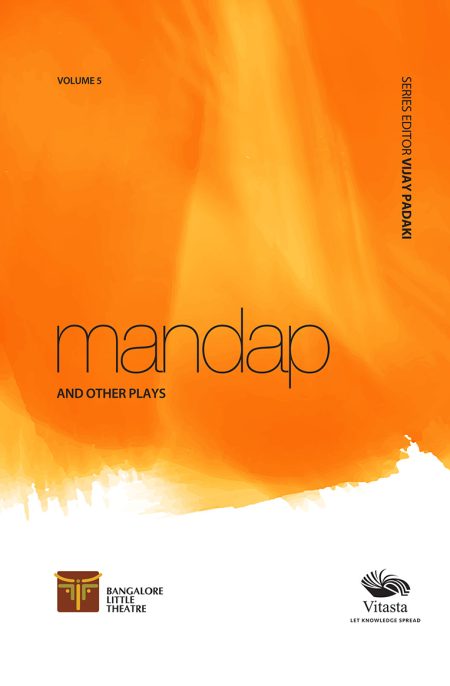
The plays included in this Volume represent two main periods of Vijay Padaki’s writing. The first is when he was deeply involved in social development programmes that had field projects in rural areas. They were all addressing the issues of human rights and social justice, although from different ‘sectoral’ perspectives. It was the absence of rights and justice that was coming in the way of development in real terms. Violence was not ruled out. Mandap is the play from that period. The dynamics of rights and justice are seen in the urban setting too. The next five plays in this volume represent a period of writing in which the writer was increasingly drawn to developmental issues in the urban setting. The plays form a set that came to be called Tales From the City. They are grouped in this Volume as two double-bills and one play by itself. Violence is the recognizable undercurrent in all these plays. Second Shift Muster is the oldest of the play scripts appearing in this volume. The one-act play is included in this volume for a variety of reasons. As with the other tales, this play explores a lesser known city-based occupation in changing times with changing value systems.
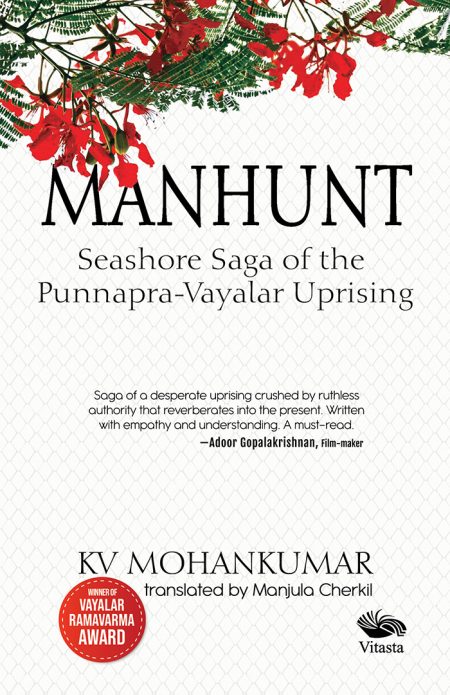
Hell breaks loose as the people fight back… and the seashore turns red…. It was an armed revolt against the government – a fight between automatic guns and crudely made sickles and spears. KV Mohankumar’s book tells the untold story of a People’s Movement in India’s not-so-distant past, a tale of haves and have-nots and a class struggle where the dead exceeded that of the Jallianwala Bagh massacre. A notable feature of this novel is its vivid portraits of impressive female characters and its brave teenagers. At the same time, it weaves a beautiful account of some legendary lives in Kerala and the cause of the subaltern, tracing the history of radical uprisings that led to the present Maoist movement in India. Certainly, this novel bridges the glaring gap in literature that comprehensively portrays the landmark anti-feudal protest in all its complexities.