+91 11 4109 1715
24/7 Support Center

About the Book
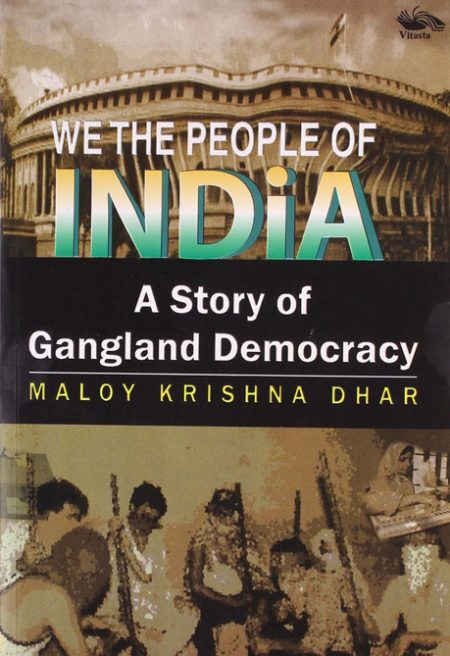
A Gandhi is killed, a Bose is forgotten and a Bhagat Singh no more pricks the conscience of the people who lead the country. This is the story of a nation that boasts of being the largest democracy. The novel undertakes tortuous journeys through the political minefield and discovers that moneybags, muscle power and criminal fringes have hijacked Indian democracy.
Satya Sarthi is a psephologist and wants to bring about a change in the system. He tries to catapult his simple but sharp businessman friend Dharmi into the top corridors of politics. His aim is to dethrone the ruling family which is corrupt and manipulative.
Dharmi’s hesitant metamorphosis from a businessman into a naïve politician and finally into a pucca politician is full of pathos. Does he succeed in dethroning the family? Does he end up changing the system? Maloy Krishna Dhar captures the intrigues that are played in power politics in the name of We the people…
We the People of India – The Story of Gangland Democracy is a reminder to Generations Next that they have to fulfill unfulfilled dreams of the savants of the nation.
About the Book
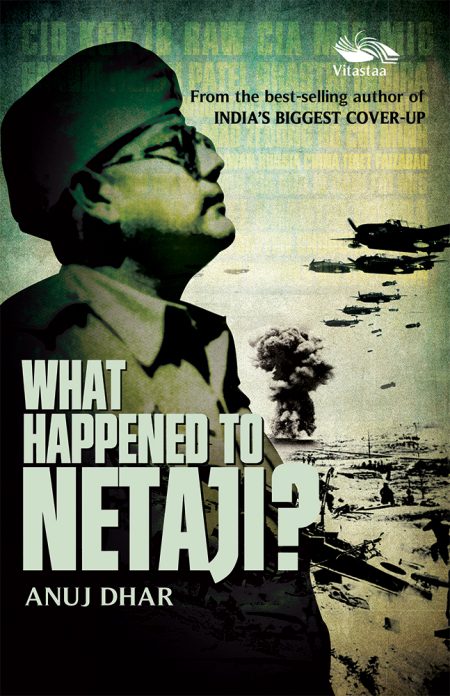
From the best-selling author of India’s Biggest Cover-up In 2013, the Lucknow Bench of the Allahabad High Court described as ‘genuine and based on relevant material’, Anuj Dhar’s writings regarding the controversy surrounding the fate of Subhas Chandra Bose So, what really happened to Netaji? What is the factual position with regard to the air crash that reportedly killed him in 1945? Is there any truth behind Subramaniam Swamy’s belief that Netaji was killed in Soviet Russia at Jawaharlal Nehru’s behest? How do the biggest names of the past and present, from Mahatma Gandhi and Vallabhbhai Patel to President Pranab Mukherjee and Atal Bihari Vajpayee fare in India’s longest running controversy? Who was Gumnami Baba of Faizabad and if indeed he was Netaji, why did he not surface? Above all, what is preventing the Narendra Modi government from declassifying the Netaji files? the answer would make you believe that truth is stranger than fiction.
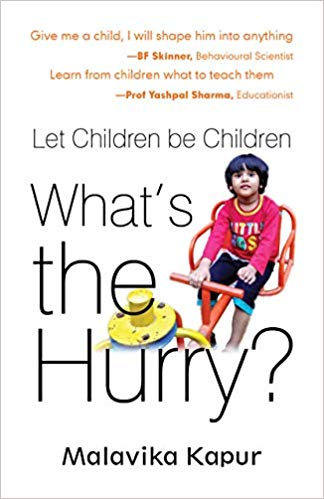
In India, the socio-economic system generally ignores mental health of children. Neither parents, nor the teachers, nor the government acknowledge that every child, irrespective of caste, colour, class or creed is entitled to equity, justice, opportunity and affection. When the National Institute of Mental Health and Neuro Sciences, Bangalore began its first Community Mental Health Movement, author Malavika Kapur was a part of it, approaching the schools with the aim of sensitising teachers to mental health of children. In Ayurveda, the total support for the woman and child before and after birth is an extraordinarily well-thought out social practice. The samskaras provide for stage-wise development of the child. India’s tradition say, 7-11 is the phase to begin scholastic activities. In multilingual India, only English is the upwardly mobile language. Strangely, India is adopting a system that is neither Indian nor Western where her 135 million children are at risk. Malavika and her colleagues found that teachers were neither interested, nor motivated to help children by promoting their psychosocial development. Their sole interest was in promoting academic performance.
After assessment and assistance programmers with 10,000 urban school children, 1500 rural children and about 2000 tribal children, the NIMHANS teams came up with a set of conclusions.
Children in India, even from well-to-do families, are surrounded by adverse conditions. In homes as well as schools. Home, school, society, knowingly or unknowingly, compromise a child’s mental health and growth. India has forgotten the lessons from her scriptures and legends. That children come with three kinds of temperaments. That reading and writing before the prescribed age (about 6 years) for Vidya arambh is WRONG. There is a right time for everything. That a child’s language skills develop best from three years on and Indians have a natural gift which is ignored. There is almost no PLAY, only learning by rote and too much of emphasis on technology, television and mobile phones. Keeping all these issues in mind, this book asks WHAT’S THE HURRY. It tells parents and teachers: Give The Child Time to Grow the Play-Way. LET CHILDREN BE CHILDREN.
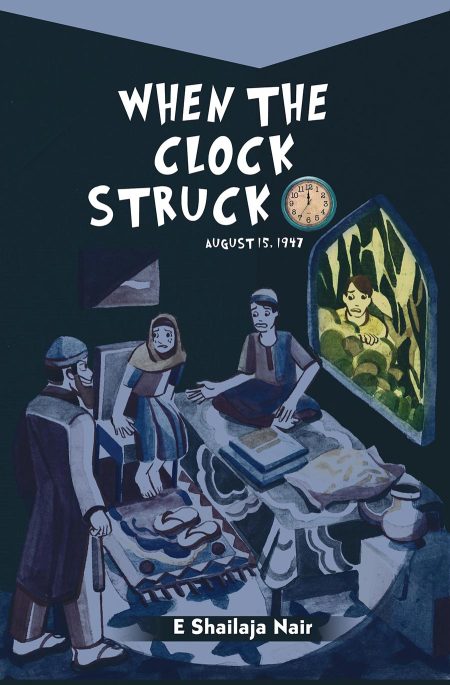
We had just won independence, but all was not well. The horrors of the partition were real. Living in the heart of a simmering Delhi, young Ashok and Priya can’t wait to meet their friends Asghar and Afshan. But the elders won’t let them. This is when sequestered in their hall, they overhear a plan: A plan to murder a Muslim family. As the kids try to find allies and save their friends, they must face people blinded by hate and personal vendetta. Will they succeed or lose their friends forever? Set against the backdrop of the tumultuous events of independence and partition, When the Clock struck 12 is a tale of innocence, unity, and courage, but most importantly, of friendship.
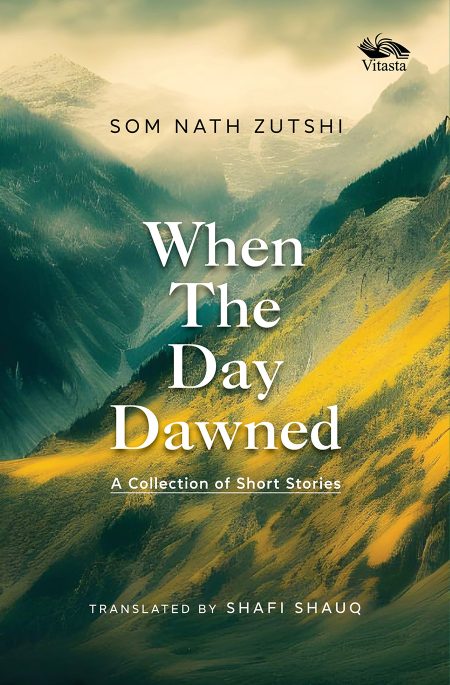
When the Day Dawned is a remarkable collection of short stories by Som Nath Zutshi, the pioneer of the short story form in Kashmiri literature. His work captures the spirit of the valley with a sincerity and purity that transcends time. In each tale, Zutshi conveys the beauty and authenticity of his homeland through characters that continue to resonate with readers today. Lauded by literary giants such as Padma Shri Rehman Rahi and Padma Shri Pran Kishore Kaul, this collection is an invaluable treasure in Kashmiri literature, preserving a legacy that will endure for generations.
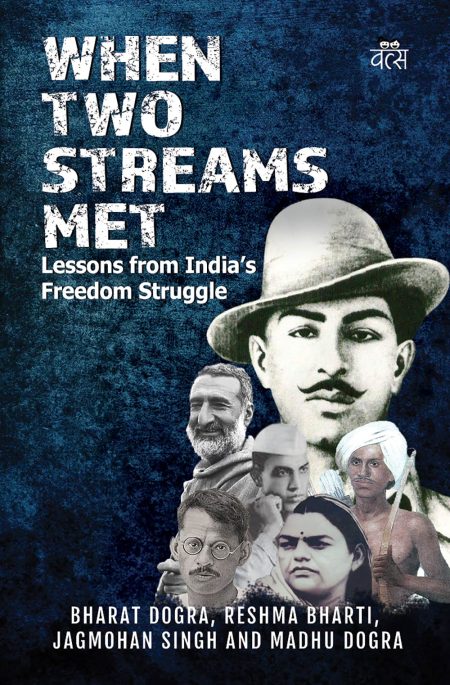
History is guilty of forgetting the sacrifices of many heroes, without whose contribution independence would never have been possible. Much has been written about our popular leaders, but do we know about the fifteen-year-old who kept shouting slogans while being brutally thrashed in a prison cell, a mother taking the bullet to save her son, or a young female revolutionary consuming poison to avoid capture. Little is known about Bhagat Singh’s daring escape with the help of a young mother, the brutal massacre of the Khudai Khidmatgars at the Qissa Khwani Bazaar, or the journalist murdered while saving people during communal riots…the list is endless. This book attempts to bring to you a few such stories of valour and the lessons we can learn from them.
Why should a man not born into fame, nor crowned by headlines, write a memoir? In Whispers of Wisdom, R K Singh answers this question with quiet conviction and stirring clarity. A chartered accountant by training but an explorer by instinct, Singh chronicles a life shaped by simplicity, service, and an unyielding commitment to purpose. From a childhood rooted in a small town to a career that spanned boardrooms and some of the world’s poorest regions, this memoir is less about self-celebration and more a generational offering. With over four decades of experience across the public, private, and entrepreneurial sectors, Singh distills his insights not as grand proclamations, but as deeply felt lessons—on work, resilience, relationships, and how to live meaningfully in an age of speed and disconnection. He writes not to boast, but to bequeath: to gift future readers a map of lived wisdom, drawn from soil as much as from spreadsheets.
Why Don’t You Convert? is a collection of twenty-three stories based on true events spanning several decades in the life of the author — from the idyllic early days as a fresh medical graduate in Kashmir, to the trauma of the refugee camps in Jammu. He looks at his subjects not only through the lens of a doctor but also through the prism of a writer, interested in their diseases as much as in the subjects themselves with their myriad physical, psychological and existential problems.
You have the story of a man unable to erase the spit that his father-in-law flings into his face; a young woman caught between the humiliation of rejection and the relentless persuasion to convert; a doctor kidnapped to treat a terrorist in his hideout; a running cricket commentary that brings to life a patient in coma; a pir with magical powers to congeal the blood in the womb of maidens; a dwarfish boy who will stop at nothing to grow tall; an old man who develops intractable hiccups after giving chase to a thief; a bear hug that robs a doctor of his sleep… each story brings alive the human touch as the deft narrative unfolds through scenes and situations, through narratives and dialogues, through drama and suspense, through agony and ecstasy, holding the reader spellbound till the very end.
What is the essence of Sanatana Dharma? Why has Hinduism endured for millennia, and is it now under threat? Can metaphysical questions like ‘Who am I?’ and ‘Is there a God?’ be answered through personal experience rather than blind belief? In this compelling collection of forty-three thought-provoking articles, Maria Wirth explores the spiritual depth of India’s ancient wisdom traditions, the power of Vedic philosophy, and the relevance of Sanatana Dharma in a modern world rife with ideological conflict. The essays span a wide range of topics—from the Kanwar Yatra and the sacred city of Haridwar, to critiques of religious conversion, violent verses in religious texts, and a powerful letter addressed to the Pope questioning aspects of Christianity.
Sa Kandasamy (23 July 1940 – 31 July 2020) -Tamil novelist, short story writer, literary critic and documentary filmmaker, Sa Kandasamy wrote his first novel Saaya Vanam at the age of 25, naming it after a village that he had lived in as a child. Now in its twelfth edition, Saaya Vanam is one of the earliest examples of modern Indian literature focussing on environmental issues. Sa Kandasamy’s Visaaranai Commission, which dealt with custodial violence and the police, won the Sahitya Akademi Award for Tamil in 1998, one of several awards and fellowships received by him. Sahitya Akademi published a series of Tamil biographies introduced by him. He wrote extensively for the literary magazine Ka Sa Da Tha Pa Ra, which featured the work of artists, writers, scholars, and translators of all hues. His film Kaval Deivangal documenting the history and techniques relating to traditional terracotta art in South India won the first prize at the Angino Film Festival, in Cyprus, in 1989. ‘Sa Kandasamy believed in expressing profound ideas in simple words and was not trapped by labels,’ says A S Panneerselvan.
The very notion of woman submissiveness, spontaneous, trained or socially conditioned, has triggered off a range of varied shades of violence around her in the form of domestic violence, female foeticide, female infanticide, rape, acid attacks, denial of parliamentary participation and so on. Through this book, which is a collection of essays on women related issues, the author has sought to highlight the images of women as they see them. The multiple ways and gender bias as seen through the eyes of women. While the male dominated feudal society discusses things from a traditional viewpoint, these essays try to touch upon what impact these incidents produce on suffering women. The central theme is why should she be treated as a commodity. Why is she defied to be commodified? Why can’t society treat her as equal?
In a world where full-time jobs and family duties collide, mothers face a mighty challenge. The relentless pressure to excel both in professional and parenting roles inevitably leads to stress, burnout, and a profound sense of being overwhelmed. Creating harmony in this multifaceted terrain of raising children is a delicate juggling act that relies heavily on meticulous planning and informed guidance. From infants to teenagers, each developmental stage presents unique challenges and opportunities that require careful consideration. With more than 15 years of dedicated service as an accomplished Childcare and Family Advisor, P Davis has touched numerous lives with her expert guidance. A devoted wife and caring mother, she oversees a successful children’s centre registered and regulated with the UK’s Department of Education. Working Mum Survival Guide is her experience on paper. It is a reflection of her many years of valuable experience. Enriched by the author’s personal narratives and trials navigating the challenges of raising a family, the book imparts a treasure trove of parenting insights gained over time. Get ready to conquer the world of work and family, one smart move at a time.
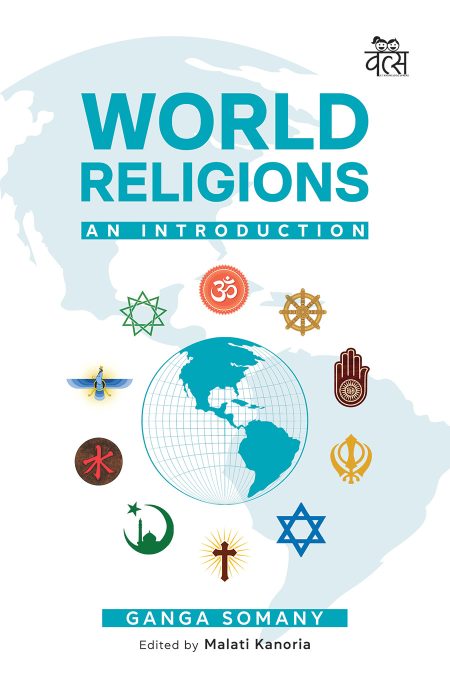
Ganga Somany was born a century ago and belonged to another era that believed religion was based on Truth and that simple living and high thinking was a way of life. She was a staunch secularist and an avid follower of Mahatma Gandhi. She wrote this path-breaking book, World Religions thirty-five years ago as a teaching tool for use in school so that children would learn that all religions are based on Truth and that differences, if any, are man-made. In her travels, Ganga found that schools in London would also teach children the rudiments of religion and philosophy—subjects that were not necessarily covered in exams. The book introduces the world’s ten most popular religions through fables and insightful life-sketches of their founders. Colourful illustrations and photographs enhance the reading experience. The book’s aim is to promote peace, contentment, love and harmony among the world’s 8.2 billion people who follow one of these religions. The author’s daughter, Malati Kanoria, brings to you this abridged and edited version of her mother’s book, World Religions: An Introduction in the hope that children will read it to know the truth behind the world’s important religions.
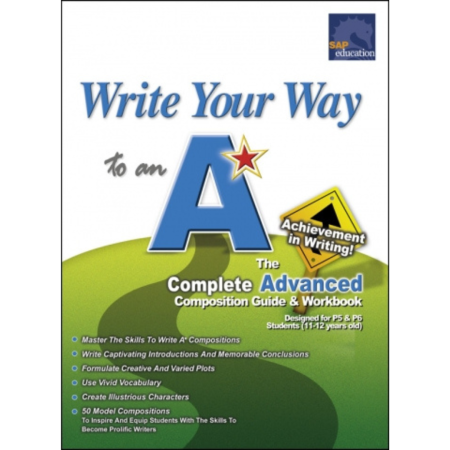
| Grade Level / Age Group: Primary levels 1 to 6 (7 – 12 years). Learning Objectives: Key Features: Unique Selling Advantages (USA): |
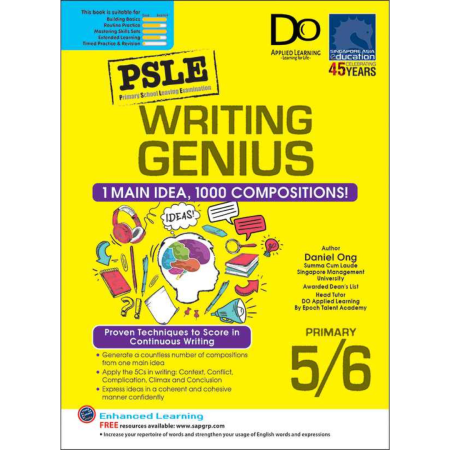
|
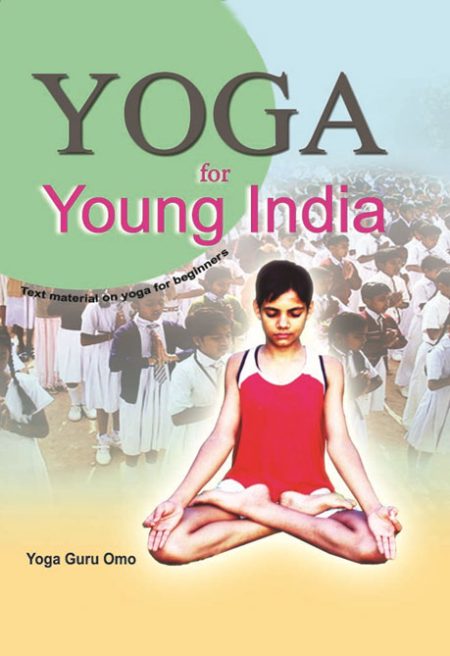
Ways to sharpen the mind and develop a better memory in children. Asanas to improve eyesight and height. Pranayam — to quieten the mind — helps students to focus and increase concentration. To enhance stamina; rejuvenate both physique and psyche of children. To inculcate positive values along with asanas. Yoga — as a tool for developing positive thoughts that increase confidence and encourage creativity — remove fears and negativity