+91 11 4109 1715
24/7 Support Center


About the Book
This book is intended for the undergraduate Electrical and Electronics Engineering students. The book covers a wide variety of topics in optimal power system operation and control of power system namely, Automatic Generation Control, Reactive Power Control, Economic Dispatch, Unit Commitment and Computer Control of Power Systems. The author has simplified the explanation of the important concepts, making the book student-friendly.
Key Features

Practical and Viva in Forensic Medicine and Toxicology is specially designed for undergraduate students in Forensic Medicine and Toxicology to help them in practical examinations. It covers all aspects of practical examinations as prescribed by Medical Council of India. It would also be useful for students of Ayurvedic, Homeopathic, Unani and Siddha systems of medicine.
Key Features:
|
|
|
|
|
|
|
|
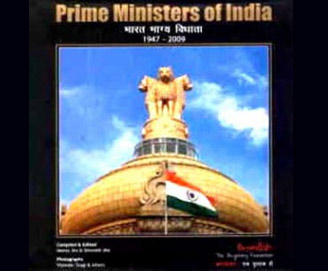
About the Book
This Coffee- table book peeps into the performances and achievements of these Prime Ministers, talks of the prevailing circumstances so that one can judge for oneself the logic and need for certain decisions taken at the time.
It has some rare photographs of our leaders.

Since the beginning of the Five-Year Plan period, public sector has been solely responsible for providing basic infrastructure through government funding. However, post liberalisation the private sector has taken a lead into the infrastructure funding and the capital market now appears mature enough to enter into project financing. However, giving the externalities, high risk and low rate of return, private investors have been finding it difficult to finance capital intensive projects.
At the same time, with the budget constraints, inherent inefficiency and regulatory mechanism, public sector has not been able to muster required resources as well. Therefore, Public Private Partnership has emerged as a viable option in infrastructure building. As a case study, author has given a narrative description of the journey attached to a successfully planned and managed PPP project, in which he served as the first Managing Director and demonstrated that with effective management such projects are not only completed in time with reduced cost, but also provide incentive to the promotion by way of reducing operating cost.
The book is a hands-on narration of the experience that the author has in the execution of Kutch Railway, one of the earliest PPP rail projects on the Indian Railways. One of the first publications of its kind, the book will be of interest to the spectrum of readers from policy makers in the government to project financing companies, construction agencies, academic institutions etc.
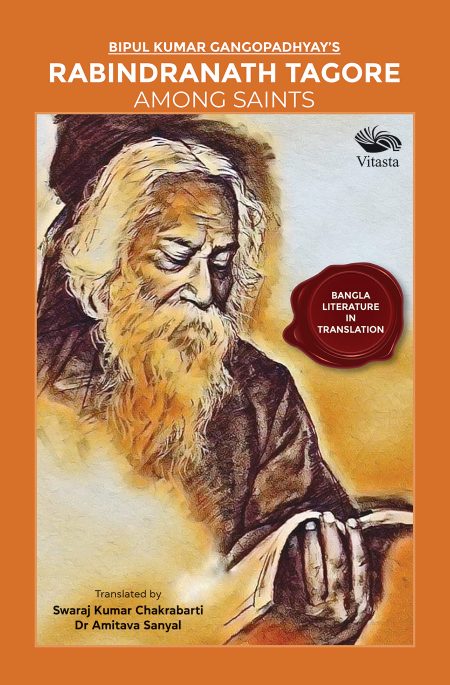
In the eyes of the world, Rabindranath Tagore is celebrated as the illustrious bard of Bengal, a name that resonates globally. His literary works and philosophy have touched the hearts of generations, leaving an enduring legacy. Yet, hidden behind the timeless verses and laurels lies a lesser-known truth. Throughout his life, Tagore sought the company of saints, a quest that profoundly enriched his spirit. These personal encounters with India’s spiritual luminaries, however, remained concealed in silence, unspoken and unwritten. It was Bipul Kumar Gangopadhyay, a renowned figure in India’s spiritual and literary realms, whose determination and relentless research culminated in Sadhu Sannidhey Rabindranath, a Bengali masterpiece that reveals Tagore’s intimate experiences with nineteen sages. Rabindranath Tagore Among Saints is the first-ever English translation of these sacred encounters. This book illuminates the profound spirituality that shaped the sage poet’s journey, offering readers a fresh perspective on the man revered as Gurudev by Mahatma Gandhi. It invites you on a spiritual pilgrimage to the inner sanctum of a literary giant’s soul.
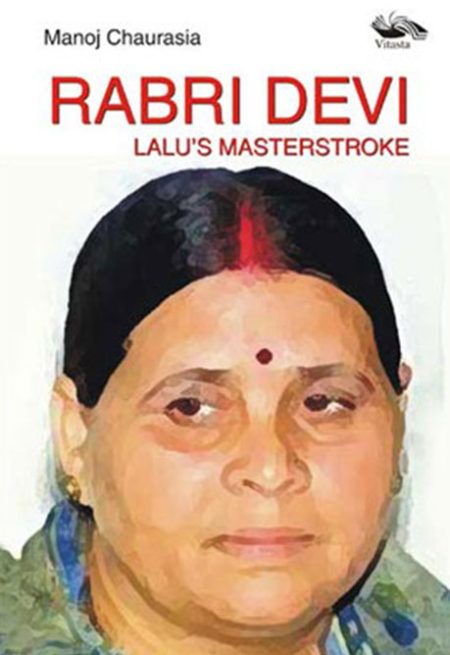
The script of Rabri Devi’s journey from her ancestral home in Selar Kalan village to 1 Anne Marg, her official residence as the Chief Minister of Bihar, appears to be borrowed directly from a Bollywood movie. This journey into limelights began right from the time when Rabri moved into a one room chaprasi quarter of the Patna Veterinary College which housed her husband, his elder brother and his wife, and more than half a dozen children.
Now the leader of the Opposition, she awaits her chance to yet again take a shot at the chief minister’s post. Rabri’s ascendancy was taken by many as the rise of women power in Bihar. Her humble background and the rustic touch perhaps inspires millions of women who never get an opportunity to acquire a good education because of the social prejudices in a male dominated feudal society, which is in turn used to keep them perpetually backward. Manoj Chaurasia’s account of Rabri was inspired by this. He gives an insight into the making of Rabri Devi. The narrative moves on gradually from Rabri’s childhood days to her assuming power and then as the Leader of the Opposition. He talks about the strength of character of this rustic and nearly illiterate housewife who rose from the ‘dungeons’ of an anarchist Bihar–to rule and lead.
This book is essentially not a biography but a comprehensive insight into the lives and turmoils of Rabri and her husband Lalu Prasad Yadav, who rose to the ranks of Chief Ministers, in a feudal, casteist Bihar
An accidental entrant in politics, Rajiv Gandhi took the nation by storm with his vision of information technology. He adopted Gandhian Swaraj by espousing grass roots democracy.
On the flip side, Rajiv proved a poor judge of the company he kept. His minister VP Singh deserted him on the Bofors kickback issue. A whole lot of other colleagues in his cabinet abandoned him before the 1989 elections. He was also impatient for peace, signing accords in rapid succession with the respective secessionist groups of Mizoram, Assam and Punjab, and going on to persuade Sri Lanka to allow the deployment of Indian Peace Keeping Force in its territory. India and Rajiv too had to pay a heavy price for this last accord.
In Rajiv Gandhi’s assassination, the country lost a great leader. No doubt he made some mistakes, but he also had the uncanny ability to learn from them. What would have been the fate of the nation if Rajiv Gandhi were living? It is for the reader to draw this conclusion.
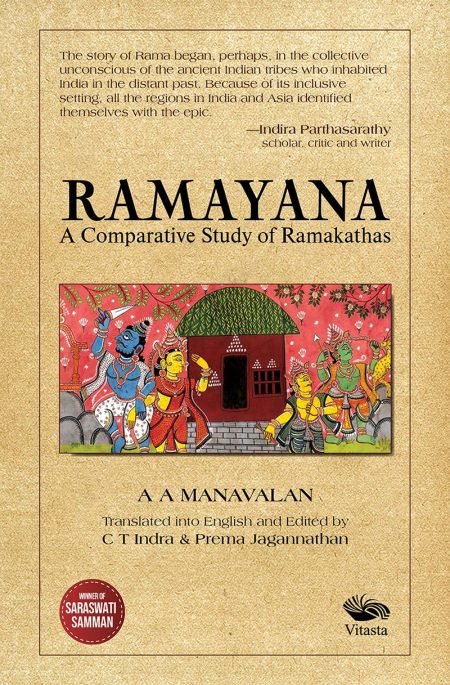
The story of Rama has been a part of our lives for ever and will probably continue to be so…. But most of us are unaware that the story has as many variations as there are versions. In the author’s own words Valmiki’s Ramayana has taken several ‘incarnations’ due to the efforts of many great writers who wanted to bring the story to their own people in their own language. In his book, Professor AA Manavalan, an eminent scholar in the field of comparative literature, has painstakingly made an intensive and analytical study of the Rama story in 48 languages including the folk tradition. Professor Manavalan’s main focus is on how the receiving language’s rendering could make a greater impact than the original in the popular imagination of the people. Ramayana – A Comparative Study of Ramakathas, an English rendition of Ramakaathaiyum Ramayanangalum, presented by CT Indra and Prema Jagannathan, captures the thematic purpose of Prof AA Manavalan’s Tamil original and creates a forum ‘to discuss whether Ramayana is an ethical text or an ideological text’.