+91 11 4109 1715
24/7 Support Center

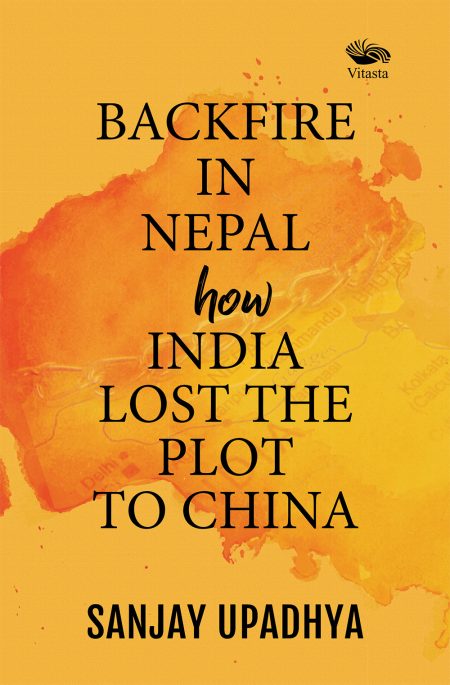
Backfire in Nepal explores how China has become the ultimate beneficiary of India’s democracy-promotion agenda in Nepal. New Delhi had made a bold bet in 2005, but one that contained two mutually fortifying flaws: the abolition of the monarchy and the empowerment of the former Maoist rebels. The world’s only Hindu monarch and kingdom were bound to India in a special relationship that neither country needed to define or assert. True, Indians had been put off by successive Nepalese monarchs playing New Delhi off against Beijing. In retrospect, a little more compassion for Nepal’s compulsions might have put things into sharper relief. Nepalese Maoists, being communists first, were trained to denounce Indian ‘expansionism’ before American ‘imperialism’. Experience may have impelled the senior leadership to make practical compromises. It was a leap of faith for New Delhi to trust the leadership to rein in their cadres’ radicalism. More broadly, since India had also enlisted Western democracies, it needed to address their often-contradictory concerns throughout Nepal’s turbulent transition. The Chinese could act purely on their national interests. India continues to misread how Beijing sees Nepal – both in terms of China’s visions of the past and the future. This complicates the core trilateral challenge: ensuring that Nepal is not sucked deeper into the Sino-Indian vortex, only to be scorned for aggravating the Asian giants’ rivalry.
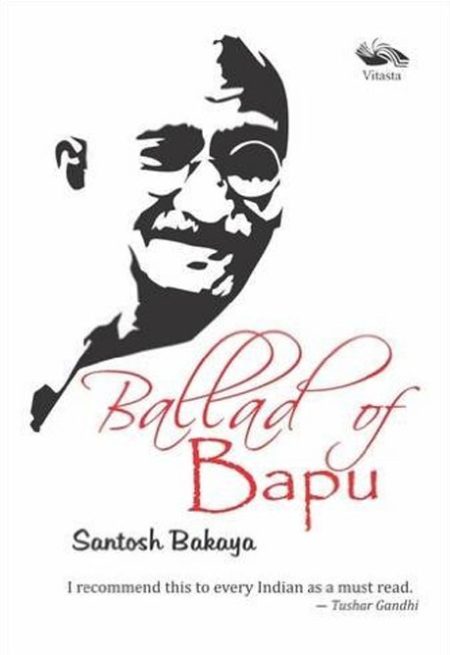
About the Book
Santosh Bakaya is the first of Gandhi’s innumerable biographers to envision his life as a poetic saga. In the Ballad of Bapu, she has produced a tour de force that spans his life, including many little- known episodes. Her exuberant language brings Gandhi’s spirit vividly to life like never before, and explores the varied potential of Indian English beautifully. We get the full flavour of how the ordinary human being, Gandhi, with his extraordinary nonviolent ways, helped to create a great India; a shining example for the world to follow.
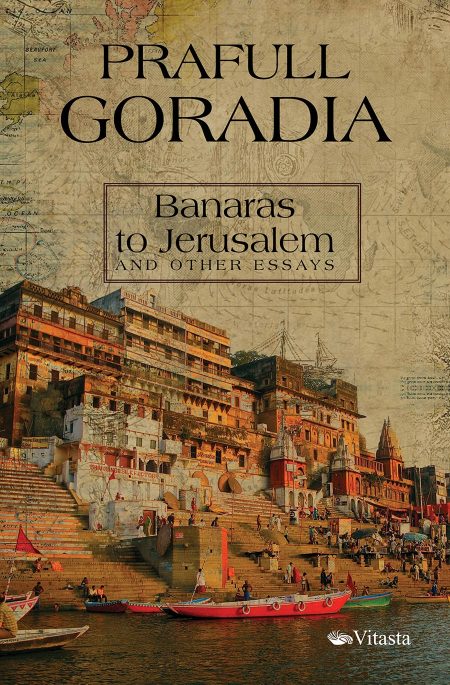
How old is Banaras? Possibly, even time may not have an answer to that. Unquestionably, Jerusalem is blessed by divinity, but Banaras, which has been invaded forty times, destroyed twice, and yet has lived on since time immemorial deserves to be called Jerusalem’s sibling in divine status, historical antiquity, and religious significance. From extolling the virtues of Banaras to calling our constitution a compromise document; from love jihad and same-sex marriages to insisting India is a democracy despite what critics may claim, Prafull Goradia comments on myriad topics in this exhaustive collection of essays. He questions why China does not have any friends or allies beyond North Korea and Pakistan. And asks us to be wary of China’s intentions as he believes its President for life, Xi Jinping’s will to dominate the world is as eloquent as any Mein Kampf. Have you ever wondered why the Jews remained homeless until 1948, what can the killings in the USA teach us? Is fascism a dirty word? Why has West Bengal become a graveyard of industries? Goradia reveals it all.
About the Book:
Good governance is the greatest act of patriotism in 21st-century India, says Maj Gen Dipak Mukherjee, in his book, Battle for Hearts & Minds from North East to Kashmir and Beyond. Just military intervention cannot compensate for governance deficit, argues Maj Gen Mukherjee, sharing his unique insight into how the Indian Army actually won wars on the ground. When the moral compass was steady, as in Nagaland, in the 1950s and ’60s or during the Bangladesh war of 1971, the Indian Army achieved victories far bigger than military surrender.
But in Sri Lanka, India’s moral compass was severely tested. As one havildar said, ‘Sahib, we all are now in Sri Lanka. Last time in ancient history, Ram came here with his army to fight Raavan. Can you tell us, who is our Raavan here?’
Pleading for a larger perspective, he says, the battle for hearts and minds will continue to inform our understanding of war. In this journey, General Mukherjee’s insights are a valuable milestone. Written with poignant exuberance, this book is recommended for reading particularly by the young generations of India and neighbouring countries. It is equally good reading for the older generation of people to reflect and introspect upon the state the nation has been consigned to and bequeathed to young Indians. It is indeed a low bottom line from where young Indians have to lift India in this so-called Asian century.
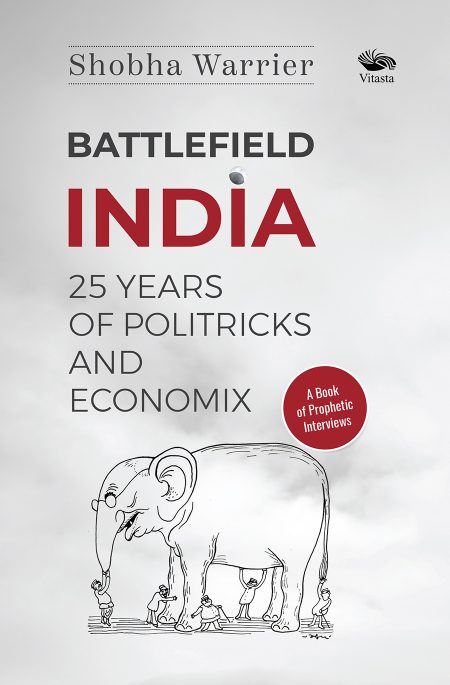
Battlefield India is a chronicle of the near past which tells us how the cycle of chaos repeats itself. The story starts in 1997 on the eve of India’s 50th year as an independent nation, and ends in 2022 as free India celebrates its 75th birthday. The political, economic, and social events of the last 25 years are recounted through the voices of people the author has interviewed over the years. These voices include many who shall go down in the history books as legends of this period in India’s long history: among others, the man behind the Green Revolution and a member of independent India’s Constituent Assembly C Subramaniam, the former President of India R. Venkataraman, the eminent agronomist Dr M S Swaminathan, the acerbic cartoonist Abu Abraham, the inimitable political commentator Cho Ramaswamy, and the ever eloquent MP Shashi Tharoor.
Battlefield India is a chronicle of the near past which tells us how the cycle of chaos repeats itself. The story starts in 1997 on the eve of India’s 50th year as an independent nation, and ends in 2022 as free India celebrates its 75th birthday. The political, economic, and social events of the last 25 years are recounted through the voices of people the author has interviewed over the years. These voices include many who shall go down in the history books as legends of this period in India’s long history: among others, the man behind the Green Revolution and a member of independent India’s Constituent Assembly C Subramaniam, the former President of India R. Venkataraman, the eminent agronomist Dr M S Swaminathan, the acerbic cartoonist Abu Abraham, the inimitable political commentator Cho Ramaswamy, and the ever eloquent MP Shashi Tharoor.
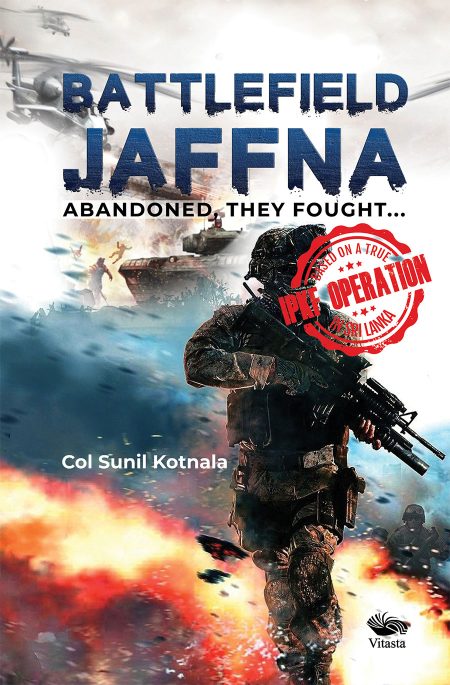
On the night of 12 October 1987, in a Special Heliborne Operation, 150 soldiers of the Indian Peace Keeping Force (IPKF) were trapped inside Jaffna University, Sri Lanka, surrounded by fighters of the Liberation Tigers of Tamil Eelam (LTTE). As the rest of the IPKF force desperately tried to break through the well-entrenched LTTE defences, the soldiers found themselves slowly bleeding to death. Miserably behind schedule, outnumbered and outgunned with ammunition and supplies fast dwindling and no reinforcements in sight—the rescuers fought with their backs, literally, to the wall. With the politicians playing their own games and the Indian spy agencies supporting the LTTE against them, the IPKF fought to determine who was friend and foe. Battlefield Jaffna takes you into the heart of the struggle, right in the middle of the most brutal, intense and dirty battle fought in Sri Lanka. It is a story of men without bullets—of men with only their courage left to defend themselves as the battle wore on.
“Ramnath Goenka, a freedom fighter in his own right, had been instrumental in giving credence to the Right to Speech guaranteed in the Constitution of India. Though his financial dealings were questionable, Goenka had earned a reputation for his fierce and fiery criticism of the Central Government and the all-powerful Prime Minister Indira Gandhi, in particular. His newspaper, The Indian Express, minced no words in criticizing the government policies even as the government used my independent investigation to pressurize him. To his credit, Goenka neither directly nor indirectly tried to scuttle the investigation though he was a powerful man.”
“Romen Chatterjee, the ring leader, insisted that the prosecutor apologized in front of all the staff members. The prosecutor, who had scolded a staffer for violating provisions of the Companies Act 1956, was scared but did not want to apologise. While I was entering my chamber, I heard Chatterjee talking to a reporter of the Amrita Bazar Patrika. Anticipating that the matter will be blown out of the proportion, I cooked up a story. I called Chatterjee in my chamber and told him that I had asked the Commissioner of Police to take action against the erring staff and that the Commissioner had said that talking to the Press would render him liable for a disciplinary action. Not knowing that I had overheard him speak to the reporter and that the story I was telling him was all made-up, Chatterjee started sweating. I was happy that I had saved the department the embarrassment.”
| Battleground South Asia offers a sweeping, eyewitness account of the political storms, wars, and power struggles that have shaped one of the world’s most volatile regions. Drawing on decades of on-ground reporting, Prem Prakash traces the arc of history from the decline of colonial rule to the rise of modern nation-states—India, Pakistan, Bangladesh, Sri Lanka, Nepal, Myanmar, the Maldives and Afghanistan—each grappling with identity, ideology, and external interference. The narrative revisits decisive moments: India’s constitutional birth, Pakistan’s repeated military takeovers, Bangladesh’s violent liberation, China’s growing footprint as it maps its ambitious Belt and Road Initiative, Afghanistan’s tragic descent into geopolitical conflict, the Sri Lankan civil war, and the recent shifts that have redrawn alliances. With personal accounts from battlefields, border crossings, and diplomatic flashpoints, Prem Prakash presents a vivid portrait of South Asia’s past and the dangerous uncertainties of its present. As global superpowers compete for control and influence, the region, now pitted against the turmoil in West Asia, stands at a critical turning point. Battleground South Asia explains how history brought us here—and what the future may demand from nations still searching for stability. |

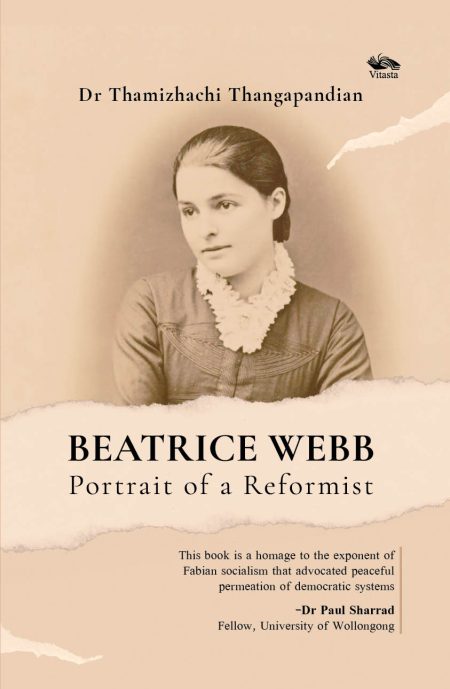
Beatrice Webb, a pioneering social reformer and co-founder of the London School of Economics and Political Science, left behind a rich intellectual legacy. This insightful study examines her autobiography, My Apprenticeship, not just as a historical account but as a work of literary significance. By tracing Webb’s journey of self-discovery, her critique of class structures, and her evolving engagement with the working class, the book underscores the depth of her narrative. Placing her work alongside other literary and intellectual figures of her time, this research highlights the broader cultural and autobiographical relevance of My Apprenticeship, offering a fresh perspective on its place in Victorian literature
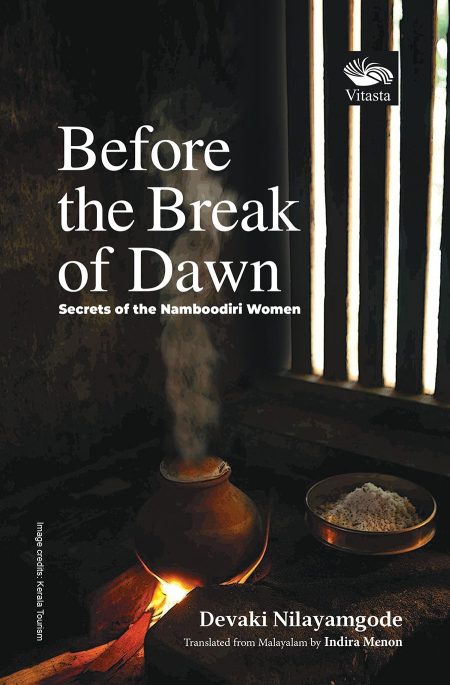
Before the Break of Dawn: Secrets of the Namboodiri Women is a celebration of life in a Kerala Brahmin household. Most of the narratives start before dawn. The ordinary business of having a bath, the almost compulsory visit to the temple, the task of caring for the unapologetically patriarchal male Namboodiris, the retiring ladies of the house and the Irikkanammas, all following a strict code of conduct. One can smell the lazy smoke of the kitchen fires, the clatter of vessels being cleaned as the household gradually comes awake, brass lamps burnished to look like gold, the chill of the sleeping waters of the pond, the subtle fragrances of blooms easily identifiable by their smell alone, the simple but wholesome and highly repetitive meals of the day, interspersed with rare festival days, the highlight of which is obviously the feast, with the winding down of the day into soft nights where birdsong and fireflies are very much part of life.
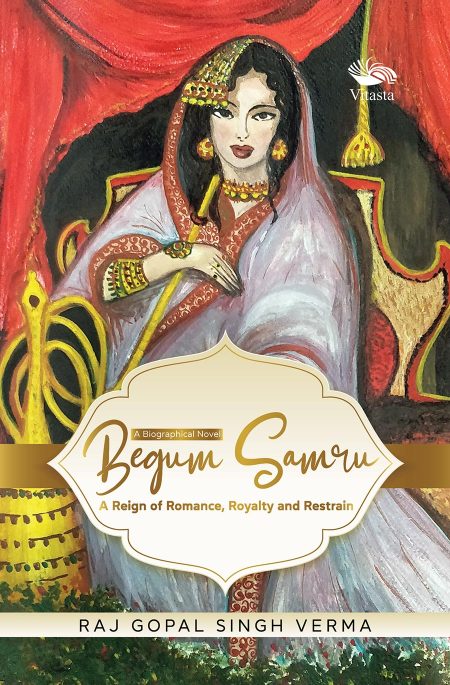
This is an extraordinary tale of a seemingly ordinary nautch girl who ruled over the province of Sardhana for almost fifty-eight years. She cast a spell on the world with her beauty, intelligence, valour and diplomacy. This biographical account accompanies the matriarch in her transformative journey from a girl named Farzana to Begum Samru. Her story has its fair share of war, politics and diplomacy alongside love, betrayal, conspiracies and ruthlessness.
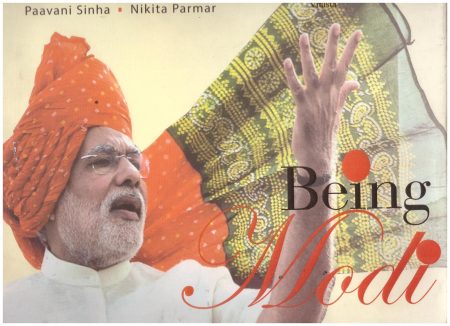
Narendra Kumar Damodardas Modi’s charisma stems from the fact that no matter how popular he becomes, he remains an enigma. This book is a glimpse of a man through pictures and not too many words. The aim is to portray, not propagate.
This book takes the reader on a journey from his humble beginning in a small mofussil village in India to now when the country looks towards him to relieve it from the quagmire that it finds itself in. The reader is invited to share his triumphs and his failures, his dreams and his aspirations, not for himself but for his motherland. Because as we discovered, Modi essentially is what his country makes of him and he makes of it….
Narendra Kumar Damodardas Modi’s charisma stems from the fact that no matter how popular he becomes, he remains an enigma. This book is a glimpse of a man through pictures and not too many words. The aim is to portray.
This book takes the reader on a journey from his beginning in a small mofussil village in India to now when the country looks towards him to relieve it from the quagmire that it finds itself in. The reader is invited to share his triumphs and his failures, his dreams and his aspirations, not for himself but for his motherland. Because as we discovered, Modi essentially is what his country makes of him and he makes of it….
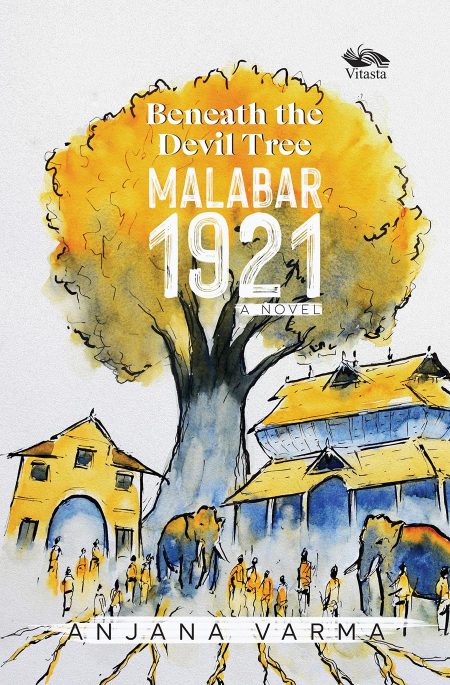
Something bitter and choppy is bubbling beneath the surface. The Matriarch senses this and it is what she most dreads. The volcano of human emotion that has been hitherto somewhat dormant is in danger of a violent eruption. The searing lava of hatred and revenge would flow out and all that remains would be the burnt out ashes of sorrow, loss, and suffering. The Matriarch fears for her loved ones and worries about the fate of the land. Ernad, Malabar 1921. The Khilafat movement has found a firm footing and has succeeded in inciting the pride of the essentially poor and downtrodden Mappila community. The oppression meted out by the Hindu landlords and the injustice of the British government’s land reforms would no longer be tolerated, the newly formed CongressKhilafat Alliance was determined. But reality is a strange aberration. The Sixth Tirumulpad, a haughty landlord, Alijan Sahib, the local Khilafat kingpin, Mammad, the young secretary, Stanley-Pat Eaton the rich planter are all caught plumb in the middle of what follows. Apart from the Matriarch herself, Benu, Sethu, Priya, Razia, Winefred Eaton, and the tribal lass, Cheenkanni all find themselves staggering as things take a turn for the worse.