+91 11 4109 1715
24/7 Support Center

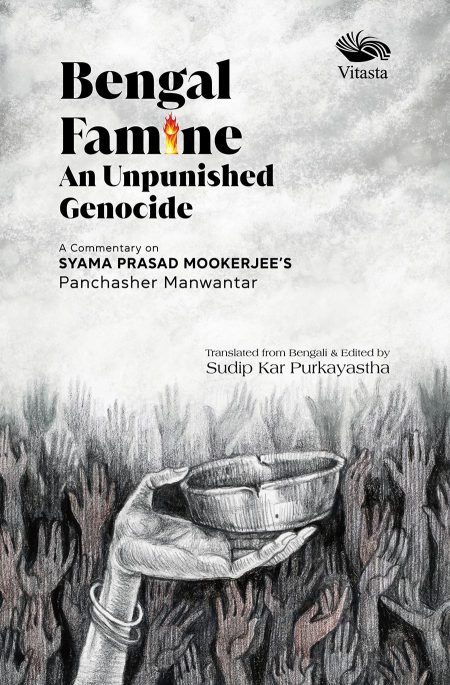
This book is a commentary on the 1944 book Panchasher Manwantar by Syama Prasad Mookerjee, a political stalwart of the time. In his book, Syama Prasad argues that the famine of 1943-44 that is said to have caused the death and displacement of three million people, tearing apart Bengal’s social and economic fabric, was a man-made disaster. The acute food shortage was deliberately created by the Churchill government to punish a rebellious, militant Bengal. The colonial government adopted a ‘scorched-earth’ policy, burned the boats that carried grain, promulgated an anti-hoarding act that prevented farmers and householders from keeping even small buffer stocks, while hoarding by private lobbies was allowed resulting in huge price rise. This policy was actively supported by the communal practices of the local Muslim League government. Translator Sudip Kar Purkayastha believes this to be a deliberately crafted and ruthlessly implemented policy that resulted in a GENOCIDE of Bengalis and notes that its perpetrators have not yet been called to account.
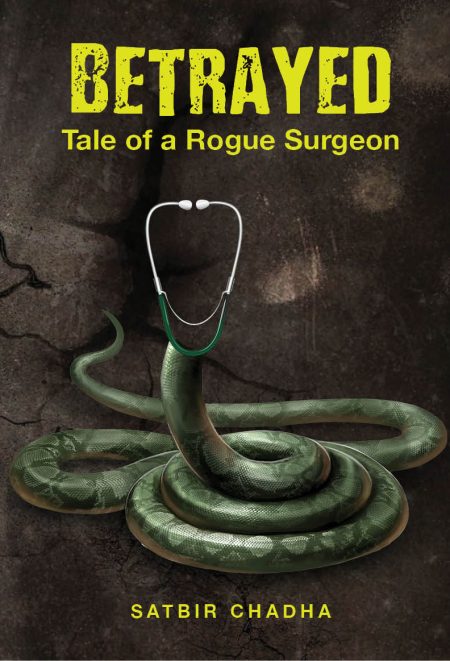
A young widow, Mohini, from the Punjab of undivided India, in a bid to escape sexual molestation by her own brothers-in-law, flees barefoot on a journey that delivers her into the hands of her childhood friend, Anjana, in faraway Abbottabad. Under the kind and loving care of Anjana and her husband, Kartar, she goes on to become a doctor and eventually a powerful IAS officer. Running parallel is the story of the young couple, Dr Amit Biswas and his wife Anita. Amit’s ambition to be a great healer for the poor is gradually derailed by his greed, spurred by the rich and successful in his fraternity.
This book shocks you with details of numerous medical malpractices perpetrated by the same noble people we turn to when in illness, even before we turn to God. From innocent small kickbacks to clandestine drug trials, from small and big surgeries to highly specialised procedures, medicines to implants, ethics are thrown to the winds at the altar of Lucre. The book ends with a chilling and totally unpredictable climax.
About the Book
Dead bodies of women, all strangled, begin appearing on the hills lining the serpentine Gurgaon-Faridabad Road. The faces have been mutilated beyond recognition. A Bollywood film director has an adulterous affair with his scriptwriter’s wife and receives blackmail threats. A night time rendezvous with the blackmailer leads to murder. Prostitutes have been disappearing for years from Mumbai’s world famous Kamathipura red light area. Is there a monstrous shadow looming over all these events? As the police investigators from Gurgaon travel to Goa following tenuous leads, mysterious events on a film location shooting and murder and mayhem on a casino ship lead to a nerve-wracking and totally unexpected climax.
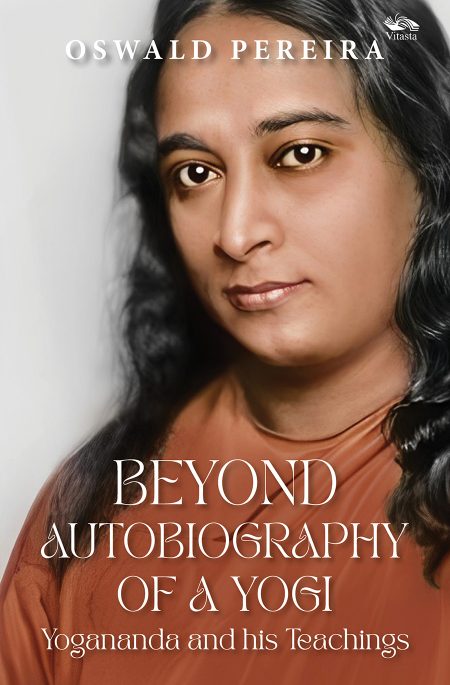
Millions of spiritual seekers consider Paramhansa Yogananda’s Autobiography of a Yogi their Gita or Bible of self-realization―a journey to discover our body, mind and soul’s oneness with God’s omnipresence. Oswald Pereira in this book captures both the essence of the autobiography and Yogananda’s core teachings. The author analyses the autobiography in the first part of the book, while in the second part, he evaluates Yogananda’s philosophy of universalism, unity and oneness of people and of religions and discusses the parallelisms between Krishna and Christ’s teachings, Kriya Yoga’s scientific technique of God-contact, and various other aspects of God. He compares Sri Ramakrishna and Swami Vivekananda’s philosophy of universalism with that of Yogananda. Yogananda’s metaphysical gyan helps us to renew God-contact and rediscover the joy within. His philosophy of universalism and oneness is also very relevant in today’s environment of communal disharmony and discord.
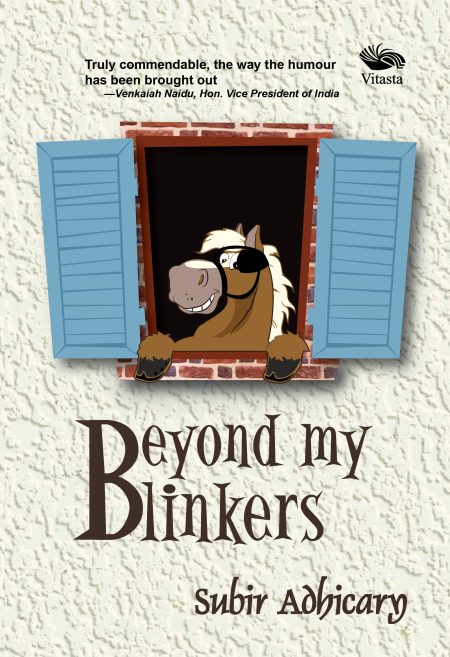
Dwarka, New Delhi’s largest subcity is home to 1.1 million people. This is veteran blog writer SubirAdhicary’sMalgudi. Competing with Krishna’s Dwarka, the name denotes aspirations. From the ruins of a medieval baoli rise dreams of a smart city. This book offers pouches of humour culled from places like Pune, Kanpur, Lucknow and the modern Dwarka and the everyday experiences provide vultures like Subir, the masala to write about the mundane matters of life which we miss and mess with.
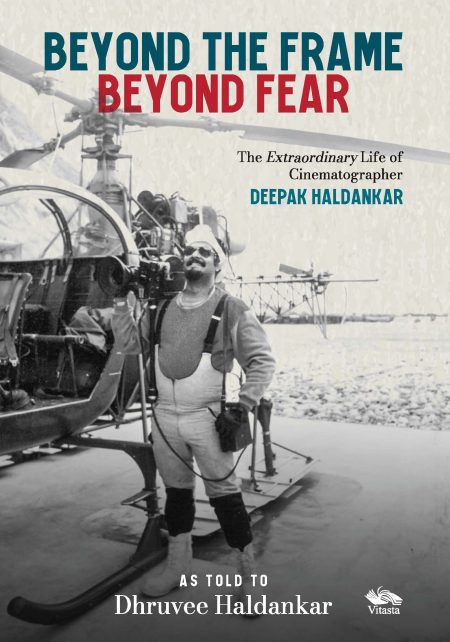
| Beyond the Frame, Beyond Fear unveils the remarkable life of Deepak Haldankar, legendary cinematographer whose lens captured the soul of Indian cinema and news for decades. Through personal stories, rare archival material, and heartfelt reflections, Dhruvee Haldankar chronicles her father’s journey—from assisting Nariman A Irani on classics like Talash and Maharaja, to creating over 5,000 documentaries across the globe, collaborating with some of India’s brightest minds along the way. This memoir is both a tribute to creativity and a testament to resilience. Dhruvee reveals the daring shoots, technical brilliance, and quiet lessons that shaped her father’s work. Beyond the Frame, Beyond Fear invites readers to see life through a lens that transforms fleeting moments into timeless stories. |
This book examines two collective actions set apart by nearly a decade. It studies the conversations that played out on Twitter (now X) during the 2012 Delhi rape case, also known as the Nirbhaya case, and the 2021 Farmers’ agitation, where social media served as a bridge between the offline and online worlds. Asynchronous communication on social media by concerned individuals, journalists, and news organisations has been systematically collected, collated, and discussed. The book underscores the importance of research on social media activism in India, making it a significant academic resource spanning diverse disciplines. It caters to scholars and students in mass communication, journalism, new media, social media, computer-mediated communication, sociology, political science, and law. In the world of tweets and likes, this book offers insights for a deeper understanding of today’s ever-evolving media landscapes.
What role did ministers like Shivraj Patil, P Chidambaram, AR Antulay, Digvijay Singh and officials like Chitkala Zutshi, Dharmendra Sharma, Hemant Karkare, RV Raju play in the Hindu Terror narrative? Here is a version of a man who almost was taken captive and was to be traded for release of Ajmal Kasab, but saved by sheer providence. In his insider account, author RVS Mani discloses how the country’s internal security establishment functioned in the period of 20042014 when India faced some of the bloodiest terrorist carnages. This former Home Ministry official posted in the Internal Security Division between 20062010 poses several questions which the nation should seek answers to.
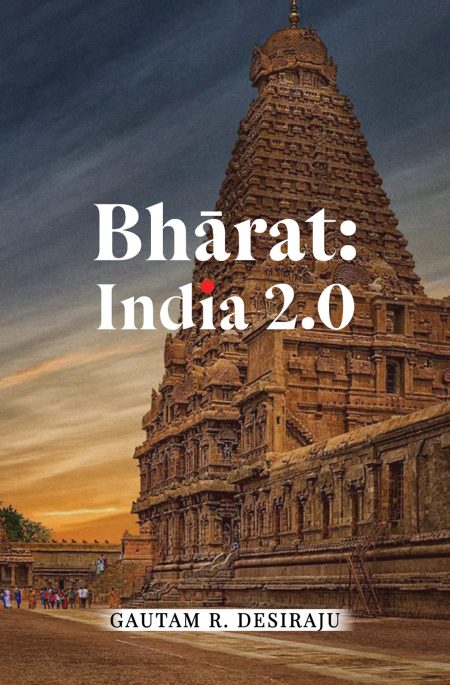
Bhārat: India 2.0 is a brilliant vision for the nation by one of India’s most prominent scientists. Through a meticulous analysis of the proceedings of the Constituent Assembly, Prof. Desiraju demonstrates the limitations of the Westminster model of governance for a country that has nurtured the longest extant human civilization. Specifically, the Indian Constitution of 1950, with its subsequent amendments, has many fault lines related to federalism, secularism and caste-based reservations that will lead to problems in the future. Going beyond conventional analyses, Desiraju argues for changes that acknowledge the civilizational aspects of a deeply religious country and proposes a unique solution to this problem. — Padma Shri Subhash Kak (Scientist, Indologist, Vedic Scholar)
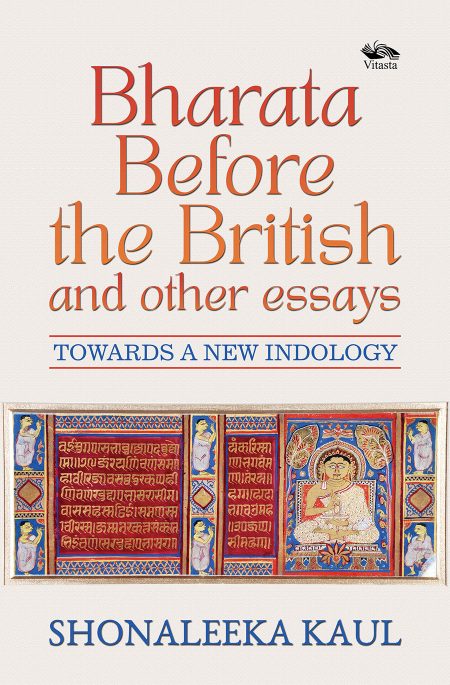
Bharata Before the British and Other Essays explores a number of fundamental questions regarding the history of early India: Did the British bring India into existence or is she an ancient nation? Was Kashmir ‘unique’ and isolated or thoroughly connected with the rest of India? Is myth the antithesis of history or the self-expression of historical communities? Was there an Indic vision of history and time as different from modern Western notions? Was Sanskrit an elitist language or one with public reach and relevance? Did it also speak for the weak and powerless, including animals? Could Indic architecture be an instrument of liberation (moksha)? What was the ancient idea of erotics (kama) and how did it relate to society? How did it feel—smell, sound, touch, appear—to live in our earliest cities? What is the state of Indian history today and where do we go from here? Filling gaps in our knowledge about India and its regions, correcting misplaced perspectives, and offering culture-sensitive methods with which to work through our texts and traditions, this outstanding collection of 17 fascinating essays invites us to rethink our understanding of India and Indology. Written in a lucid and engaging style, it brings exciting new insights from the world of scholarship to the general reader who is curious to learn authentically about our past.
“Bhartiya Rajneeti Mein Mahilaen: Avadharana aur Vimarsh offers a distinctive perspective on women’s political empowerment. Rather than relying on broad claims, the authors present well-reasoned arguments that cut through both traditional misconceptions and foreign theoretical impositions. The book places the Indian experience in conversation with global feminist thought, highlighting India’s own rich intellectual traditions and the agency of its women. In keeping with Delhi University’s 2020 syllabus, this work brings together conceptual analysis, key debates, and scholarly insights that deepen one’s understanding of women’s roles in Indian politics. It serves as a valuable resource for students of political science, gender studies, and sociology, and will also be helpful to UPSC aspirants seeking clearer insight into issues related to women and governance.”
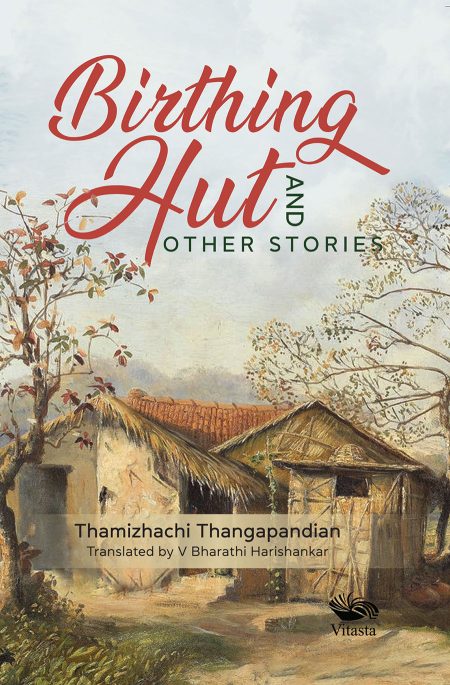
Birthing Hut and Other Stories is the English translation of the Tamil original, Muttu Veedu. It is a collection of five stories where the narrative world is peopled with ordinary men and women. They are the author’s protagonists. The extraordinary moments of their ordinary lives provide a flash of insight and awareness of human values, vulnerabilities, fallacies and prejudices. Thamizhachi weaves in and out of the narrative with ease, forcing the readers to observe and understand the characters and their lives, and eventually taking them to a place where judgment is replaced with empathy.
From a modest chieftaincy to a mighty empire that thundered across oceans—and then, slowly, back to obscurity. History of the Cholas traces the remarkable journey of the Chola dynasty with colour, depth and feeling. Its kings and queens, princes and princesses, brave generals and ordinary subjects all walk through these pages like living figures. We see palaces glow under torchlight, temples rise skyward stone by stone, and endowments flow from monarchs, commanders and humble devotees alike. There are wars and conquests, yes—but also betrayal, loss and decline. M Rajamanikkanar gathers history, inscription, folklore and imagination into a narrative that is as powerful as it is human. This translation brings his masterpiece to a new audience, inviting readers to step into a world where ambition shaped kingdoms and faith carved monuments that still stand.
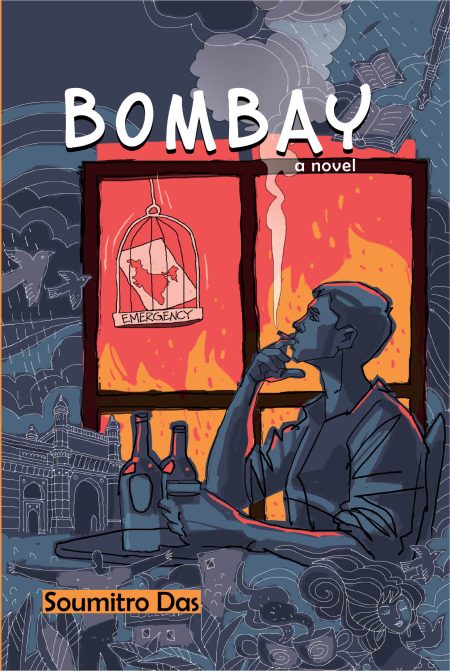
Bombay in the 1970s—a city of dreams, a city that seduces, a city caught in political turmoil. Sam, the bohemian dog, struggles to escape the suffocating grip of his family’s puritanical values. While the country breathes heavily under the Emergency, Sam discovers a hidden talent for writing, pouring his frustrations—cultural, sexual, and personal—into words. But his self-destructive path, fuelled by drugs, alcohol, and fleeting college fests, only deepens his inner conflict. Destiny brings him to meet Isabella Gondola, a fiery Naxalite revolutionary with a fierce will to bring a change. In her, Sam sees someone who dares to dream of a world without oppression. Together, they fight to keep their love alive in a city and society that threatens to tear them apart. But soon they get caught in the vicious loop of politics. Tortured and interrogated mercilessly, they face the brutality of a regime determined to break their spirits. Amid the chaos of love, revolution, and family, Sam must find the courage to defy everything and express his love for Isabella. Will Sam break free from his family’s control? Will their love survive? Bombay is a raw, powerful tale of teenage rebellion, love, and the painful journey toward self-liberation in a world on the brink of change.
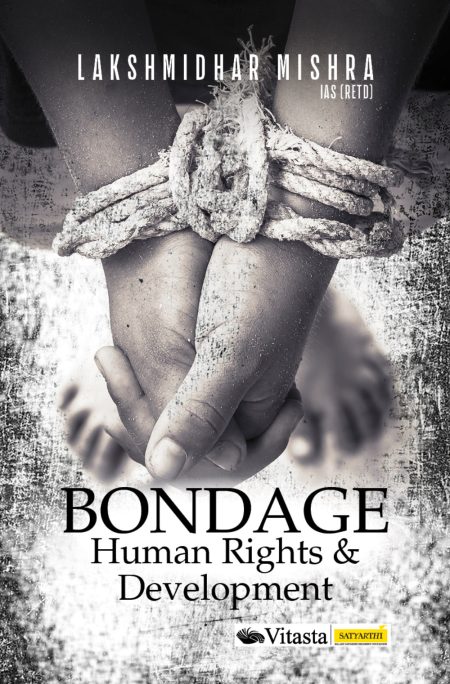
Most Indian States and UTs are in denial mode about the existence of bonded labour. Law enforcers have mostly not lived up to the laudable intentions of the framers of the Bonded Labour (Abolition) Act, 1976. Governments failed to translate into action the directions of the Supreme Court and recommendations of the National Human Rights Commission. This book seeks to change the mindset of those tasked with removing modern-day bondage. It seeks to promote a broad awareness and critical consciousness about the provisions of the Constitution in the minds of all stakeholders, especially non-profits. This has been done through a dialectical exercise or Q&A format. It should enable every reader to think, reflect, critically analyse and act accordingly. The author, Dr Lakshmidhar Mishra, is uniquely placed to write on this subject, as he was during his long career Union Labour and Parliamentary Affairs Secretary (1996-200), Special Rapporteur, National Human Rights Commission (2006-2011) and Special Advisor, National Commission for Protection of Child Rights (2011-2012) and Advisor to the ILO (2000-2003). He is currently an Independent Advisor to International Justice Mission, an international NGO, a position he has held since October 2013. He was also a Member of a Committee constituted by the High Court of Delhi to investigate labour irregularities connected with the Delhi Commonwealth Games, 2010.