+91 11 4109 1715
24/7 Support Center

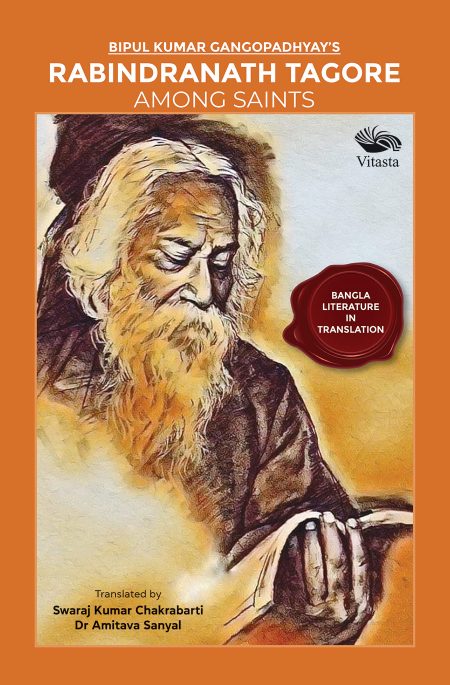
In the eyes of the world, Rabindranath Tagore is celebrated as the illustrious bard of Bengal, a name that resonates globally. His literary works and philosophy have touched the hearts of generations, leaving an enduring legacy. Yet, hidden behind the timeless verses and laurels lies a lesser-known truth. Throughout his life, Tagore sought the company of saints, a quest that profoundly enriched his spirit. These personal encounters with India’s spiritual luminaries, however, remained concealed in silence, unspoken and unwritten. It was Bipul Kumar Gangopadhyay, a renowned figure in India’s spiritual and literary realms, whose determination and relentless research culminated in Sadhu Sannidhey Rabindranath, a Bengali masterpiece that reveals Tagore’s intimate experiences with nineteen sages. Rabindranath Tagore Among Saints is the first-ever English translation of these sacred encounters. This book illuminates the profound spirituality that shaped the sage poet’s journey, offering readers a fresh perspective on the man revered as Gurudev by Mahatma Gandhi. It invites you on a spiritual pilgrimage to the inner sanctum of a literary giant’s soul.
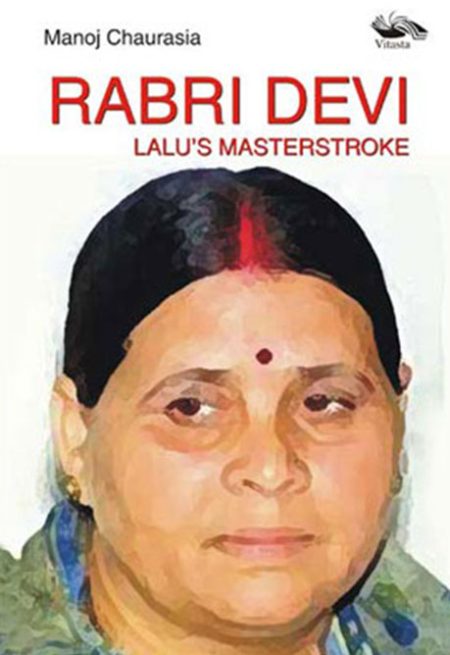
The script of Rabri Devi’s journey from her ancestral home in Selar Kalan village to 1 Anne Marg, her official residence as the Chief Minister of Bihar, appears to be borrowed directly from a Bollywood movie. This journey into limelights began right from the time when Rabri moved into a one room chaprasi quarter of the Patna Veterinary College which housed her husband, his elder brother and his wife, and more than half a dozen children.
Now the leader of the Opposition, she awaits her chance to yet again take a shot at the chief minister’s post. Rabri’s ascendancy was taken by many as the rise of women power in Bihar. Her humble background and the rustic touch perhaps inspires millions of women who never get an opportunity to acquire a good education because of the social prejudices in a male dominated feudal society, which is in turn used to keep them perpetually backward. Manoj Chaurasia’s account of Rabri was inspired by this. He gives an insight into the making of Rabri Devi. The narrative moves on gradually from Rabri’s childhood days to her assuming power and then as the Leader of the Opposition. He talks about the strength of character of this rustic and nearly illiterate housewife who rose from the ‘dungeons’ of an anarchist Bihar–to rule and lead.
This book is essentially not a biography but a comprehensive insight into the lives and turmoils of Rabri and her husband Lalu Prasad Yadav, who rose to the ranks of Chief Ministers, in a feudal, casteist Bihar
An accidental entrant in politics, Rajiv Gandhi took the nation by storm with his vision of information technology. He adopted Gandhian Swaraj by espousing grass roots democracy.
On the flip side, Rajiv proved a poor judge of the company he kept. His minister VP Singh deserted him on the Bofors kickback issue. A whole lot of other colleagues in his cabinet abandoned him before the 1989 elections. He was also impatient for peace, signing accords in rapid succession with the respective secessionist groups of Mizoram, Assam and Punjab, and going on to persuade Sri Lanka to allow the deployment of Indian Peace Keeping Force in its territory. India and Rajiv too had to pay a heavy price for this last accord.
In Rajiv Gandhi’s assassination, the country lost a great leader. No doubt he made some mistakes, but he also had the uncanny ability to learn from them. What would have been the fate of the nation if Rajiv Gandhi were living? It is for the reader to draw this conclusion.
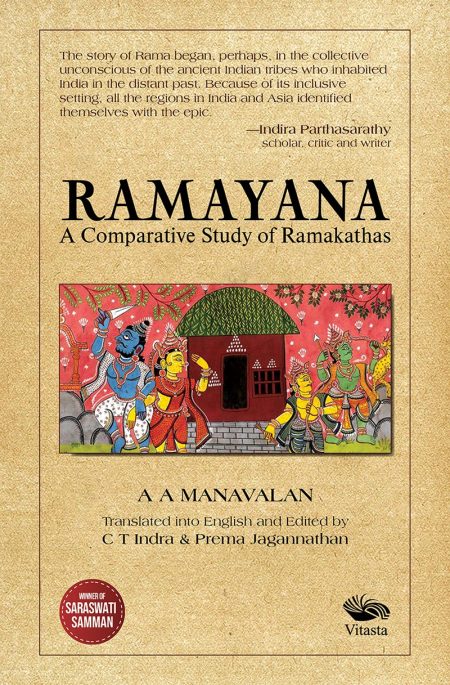
The story of Rama has been a part of our lives for ever and will probably continue to be so…. But most of us are unaware that the story has as many variations as there are versions. In the author’s own words Valmiki’s Ramayana has taken several ‘incarnations’ due to the efforts of many great writers who wanted to bring the story to their own people in their own language. In his book, Professor AA Manavalan, an eminent scholar in the field of comparative literature, has painstakingly made an intensive and analytical study of the Rama story in 48 languages including the folk tradition. Professor Manavalan’s main focus is on how the receiving language’s rendering could make a greater impact than the original in the popular imagination of the people. Ramayana – A Comparative Study of Ramakathas, an English rendition of Ramakaathaiyum Ramayanangalum, presented by CT Indra and Prema Jagannathan, captures the thematic purpose of Prof AA Manavalan’s Tamil original and creates a forum ‘to discuss whether Ramayana is an ethical text or an ideological text’.
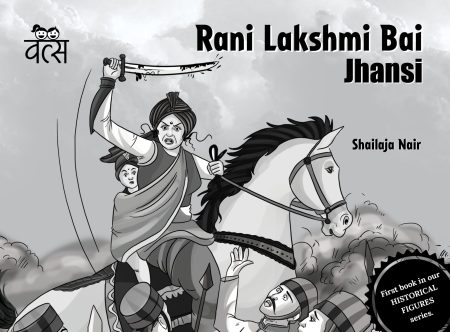
Lakshmi Bai, Jhansi Ki Rani was one of the first, and most important voices against British rule in India. As a child, Lakshmi Bai was brought up to stand up for herself and give voice to the weak. Unafraid, and unbowed, Lakshmi Bai went out fighting the ones who wanted to oppress her and immortalized her name in Indian history. Illustrated imaginatively, this book gives us a glimpse into the life of an unforgettable woman who became a legend and a role model for countless revolutionaries.

In Search Of Marty is a poignant story of the discovery of a World War II cemetery in Joyrampur, Assam, with unmarked graves of unknown soldiers – how relatives of soldiers came rushing to find some sign of their loved ones only to return disappointed. A City In Its Nakedness starkly portrays the loneliness and despair of a woman living alone in Delhi who befriends a poor young boy, educates him with disastrous consequences. Parasu Pator’s Well speaks about a young boy and his battle against the diminishing humanity of people.
Purification Sanskaar brings out the degradation of human beings by social and cultural compulsions. The reader is moved by the desperation of a childless man to father a child. The Empty Box is the story of a young woman living near a cremation ground whose nostalgic memories and illusion of love are cruelly shattered. Ishwaree is based on the first-hand experiences gained by the author (who was also a Ramayana scholar) when she attended a Ramayana conference in Janakpuri, Nepal.
The time frame of the stories stretches from the thirties up to the present when Assam is torn apart by different militant movements. Dr Goswami’s eye for detail in her beautiful descriptions – whether of the trout in the Dikhari river, the lilting joyous Bihu song or the chirping of the little fesulika birds is simply wonderful. The end of each story catches the reader unawares leaving him filled with a variety of emotions – both of wonder and despair.

Reliving Sujatha is a fascinating collection of 8 stories written by prolific Tamil writer Sujatha Rangarajan and translated by Vimala Balakrishnan, a recipient of Katha and Sahitya Akademi awards for translation from Tamil to English. Sujatha was a prolific writer of popular fiction in Tamil whose writing career spanned almost 50 years. Translated for the first time, into English, this selection has been carefully chosen, for an audience of readers who are interested in stories about India. The tales by Sujatha, in this collection, are replete with shocking twists, characters, and life situations with whom the reader is bound to feel an emotional connect.
Hey Raja Stop, a novella, is an enthralling story about mind control with its twists and turns. It features the lawyer duo, Ganesh and Vasanth, who became very popular with the readers. A diabolical plot is hatched to murder the visiting President of Syliana using Raja, the simple foreman of the factory.
Jillu is a heartrending story where an innocent young boy and his pet dog become victims of the fallout of nuclear warfare. Rice reflects the common man’s aversion to being a witness to an accident for fear of police involvement and wastage of time. Sacrifice is the story of a man waiting for his flight at Chicago’s O’Hare airport. He leaves the airport with a tuft-haired American swamy out of curiosity to see his ashram with disastrous consequences.
Guru Prasad’s Last Day is the poignant story of the apathy and callousness of an ambulance driver and hospital staff who shunt a dying patient from hospital to hospital leading to his death. In The Edge, a man plans to kill his friend. The psychological twist at the end leaves us gasping with surprise.
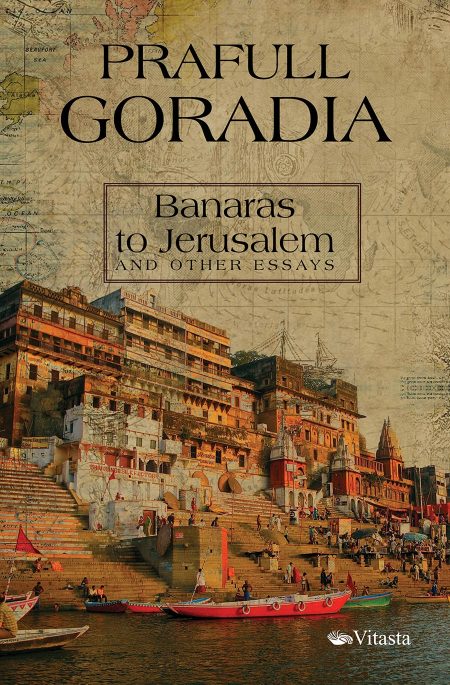
How old is Banaras? Possibly, even time may not have an answer to that. Unquestionably, Jerusalem is blessed by divinity, but Banaras, which has been invaded forty times, destroyed twice, and yet has lived on since time immemorial deserves to be called Jerusalem’s sibling in divine status, historical antiquity, and religious significance. From extolling the virtues of Banaras to calling our constitution a compromise document; from love jihad and same-sex marriages to insisting India is a democracy despite what critics may claim, Prafull Goradia comments on myriad topics in this exhaustive collection of essays. He questions why China does not have any friends or allies beyond North Korea and Pakistan. And asks us to be wary of China’s intentions as he believes its President for life, Xi Jinping’s will to dominate the world is as eloquent as any Mein Kampf. Have you ever wondered why the Jews remained homeless until 1948, what can the killings in the USA teach us? Is fascism a dirty word? Why has West Bengal become a graveyard of industries? Goradia reveals it all.
An American girl is given in adoption since her biological parents have no means to support her. The new family loves her immensely but fails to prevent her exposure to sex when she is two. She moves to school but still cannot come out of her obsession with sex. Later, she comes across hippies and gets addicted to drugs, plunging deeper and deeper into the unknown. She goes into lesbianism and the search for quick money leads her to a credit card scam for which she is convicted. Stuck between the wildly changing times and her drug addiction, she continues to search for some stability, which is provided by her bona fide spiritual master Srila Prabhupada’s Hare Krishna movement. But before she could be cleansed of all sins, she is pushed in the vortex of drug abuse once more. Does she continue to live a meaningless life of drugs, sex and violence, or does she succeed in cleansing her life and her soul? Are all her questions about life answered? Can she be rescued from the hellish depths she has plunged into? A gripping story till the end.
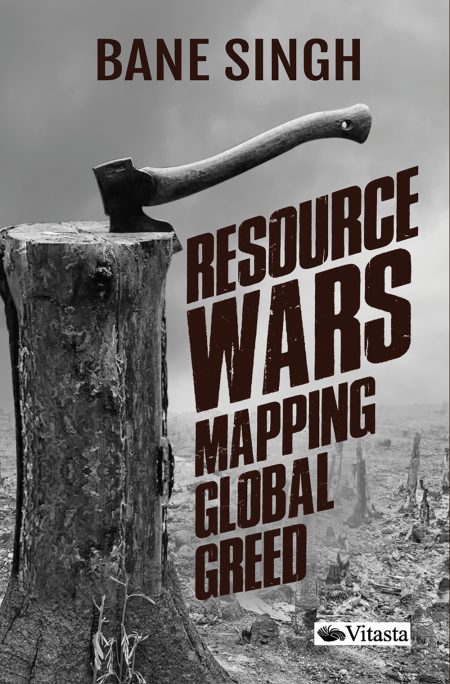
The region above the Arctic Circle accounts for only about six per cent of the Earth’s surface area, but holds nearly one-fifth of the world’s recoverable oil and natural gas. The book, Resource Wars: Mapping Global Greed, tells the fascinating story of global competition for the Earth’s natural resources, even in the remotest corners of the world. Broadly cataloguing the resources available to mankind on this planet, the book also notes how technology for their extraction is a key determinant of winners and losers among nations fighting for oil, uranium, even the sun, sea and sand. Within its jackets, the book brings to its readers a comprehensive global overview of Earth’s assets and a perspective on the fatal exploitation that is creating an irreparable ecological imbalance.
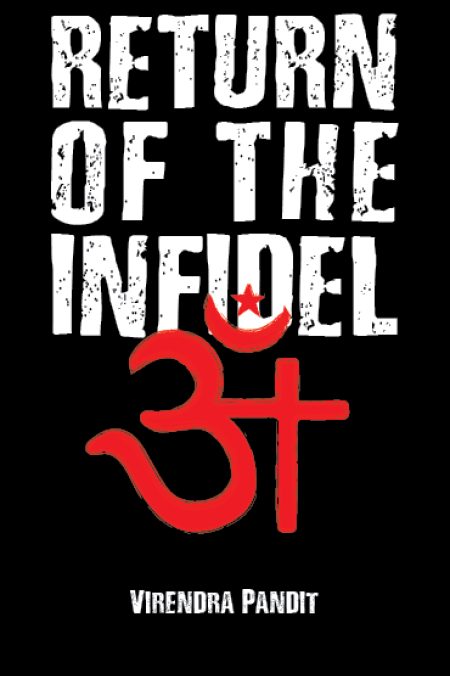
It is not Gandhi but Jinnah who was the Father of modern India. It was Jinnah who, like a pied piper, lured monotheism out of India. His persistent demand for a ‘separate nation’ for Muslims resulted in the migration of millions of Muslims to a new geographical and political reality called Pakistan. Had this not happened, imagine a united Hindustan with 750 million Muslims by 2050, the biggest Islamic country in the world. In that sense Jinnah was the greatest Indian after Gautam Buddha, Chanakya and Adi Shankara.
Author-journalist Virendra Pandit suggests that although Mahatma Gandhi pretended to oppose Partition, deep within he was content that India would be a country living according to its Hindu heritage and ethos. Gandhi plotted the exit of Islam and Christianity—the end of colonialism—so that most part of India remained a home majorly for the Hindus. He egged on Jinnah to demand Pakistan and with its creation India’s medieval era came to an end. Arguments of the author are compelling and though the book appears to be a panacea for those who think that India will survive only if it is a Hindu majority country, there is plenty to chew on for the forces of secularism. Return of the Infidel is the story of how India ejected both Christianity and Islam from the subcontinent. The story of China and Japan, and that of many other nations, is the same. Christianity and Islam viewed these three ancient Asian giants as ‘infidels’—and they are Returning now!
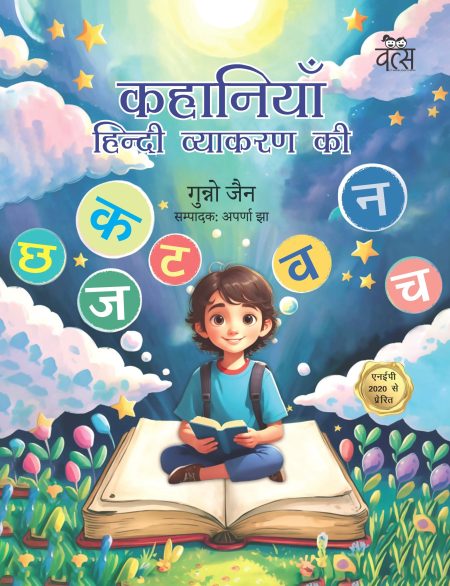
टेक्नोलॉजी और विज्ञान, दोनों हैं वरदान, इन का साथी प्रदूषण, यह तो है शैतान। यह पुस्तक दिल और दिमाग दोनों को प्रदूषण के खतरे से लड़ने के लिए तैयार करेगी और पर्यावरण के बारे में जागरूक करेगी। बच्चों की दिमागी कसरत और मनोरंजन के लिए इस पुस्तक में कुछपहेलियां भी दी गई हैं। पुस्तक में दिए गए चित्र आर्टिफिशयल-इंटेलिजेंस के माध्यम से बनाए गए हैं।
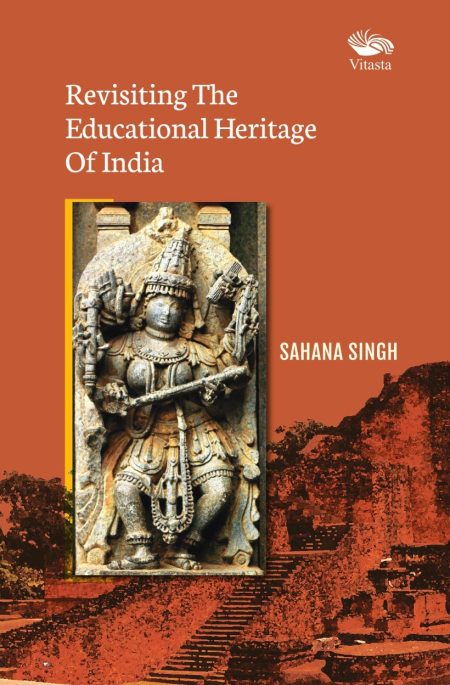
Long before the first European universities appeared, India already had multi-disciplinary centres of learning that fuelled a knowledge revolution around the world. This book fills a dire need to chronicle the great educational heritage of India. It describes a unique ecosystem which ensured that Gurus and Acharyas handed the lamp of learning to generations of students. As the author puts it, “When swords quenched their thirst and famine ravaged the lands, Indians still held on to their truth that there was nothing more purifying than knowledge.” She has collated information from oral history, local lore, travelogues, surviving literature, inscriptions, salvaged manuscripts and accounts of scholars and laity. Historically, the book covers a vast time span from ancient India’s traditions to the deliberate destruction of its heritage. It also outlines steps that can be taken today to incorporate the most relevant aspects of ancient learning systems into the current structure of school and university education.
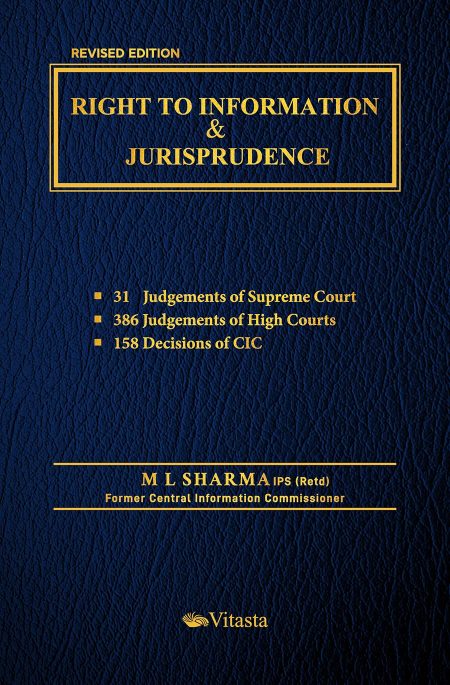
The underlining philosophy of the RTI Act is to promote transparency and accountability in the working of every ‘public authority’ and thereby strengthen and deepen participatory democracy. In this book, M.L. Sharma outlines the global perspective of the Right to Information, traces its genesis and evolution in India and insightfully analyses the Act in the light of case law. The book contains the ratio of 29 judgments of the Supreme Court of India; 374 judgments of various High Courts; and 156 decisions of the Central Information Commission, along with the citations for reference purposes. The author has also legally critiqued the Act and given valuable suggestions for amending and fine-tuning it, apart from giving an overview of its implementation on the ground. This book would prove useful and handy for RTI litigants and activists; Public Information Officers, First Appellate Authorities and Information Commissioners; law students and the lay readers in general.
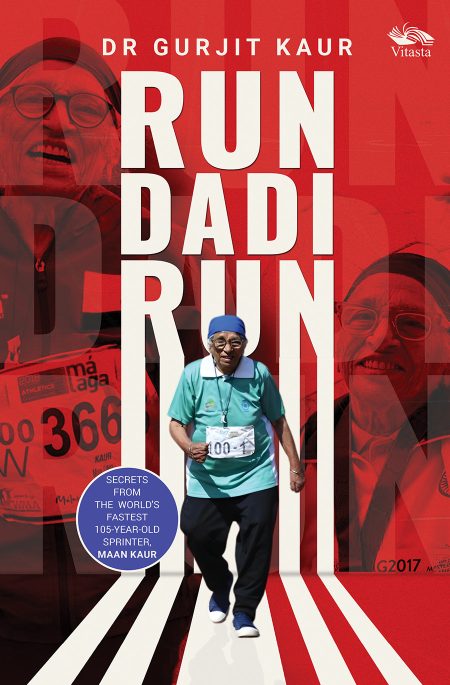
Run Dadi Run is an extraordinary tribute to the unstoppable Maan Kaur, the 105-year-old record-breaking athlete who took up running at the age of 91 and continued defying expectations with her unwavering spirit. Named Athlete of the Year at the World Masters Games in 2011, Maan’s journey is a testament to resilience, courage, and the power of self-belief. Guided by her son Gurdev, a record-breaking senior athlete himself, Maan transformed her life, proving that age is no barrier when passion and determination lead the way. Inspired by a documentary, author Dr Gurjit Kaur spent a week with Maan in Patiala, documenting her daily rituals, diet, and the exercise routine. The book reveals simple yet profound habits that fuelled Maan’s vitality—from refreshing kefir drinks to sprouted wheat chapatis—and her various other recipes for longevity. Dr Kaur’s insights capture not only Maan’s wellness secrets, but also her rich life philosophy: grounded, spiritual, and optimistic. Filled with stories of Maan’s days as a nanny in the Maharaja of Patiala’s palace and her memories of India’s freedom struggle, Run Dadi Run draws readers into Maan’s world—a world where energy, purpose, and positivity are ageless.
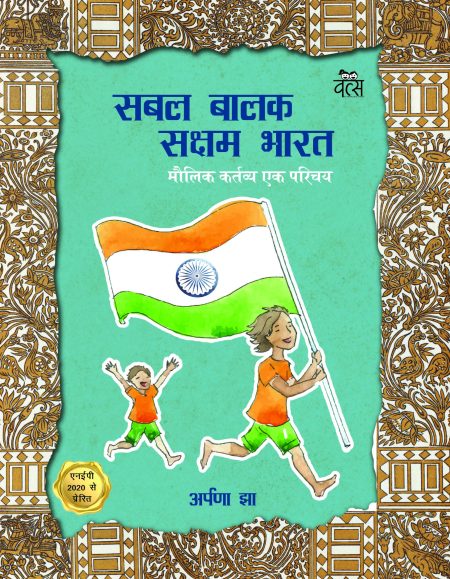
Sabal Balak, Saksham Bharat is an engaging and child-friendly book designed in alignment with the ‘National Education Policy (NEP) 2020’, aiming to instil constitutional values in young minds. Focusing on the ‘Fundamental Duties’ as prescribed in the Indian Constitution, this book introduces children to their civic responsibilities through simple language, relatable stories, vibrant illustrations, and practice sheets & other activities. It bridges the gap between classroom learning and real-life values, helping children become not just good students, but responsible citizens. Every growing child deserves a strong moral and civic foundation. ‘Sabal Balak, Saksham Bharat’ is a must-have book for schools, homes and libraries seeking to raise socially aware and responsible future citizens. It’s not just a book—it’s a step toward building a ‘capable child and a stronger India’.