+91 11 4109 1715
24/7 Support Center

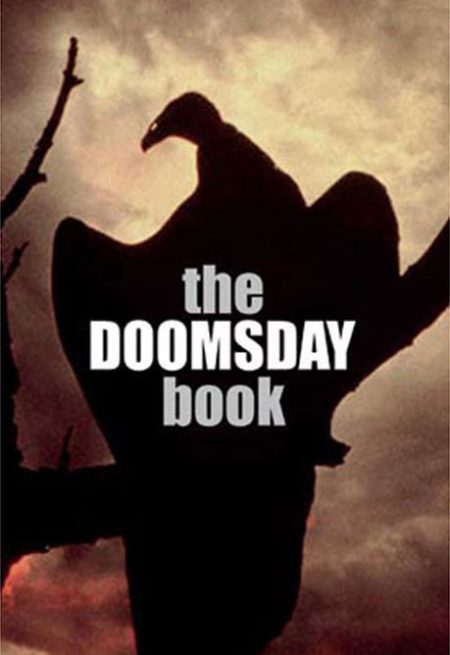
Prophets of doom have predicted that the world will end one day either from manmade disasters or from natural causes. For the believers, it is religious. Whether it is a tsunami or an asteroid, a terrorist attack or a nuclear war, the end of the world seems ever closer. But just what are the chances of civilisations being destroyed, and which method of meltdown is most likely? The Doomsday Book looks at all the burgeoning threats to civilisation, explaining the story and the science behind each one, and provides a clearheaded assessment of how serious they are and what can, and is likely to be done about them.
Covering ecological crises, such as water shortages and habitat destruction, the dangers of nanotechnology and superplagues, and the cataclysmic effects of a supervolcano or a new ice age, Joel Levy’s book is scarily engrossing.
Examining the fate of ancient civilisations and explaining the lessons they can teach us, the Doomsday book explores the likelihood of our survival when disaster hits. Various religions have their own conception of the Doomsday, and they all have a common thread. Trinath Mishra, an Indologist, has given introduction to Joel’s book and tries to explain how this has been viewed in religions, particularly Hinduism.
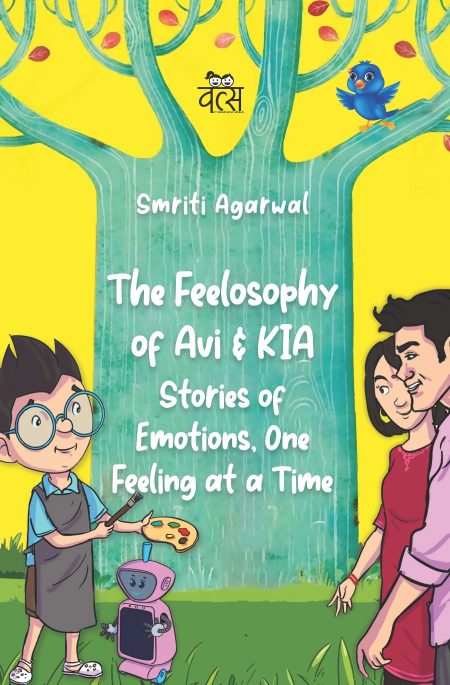
The Feelosophy of Avi & KIA: Stories of Emotions, One Feeling at a Time takes young readers on a heartwarming journey of discovery and empathy. In this delightful sequel to Avi and KIA, the roles are reversed—Avi, a curious eight-year-old, now becomes the teacher, guiding his ‘Know It All’ robot friend through the fascinating world of human emotions. Each story explores a different feeling—from joy and kindness to anger and fear—helping children understand and express their emotions with confidence and care. Blending imagination, gentle humour, and meaningful lessons, the book nurtures emotional intelligence and social values in an engaging, relatable way. Perfect for parents, teachers, and children alike, The Feelosophy of Avi & KIA is more than just a storybook—it’s an invitation to connect, feel, and grow together, one emotion at a time.
Frank but scathing in her remarks, Chatterji in this collection of essays voices those who have been muted but not silenced. She scrutinises the intertwined fabric of social and financial milieu that determines a woman’s place in society. Her observations on the systemic silence of women, the physical and mental abuse, the stereotypes that women are forced to live up to, are some of the many things that force you to stop and think. Ranging from issues that affect women and society to the representation of women in cinema, she goes through important societal issues one by one with a fine-tooth comb and analyses them through multiple lenses.
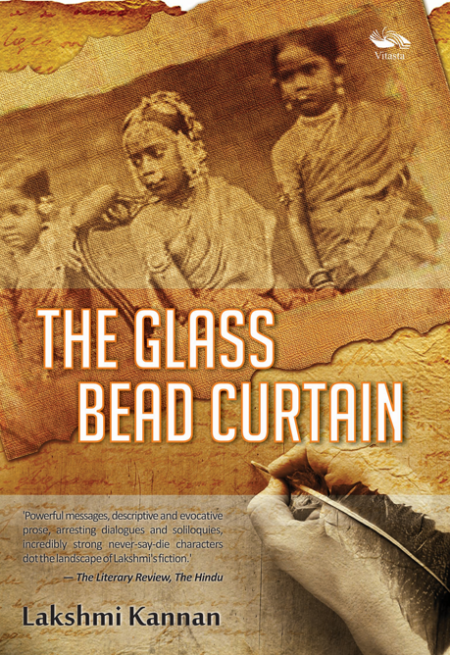
Kalyani and Athai, two feisty women, sail through the turn- of- the- century Madras Presidency under British rule, despite archaic customs such as child marriage and a prescriptive widowhood. British influence encounters an ambivalent attitude that was contrary and at times uproariously hilarious. Kalyani’s child marriage ends her formal education because of a prevalent superstition that married girls would be widowed if sent to school. Tutored at home by the intrepid Susan O’Leary of Irish origin, Kalyani soaks up her irrepressible humour. O’Leary is equally delighted by the strapping girl’s passion for sports and athletics, but is anxious about her pupil’s future beyond the luminous beauty of the glass bead curtain in her father’s home. Kalyani, grows taller than her husband Natarajan. It becomes a contentious issue for her retrograde female in-laws who mock her height and her English. Kalyani battles her way through unfazed and evolves as a successful badminton coach with the unstinting support of her husband, father-in- law and grand mother-in- law. The intellectually endowed Athai uses her widowhood to pursue her education. The family discovers an astonishing secret about her, when she dies. A contemporary writer Shailaja “writes” the novel capturing the changing ethos of the people with the irony, pathos and humour that animate the period.
About the Book
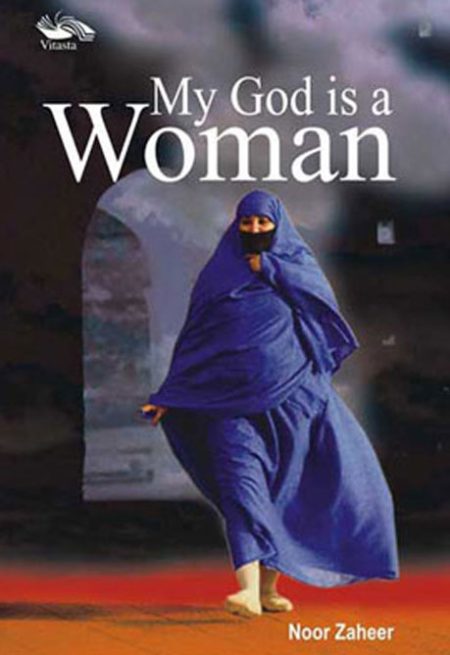
An innocuous article in a magazine lands nine-year-old Safia Mehdi in the world of purdah. Her father gets her married to Abbas Jafri, son of the famous Jafri family of Lucknow. Abbas is a barrister and author of a controversial book. Safia’s father hopes that she would be able to bring back her deviated husband to ‘God’s true faith’. Ironically, Abbas who dreams of a liberated India where women enjoy equal rights as men, leads Safia to break free from the stereotype of a traditional Muslim woman.
Set against the tumultuous period of pre-Independence, the husband-wife duo embarks on a journey, elucidating the way to a progressive nation. However, just when everything seems alright, Abbas is issued a fatwa for confronting the Imam, preaching inequality between men and women. His Marxist Party too ostracizes him for criticizing the Shariat for the sorry state of the Muslim women in the country. Consequently, Abbas is killed by Muslim fanatics and Safia is left all alone to fend for herself and her daughter.
With time, Safia gains grit and common sense. Armed with her forth righteousness and sheer belief in her ‘power’ of being a woman, Safia walks on, championing the cause of women empowerment. But does she manage to bring about that much-awaited change or falls a victim to the repressive dogmas of the society? Can she help the Muslim women to step forward, wrench their tightly closed fingers open and set out to build a world to suit their destiny? Can women become the God that they were always meant to be? My God is a Woman tries to seek answers to some of these questions.
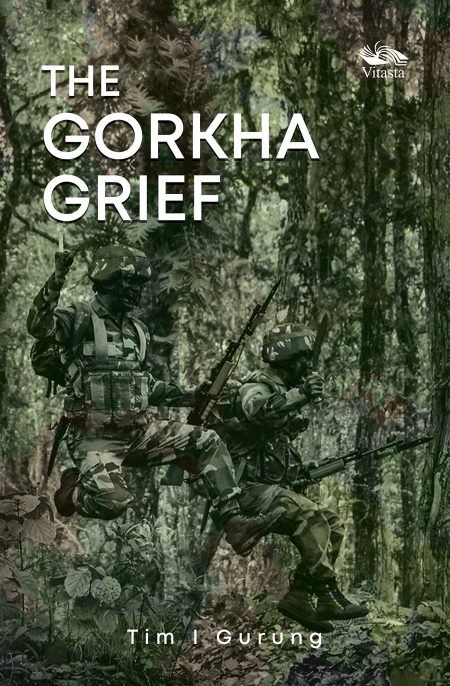
First to lead and the last to complain, the Gorkha soldiers have withstood the test of time despite the challenges thrown their way. Renowned for their bravery, they have a remarkable legacy as warriors who paved the way for the proud modern India we celebrate today. Instead of being rightfully showered with accolades and acknowledgment, the sincere Gorkhas have been treated as outsiders, their families and communities left out of the progress that the rest of the country has leaped towards over time. Stuck between power players plotting to determine its faith, Nepal has also come to a standstill, with progress slipping away faster than the country can keep up with. Who is to blame for this reality and is it too late to make amends? There are many questions left unanswered, but through the pages of this book—woven with the tears of long-suffering Nepalis worldwide—Tim I Gurung intends to show you how the vast depths of the Gorkha Grief came to be.
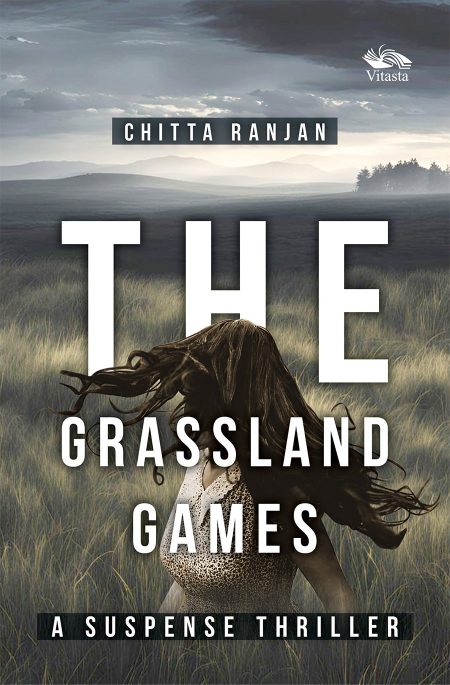
Amelia, an adventurous Australian tourist, narrowly escapes kidnappers in Kolkata. Though shaken, she resolves to carry on with her travels and soon reaches a remote national park in northeast India. Meanwhile, Raj, a park ranger, uncovers a disturbing secret in an anti-poaching camp, and despite coming from two different worlds, Amelia and Raj share a dangerous secret that entangles them in an elaborate web of lies and deceit within the park’s grasslands. Together, they face an unknown enemy in the misty floodplains of the Brahmaputra. While Amelia grapples with cultural differences and mistrust, Raj strives to safeguard the park. Fate finally brings them together to fight their common adversary. Will they be able to outwit the Smiling Assassin and survive the endless challenges they encounter? Join them on their thrilling journey in The Grassland Games.
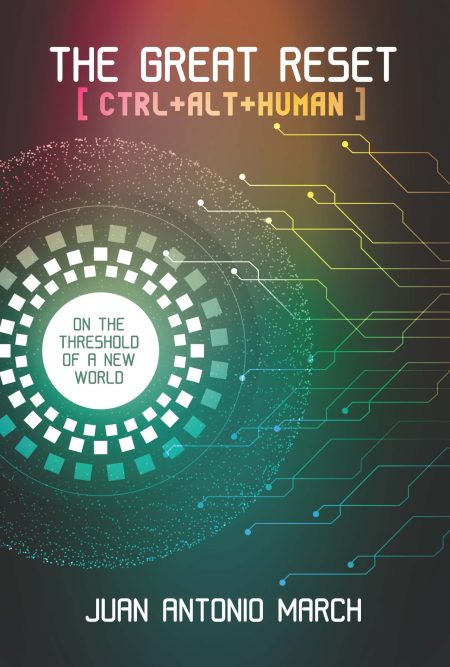
Humanity stands at the edge of a revolution. At the heart of The Great Reset is Nour, a visionary AI expert, who reveals fifteen extraordinary breakthroughs across iconic global sites—each one a portal to a radically transformed tomorrow. Yet, every step toward innovation raises a haunting question: will our political structures evolve or stumble over time? Nour’s journey moves toward a dramatic climax at a pivotal United Nations summit, where the blueprint for humanity’s future hangs in the balance. In the tension of those international debates lies the possibility of a unified world or the chaos of irreparable division. The Great Reset is a gripping exploration of power, progress, and survival—of how one era ends and another begins…. At stake is the promise of breathtaking progress colliding with the threat of global collapse as outdated political systems struggle to contain a world transformed by artificial intelligence.
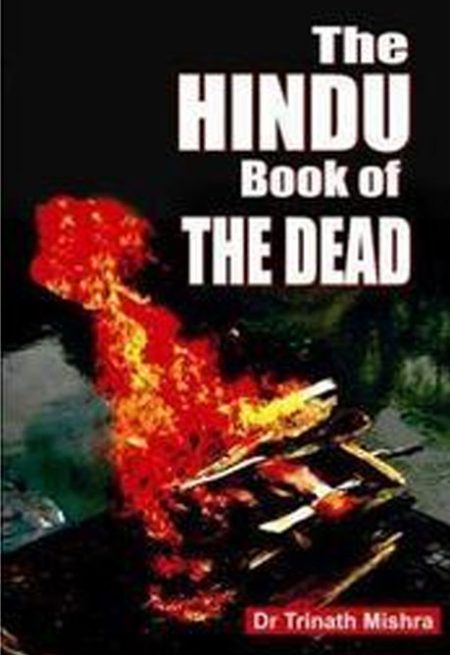
The Hindu Book of the Dead discusses all the concepts, beliefs and traditions found in these texts as well as the secular classical works about death and its meanings critically. The significance of various funeral rites and rituals and their relevance for the soul and for those who are alive have also been explained. What are those rituals and their meanings and how the soul tries to overcome the cycle of life and death? Where the journey ends? The body is dead but the soul still has to travel. The book tries to explain the What, Why, Where and How of what is described as death. It also presents a comparative picture of the beliefs and traditions held by other faiths and cultures.

Justice Sachar committee has placed Muslims at the lowest rung of India’s economic, educational and social hierarchies. If India is to develop, this vast mass of humanity cannot be left untouched and uncared for. Some of the popular myths such as Muslims producing more children and the community preferring madarsa education have been demolished. The Sachar Committee has established that only four per cent Muslims go to the madarsas. Now, it is for the community to see through the design of the mullahs who vehemently oppose reforms in the community or madarsa education.
For India to evolve into a plural society, poverty has to be overcome. This requires different policy orientations. Fundamentalism, either of the Muslim or the Hindu brand, has to be taken care of. India cannot live in the past. Nor can it allow its past to distort the present.
Amrik Singh tries to analyse the reasons for Hindu-Muslim divide and suggest solutions. The partition of India in 1947 was supposed to be a panacea for the Hindu-Muslim divide which had engulfed India for the preceding 1,000 years. Those who thought so were naive. The issue was not territorial dispute but assimilation. One belief system, new and aggressive, wanted to establish hegemony over the other and this led to confrontation. The Partition also put a question mark on the loyalty of those Muslims who chose to stay on in India. The physical division of India created an emotional turmoil in both the communities. Rather than addressing these issues, a fledgling Pakistan unleashed its territorial ambitions and fought three fratricidal wars with India. Vested interests in India gave these the colour of a clash between two communities.
The Bharatiya Janata Party that fed on Hindu nationalism did everything to perpetuate this myth. This was not opposed strongly by either the secular forces or from within the Indian Muslim community and communal forces gained in the process.
Pakistani leaders have also helped perpetuate this divide.
Amrik Singh quotes Zulfikar Ali Bhutto who had said in 1971 that there had been a thousand years of war between Hindus and Muslims in India. The Muslims in India may not be guided by what Bhutto and some others said. The Hindutva forces nonetheless will like its followers to believe that Islam is determined to conquer India and destroy its culture. The introduction of the separate electorate system by the British had reinforced this division over a period of time. Mahatma Gandhi understood this fact and tried to bridge the divide through active participation in the Khilafat movement. But that did not work.

All the plays included in this volume are original scripts by BLT.The Prophet and the Poet is based on the historically significant exchanges between Mahatma Gandhi and Rabindranath Tagore. Tiger! Tiger! On the life of Tipu Sultan is based on a play by Dina Mehta. Finding Ananda was commissioned by the Ministry of Culture to celebrate the 150th birth anniversary year of Swami Vivekananda. Monsters in the Dark is based on the Pulitzer Prize book The Emperor of All Maladies by Siddhartha Mukherjee. Einstein’s Dreams is an original adaptation for the stage of Alan Lighman’s novel, based on Einstein’s early struggles.

About the Book
The Rai Bahadurs of Rasulabad are an old aristocratic family that has seen better days. Rahul, the scion of the family and a brilliant lawyer, is bitter about the rapid decline of his family’s social standing in a world where everyone is taking the short cut to success. He is at the centre of a corruption scandal in the judiciary and it is hard to believe that he has been framed by a spurned lover. Sita, an abandoned child brought up by the Rai Bahadurs, discovers that she is an heiress. But when the mystery of her mother’s identity is revealed it brings Rasulabad to the edge of a communal conflagration. She was groomed to be Rahul’s wife one day. Can her hero worship of Rahul withstand his legal travails and her changed circumstances?
Shahnaz has the world at her feet but wants more from life than high society can give. Will her growing involvement with community work at Rasulabad bring her closer to Rahul and displace Sita? The novel depicts the jet set lives of high society, precariously perched on a foundation of eroding values and growing social tensions. In the middle of this tumult is a simple love story of a boy who thought he wanted power and had no time for love; and a girl who had the world at her feet but gives it all up to follow her dreams.

Born in 1925 at Dera Ghazi Khan (Pakistan), Girja Kumar is a veteran research scholar. The man behind the Sapru House library, he has held many important positions including Chairman of the Delhi Library Board (1985-86) and President of the Indian Library Association (1983-85). He was Associate, Oriental Division, Library of Congress, Washington DC during 1954-55. He retired as chief librarian of the Jawaharlal Nehru University library in 1985. His world has been a world of books.
While he wrote books on censorship and education, he always contemplated producing a book on the greatest cult figure of modem times – Mahatma Gandhi. Brahmacharya, Gandhi and His Women Associates is based on extensive research and quotes of the main players while delineating the Mahatma’s relationship with his women associates. The present book, in that sense, is a biography within a biography.

Chelsea’s dad drops two bombs on the same night. One, he has a new job and they’re moving! And, two, he’s getting married!
Chelsea groans — and not too silently — as she offers up plenty of outrageous disgust and does a pretty good job throwing a tantrum. Retreating to her room doesn’t change the fact that within six weeks’ time, she and her father will be relocating to San Jose, California, and soon thereafter welcoming Kate into their home as her new stepmother.
Kate tries to understand Chelsea. She realizes Chelsea lacked self-esteem – a problem similar to what she endured as a teen. The now-perfectly beautiful Kate takes on the task of giving Chelsea, her wardrobe and attitude a complete makeover. When Chelsea starts school after vacations, it’s like she’s a completely different person–at least that’s how people are treating her. With lots of mistakes and some humbling mishaps, Chelsea begins to understand that even beauty has a cost of its own, and she does some real soul-searching about who she truly is (inside and out).
The first book in Carlson’s Life at Kingston High series is believable. She knows how to stir up those “wanting to be forgotten” moments of rejection and isolation everyone experiences, yet laces every heartache with hope, humor and lighthearted fun. This is a wonderful story for all ages, but highly recommended for teens. It will really make them think.

The Kashmir Story (1 and 2) are a veritable encyclopaedia on Kashmir. Part 1 traces the history of Kashmir beginning from the legends of Nilamatapurana to Kalhana’s Rajatarangini followed by Jonaraja’s, Srivara’s and Sukha’s historical accounts which give us a vivid account of kings, their rule and misrule with the existing political, administrative, economic and social life.
It describes the rise and fall of the Gonanda, Vikramaditya, Lohara, Karkota, Utpala dynasties with the fascinating palace intrigues, romances and civil wars. It also describes the topography of Kashmir highlighting its important places and frontier regions. It traces the rise of Kashmir as a seat of learning detailing its great scholars and their famous works.
It tells us the origin of Kashmir Shaivism, how Buddhism became a part of the classical culture of Kashmir and its impact, how Rinchan and Shah Mir came to Kashmir and a land ruled for thousands of years by Hindu kings became a Muslim state. How Sultan Sikandar’s persecution of people of other faiths was offset by the tolerant rule of Budshah. The secular character of Akbar and Jahangir’s love for Kashmir is highlighted. The book ends with the cultural highlights of the Medieval period with scholarly works of Abhinavagupta, Lal Ded and her famous vaakhs, poetry of songstress Habba Khatoon and the verses of Rupa Bhawani.

Part 2 of The Kashmir Story starts with the Sikh rule in Kashmir under Maharaja Ranjit Singh followed by the Dogra rule. The book traces how the age-old composite culture of Kashmir (Hindus and Muslims co-existing peacefully) was replaced by the canker of communalism.
Against the backdrop of India’s independence on 15th August 1947 and the turmoil of partition unfolds the saga of the accession of Kashmir to India by Maharaja Hari Singh. From Sheikh Abdullah we arrive at his grandson Omar Abdullah. The National Conference and Congress were defeated in the 2015 elections and the BJP and PDP jointly formed the government.
The book traces the rise and spread of terrorism in the Valley. It chronicles the heroic deeds of Indian soldiers who died protecting Kashmir from Pakistani raiders and army. It describes the conflicts of Siachen and Kargil and the unfortunate exodus of Kashmiri Pandits from the Valley. It highlights the love of the Mughal emperors for Kashmir reflected in the splendid architecture of the gardens and lakes. There is an engrossing account of the rich craft traditions of Kashmir — the shawls, namdas, samovars, kanger, houseboats, the springs, lakes, forests, flora and fauna. Kashmir is rich in performing folk art and folklore. The lifestyles, social festivals of Hindus and Muslims, their food are described vividly.