+91 11 4109 1715
24/7 Support Center


In Kalyug, the demons grow and transform into terrifying shapes and sizes. Amidst this chaos, Aishani and Adheesh are married with twins who do not know their own powers. The new warrior parents can only hope and fight for victory against the emerging darkness that threatens to devour everything. Continuing on the riveting adventures of The Demons of Jaitraya and The Angels of Kailash, Aishani and Adheesh prepare for their final journey – a journey that will decide the fate of the world as well as of their children. Will they succeed in slaying the demons or succumb to failure?

He was an Oxford-educated scion of a Nawabi family. She, a comely young woman from a Brahmin turned second-generation Christian family. While he rose to become the first Prime Minister of Pakistan, the Shaheed-e-Millat Liaqat Ali Khan, she came to be known as Gul-e-Ra’ana. Theirs was a beautiful story of love transcending the boundaries of nationalism and religion—a story worth telling. Raj Gopal Singh Verma narrates the fascinating story of this famous couple in the style of a fast-paced historical novel set against the complexities and violent upheavals of the Partition. After Liaqat’s assassination, the Begum brought up their two children alone and made a stellar contribution to Pakistan’s political, social, and cultural domains. She also served as the country’s finance minister and a diplomat to several Western countries. On her return, she continued to work for the empowerment of Muslim women of the country. Born and brought up in an undivided India, this is a story of the lady of two nations and three religions: Begum Ra’ana Liaqat Ali Khan.
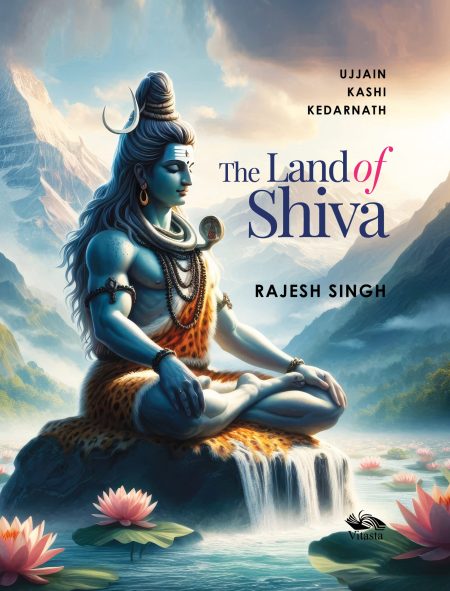
| The Land of Shiva is a visual narrative tribute to three of India’s most sacred Shaivite sites—Kashi, Ujjain, and Kedarnath—where mythology, devotion, and history converge. This coffee-table book explores these timeless cities not only as ancient spiritual centres but also as living symbols of India’s cultural resurgence. For centuries, these places have drawn saints, seekers, scholars, and emperors—each adding to their spiritual resonance. Kashi, believed to be the oldest living city in the world, is where time dissolves into eternity at the ghats of the Ganga. Ujjain, the city of Mahakal, pulses with cosmic energy, where Shiva is worshipped as the lord of time. Kedarnath, nestled in the Himalayas, stands as a symbol of endurance, devotion, and divine presence amidst nature’s raw grandeur. In recent years, under the visionary leadership of Prime Minister Narendra Modi, these ancient tirthas have undergone a remarkable transformation—ushering in a new cultural renaissance. The creation of the Kashi Vishwanath Corridor, the majestic expansion of Mahakal Lok in Ujjain, and the reconstruction of Kedarnath Dham after the 2013 calamity have not only restored physical spaces but have reignited spiritual pride and national identity. These developments embody a broader movement—a reclaiming of India’s civilisational ethos, where infrastructure serves spirituality and the past inspires the future. Blending storytelling with stunning visuals, The Land of Shiva chronicles this renaissance—of temples, towns, and timeless beliefs. It captures the spiritual vibrance, architectural grandeur, and the collective pride of a nation reconnecting with its roots while confidently stepping into the future. |

A breeze blew from the northeast. The flames lengthened, almost leaving their wicks…the shadows danced on the walls…in the old stories, when danger loomed, there was always a God. His father’s words reverberated as Aziz once again shifted his gaze back to the gentle light of the friendly fireflies. The Last Days of the Storyteller is the tale of Pak Hassan, the village story-teller who carefully preserves oral history–the traditions, old world values, all that a story-teller represents–eclipsed by a modernising world with which he tries to but cannot reconcile. This is Pak Hassan’s story until his dying day, told beautifully by Malaysian writer Anwar Ridhwan.

A storyteller unravels the extraordinary stories of some ordinary people. On our journey through life, we meet so many people–many we forget but some leave memories that refuse to fade away. This is a collection of true stories – of actual meetings and encounters that the author had with these people over the years as a journalist.
The 11-year-old flower seller with her unfulfilled dreams, the gay men forced into lives of heterosexual unhappiness, the heart-wrenching stories of abandoned HIV positive children whom no-one wants to adopt. There are poignant stories of old women in old age homes. Among the exploited prostitutes there stands out Sandhya who proudly describes how being a sex-worker has enabled her to educate and marry off her siblings. Poor homeless pavement dwellers live together amicably regardless of their religion. One old lady tells the author: “here everyone has only one caste – Ezhari jaati-(the caste of the poor).” Yet what shines through these stories isn’t despair but hope and triumph of the human spirit against all odds.
At just twelve years of age Iqbal Masih was gunned down by an assassin. Iqbal was sold by his parents to a carpet factory owner at the age of four. It was six long years before he succeeded in escaping the clutches of his tyrannical master.
A young boy alone in the world, surviving off foraged scraps, he stumbled across a Bonded Labour Liberation Front rally. The organisation took him in, and he began tirelessly working to spread the word to other enslaved children that they too could be free. Iqbal participated in raids on illegal factories and addressed international conventions. He was awarded the Reebok ‘Youth in Action’ award and a scholarship to study law in Boston. But before he could start to enjoy the results of his hard work, his life was cut short by a hail of bullets from the gun of an unknown sympathiser with the carpet masters.
Told by the bestselling ghostwriter of The Little Prisoner and Sold, this is an inspiring tale of what one boy can achieve and a gripping call to action to end child slavery.
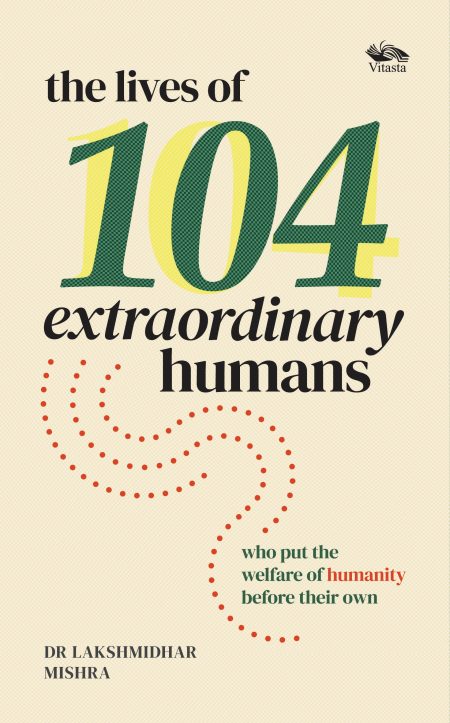
| “What makes a human being truly extraordinary?” Is it power, fame and achievement or the courage to live for others? The Lives of 104 Extraordinary Humans is a compelling tribute to the men and women who shaped history through their compassion, wisdom and unwavering commitment to human dignity. At its heart, the book is an exploration of humanism—the belief that every human life is sacred and that kindness, equality and compassion transcend barriers of caste, creed, religion, nationality and ideology. Drawing upon the wisdom of the Vedas, the Bhagavad Gita, Shakespeare, Tagore, Rumi, Wordsworth and many other traditions, it reveals how the ideals of humanism have united civilizations across time. Enriched by the author’s distinguished career in public service and his lifelong work in advancing human rights, labour welfare and social justice, the book offers far more than biographical sketches. Each chapter uncovers the values, choices and sacrifices that transformed remarkable individuals into enduring symbols of hope and humanity. Insightful and deeply inspiring, this book is both a celebration of humanity’s finest examples and a timeless invitation to rediscover the humanity within ourselves. |

Michele has been looking for answers for a long time. She remained behind the doors fearing the embarrassment that truth would accompany. Therapy presents her life in a new way, to look beyond the obvious. It teaches Michele to accept life the way it comes, to make her choices towards the life she desired for, and to live the fullest. Michele’s quest continues as she steps into her desired choices.
Do her parents accept her for the person she is… does she regret ‘coming out’ to the world… what happens behind the doors? This is a true account of a struggling woman, who seeks her identity despite all odds. Her life becomes a source of inspiration for the author. An unswerving heart accepts all challenges before finding the unsurpassed.

By systematically assessing the debates within the Indian National Congress, from its founding in 1885 to independence in 1947, the author explains the awakening of India’s consciousness of the world and its maturing in the period between the two World Wars. Bimal Prasad’s study helps us recognize that such principles as non-alignment, Afro-Asian solidarity, and the commitment to international peace that guided the republic’s foreign policy were not simply divined at the dawn of independence but were deeply embedded in the Indian national movement’s responses to the world around it.
To understand where a rising India is headed, it is critical to know where it started from.
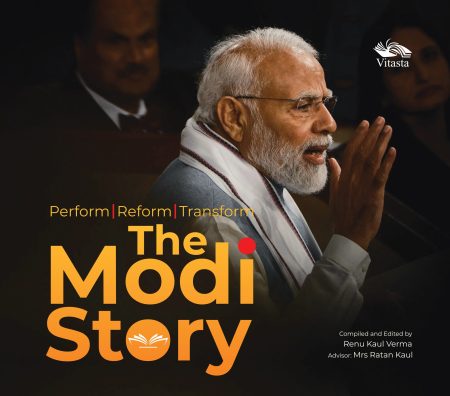
Manusmriti occupies a prominent place in Indian textual tradition as one of the authentic sources of dharma. However, contemporary engagement with the text has been wrought with prejudice and discomfort left in the wake of colonialism. The present work aims to address the gap in contemporary approach and facilitate a better understanding through a philosophical analysis of the first four verses of Manusmriti, shedding light on the object, purpose and relevance of dharma texts. Rather than reducing Manusmriti to a mere relic of the past through a historical study, the book locates the text within the larger Hindu epistemological, ontological, and theological worldview and extracts the eternal teachings embedded within it. The book addresses common misconceptions on topics such as the definition of dharma, the integrity and importance of Manusmriti, the notion of ritual competency, and the Hindu conception of varna. The book draws from the entire Hindu textual tradition spanning the Vedas, Upanishads, Smritis, Itihasa-Puranas, and the Gita. It references the works of renowned acharyas including Adi Shankaracharya, Ramanujacharya, Madhvacharya, Vallabhacharya, Sayanacharya, Kumarila Bhatta, and Sri Aurobindo.

What happens when you have three kids, a pup, and a ghost together in a huge jungle? Opal and Shailendra, a brother-sister duo, have just moved into a large house on the city outskirts. Much to their amusement, they discover a ghost in their house! Soon, their cousin Krish, with a cute puppy Chutney in tow, comes to visit them during the holidays. The kids embark on an adventure to find out about the ghost and end up befriending him. The friendly ghost Xoxo gets on a mission to find the wicked ghost who possess the evil magic mirror in the jungle and destroy it. The kids help Xoxo, and they venture into the mysterious jungle with duplicated images. How will Xoxo help the kids find the mirror? Will they be able to destroy it and save humanity? Join them in the quest and embark on a journey of a lifetime one replete with vivid imagination and excitement!
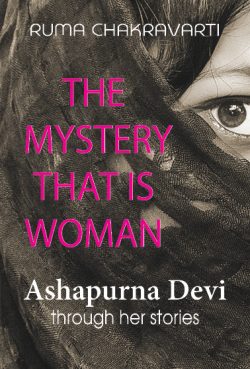
The stories have been selected to provide a look at human issues such as rural migration, feminism and the refugee experience.The characters, whether they are mothers and daughters or husbands and sons, always seem to be people we have seen and possibly even know in our daily lives. They are never distant or two dimensional.The stories are full of wisdom. The writer had a great understanding of the layered complexity of the world outside the confines of the four walls of a home.These stories deal largely with women and the situations they find themselves in, in different settings both urban and rural. While deeply sympathetic towards the dreams and heartache of a woman’s life, Ashapurna never does this at a cost to her male characters. Her feminism is neither strident nor vitriolic but her characters are treated with respect and compassion.
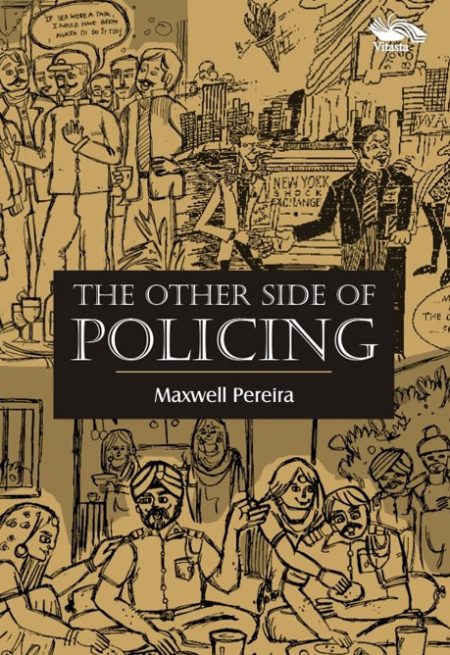
Forgotten and buried deep behind the uniform is a common man. As The Other Side of Policing attempts to break the stereotype of policing as an obsession with guns, crime and criminals, it insists that even the cops have a penchant for humour. At times, for people like Maxwell, it is the humour that makes them survive in a system that kills initiatives.
The book is based on the author’s own experiences as a policeman for nearly 35 years where he provides an insider’s account of someone who has experienced everything at close quarters and can afford to be critical of the system as a whole. He recounts gripping stories about how policeman learn to survive under the axe of the media, politicians, common people and their own seniors.
In his anecdotal account, the author talks of various incidents and projects, the men behind uniform as human beings who could succumb to the trials and tribulations of power. He talks about the inability of cops to do anything when high profile politicians enact stage dramas to stay in the limelight, how the cops take liberties to kill at will, how a South Indian to whom all Sikhs looked the same learnt to differentiate between them and how an April Fool’s prank resulted in a senior officer waiting at the airport to receive a VIP when none was scheduled to arrive.
His narration laced with humour provides a fresh look at unexplored alleys and brings home the point that at the end of the day we all need our daily dose of banter and policing provides ample opportunities for that. The author hopes that this book will connect easily with the man on the street and help bridge the gap between police and people.
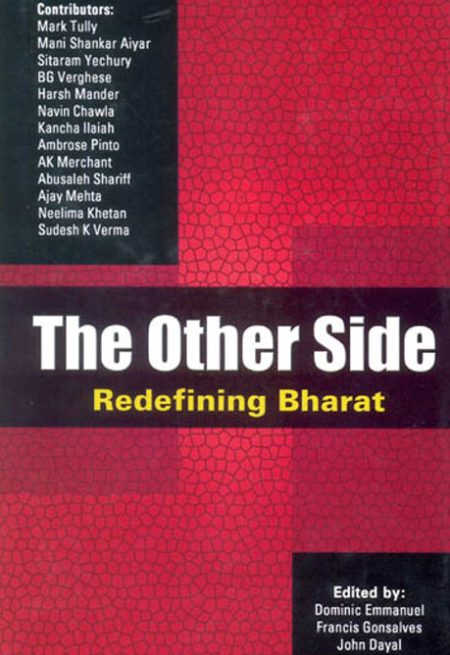
The Other India: Reinventing Bharat is a volume in honour of His Grace Archbishop Vincent Michael Concessao on the completion of 50 golden years of his service to God and to humanity as a priest. His fifty years of priesthood also coincide with his 75th birthday. The book highlights topics that are not only dear to Archbishop Vincent’s heart and espoused by the Catholic Church, they are issues which the Archbishop has rallied for in the public sphere, and for which he has provided outstanding leadership.
The essays, written by eminent authors, focus on stark realities of the India which is not as shining as India Inc. and the rich and powerful would make believe. The essays draw roadmaps that India could follow for a brighter tomorrow.
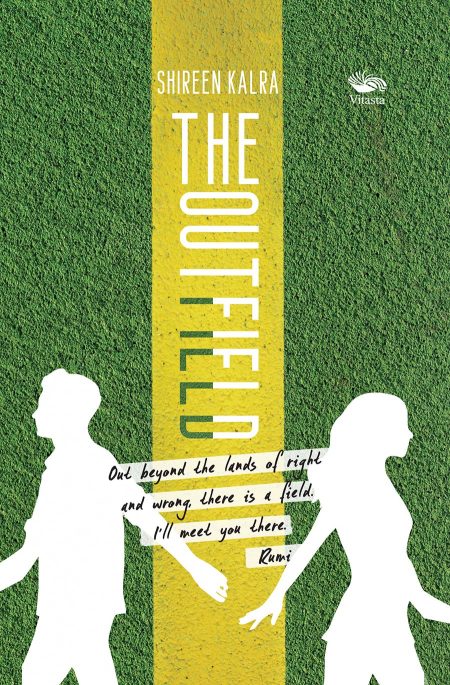
1969, New Delhi… Childhood best friends and next-door neighbours, Veer and Rashika study and play together every day. They don’t spend a waking moment apart but are separated when their politician fathers start competing in rival camps. Years later, they land in the same college and rediscover their lost bond. With each run in, and banter, they find it hard to stay away from each other. But when the national Emergency is imposed, what comes first, love or family?
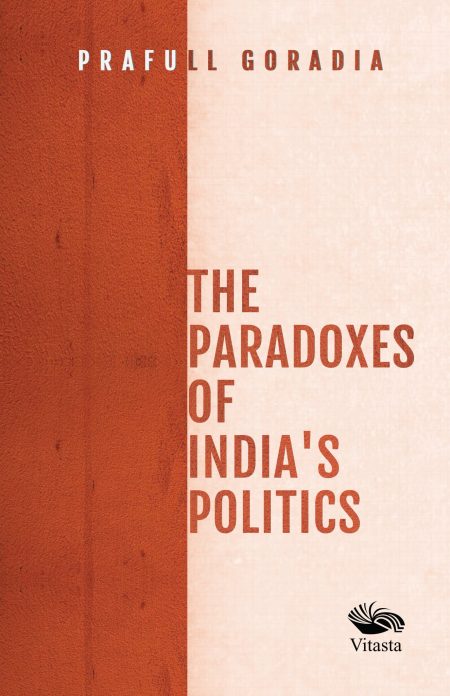
Politics in india is full of paradoxes, and caste, community, education, all civil society matters are subject to intense politics, which is very often so quixotic that it is not funny. India is the only country in the world that has practiced toleration for thousands of years and, at the same time, runs a successful democracy today. This makes toleration a sine qua non of democracy; a proposition which applies to all real practitioners of this free system of government. Pakistan, an Islamic country, is home today to 203 million Muslims, India, a ‘secular’ state is home to 201 million Muslims! There are no wakfs in Turkey; Libya, Egypt, Sudan, Lebanon, Syria, Jordan, Iraq and Tunisian. In India, wakfs thrive though on independence, zamindaris and jagirdaris were abolished as were the princely States. India’s political life, thus, is full of contradictions, though it is 75 years old. When will clarity come, is a question the author asks.